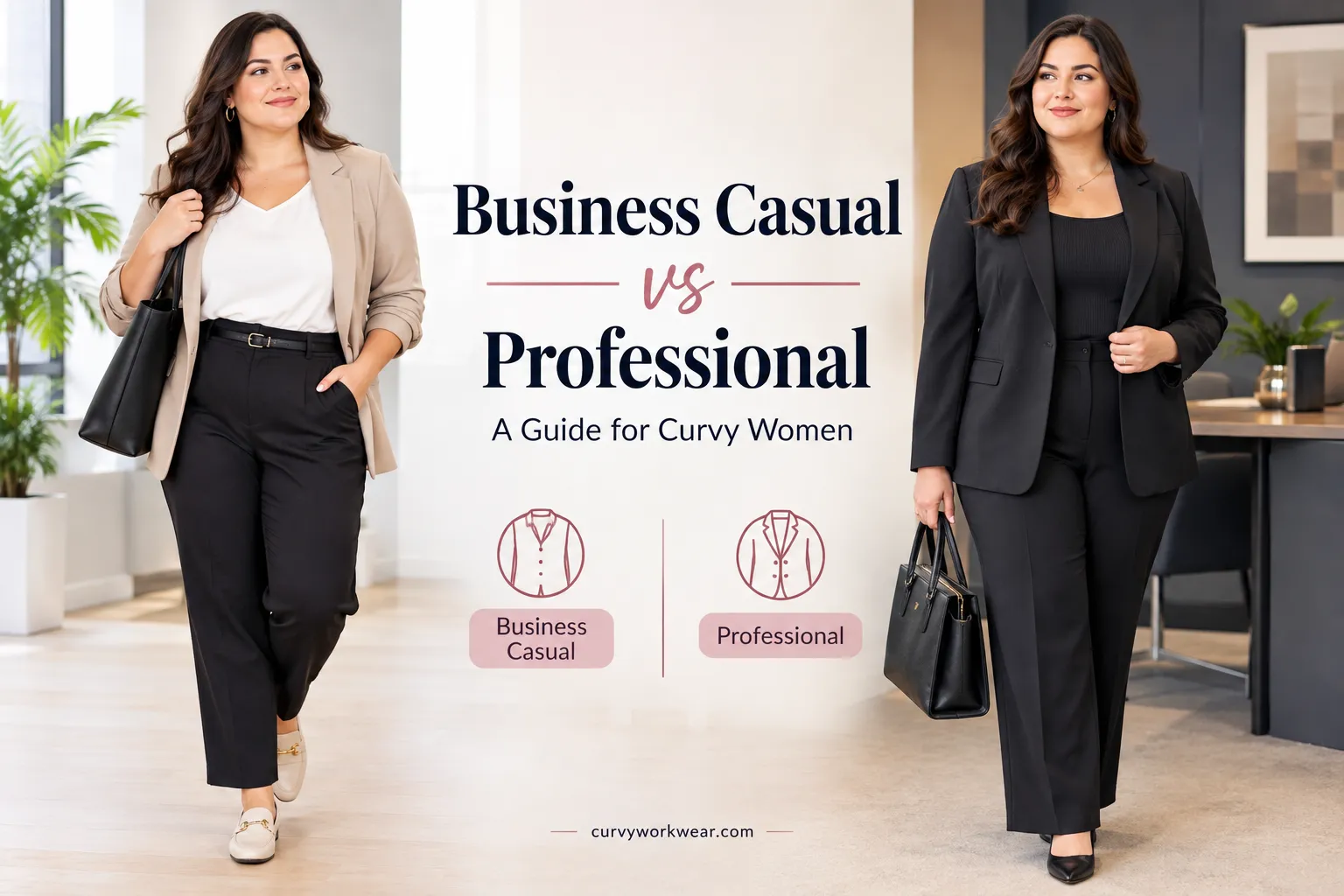
What Is the Difference Between Business Casual and Professional Dress?
Business casual and professional dress both create a polished and workplace-appropriate appearance. However, they differ mainly in their level of formality and clothing choices. Business casual gives women more freedom to choose relaxed yet polished pieces. Professional dress usually requires more structured clothing and a more formal appearance.
Business casual can include tailored pants, blouses, sweaters, skirts, dresses, and blazers. These pieces can look professional without feeling overly formal. Professional dress often includes suits, tailored trousers, structured blazers, formal dresses, and polished shoes. The exact expectations can vary based on the workplace and industry.
For curvy women, both dress codes can offer stylish and comfortable outfit options. The most important factor is choosing clothes that fit well and allow movement.
What Does Business Casual Mean for Women?
Business casual combines professional clothing with a more relaxed style. Women can wear tailored pants, blouses, sweaters, skirts, or dresses. Simple flats, loafers, boots, or low heels can work well. Some workplaces may also allow neat, dark jeans without damage.
What Does Professional Dress Mean for Women?
Business professional dress is more formal and structured than business casual. It commonly includes suits, tailored pants, blazers, skirts, and polished dresses. Button-down shirts and blouses are also common choices. The overall look should appear neat, polished, and well-fitted.
Business Casual vs Professional: What Is the Main Difference?
The biggest difference is the level of formality between both dress codes. Business casual gives you more flexibility with colors and clothing choices. Business professional usually calls for more structured and conservative pieces. These pieces can create a polished look without making the outfit fully formal.
The right choice depends on your workplace and the situation. A client meeting may require more formal clothing than daily office work.
Which Dress Code Looks More Formal?
Business professional looks more formal than business casual. It usually includes tailored and structured clothing with a polished appearance. Business casual offers more room for relaxed pieces and personal style. Neither dress code is better than the other for every workplace.
Business Casual Outfits for Curvy Women
Business casual outfits should look polished, comfortable, and suitable for your workplace. Curvy women can choose tailored pants, blouses, dresses, and blazers. Pick clothes that fit your shape without feeling too tight or restrictive. Comfortable fabrics can also make long workdays easier.
Choose colors and styles that match your workplace dress code. You can also add simple patterns or colors for more personality. The right fit matters most when creating a confident business casual outfit.
Best Tops for a Polished Business Casual Look
Blouses, button-down shirts, and sweaters work well for business casual outfits. Choose tops that fit comfortably around your bust and waist. Simple colors and subtle patterns can create a polished appearance.
Are Dresses Appropriate for Business Casual Offices?
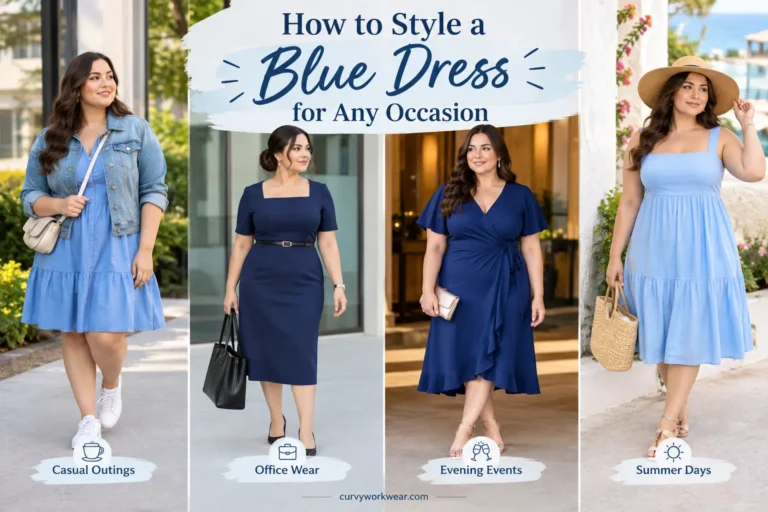
Yes, dresses can work well in many business casual offices. Choose simple styles with a polished and comfortable fit. Knee-length and longer dresses are common choices for work.
How to Style Blazers for Business Casual Workwear?
Wear it over a blouse, sweater, or simple dress. Choose a comfortable fit that allows easy movement through the shoulders.
What Shoes and Accessories Work With Business Casual Outfits?
Loafers, flats, boots, and low heels can suit business casual outfits. Choose clean shoes that feel comfortable during your workday. Simple jewelry, belts, and scarves can complete the look without feeling excessive.
Professional Workwear for Curvy Women
Professional workwear creates a polished, formal, and structured appearance. Curvy women can choose tailored blazers, trousers, dresses, skirts, and polished tops. Well-fitting clothes should provide comfort without looking too loose or restrictive.
Choose professional clothing based on your workplace and its dress code. Traditional offices may expect suits, blazers, tailored trousers, or conservative dresses. Some workplaces may also allow dark-wash jeans as part of business casual dressing. Simple accessories and closed-toe shoes can complete a professional outfit. Always check your workplace expectations before choosing your final look.
How to Choose a Well-Fitting Professional Blazer?
Choose a blazer that fits comfortably across your shoulders and bust. The blazer should close without pulling across the front. Avoid sleeves that feel too tight or restrict movement.
How to Choose Professional Dresses and Skirts?
Choose dresses with a clean shape and comfortable fit. Knee-length or similarly modest styles can suit professional workplaces. Pencil, straight, and other tailored skirts can also work well. Avoid designs that feel too tight or distracting for your workplace. Neutral colors can make professional dresses easier to style.
What Tops Work Best With Professional Outfits?
Button-down shirts and simple blouses work well with professional outfits. Choose tops that fit comfortably around your bust and shoulders. White, light blue, and other neutral shades create a classic appearance. You can pair a blouse with tailored trousers and a blazer. Pressed and wrinkle-free tops can also keep your outfit looking neat.
How to Choose Shoes and Accessories for a Professional Look
Choose clean, closed-toe shoes for a traditional professional workplace. Flats, loafers, and moderate heels can work well. Black, brown, burgundy, and other neutral shades are common choices. Keep jewelry simple and avoid accessories that feel distracting. A classic watch or simple handbag can complete your outfit.
Business Casual vs Professional Dress for Different Workplaces
Workplace dress codes can differ between companies, industries, and job roles. Some workplaces prefer business casual clothing for everyday work. Others expect more formal business professional attire. Traditional industries may have stricter dress expectations than creative or flexible workplaces. Your position and daily responsibilities can also affect the expected level of formality.
Business casual usually combines professional clothing with a more relaxed style. It can include tailored trousers, blouses, sweaters, skirts, dresses, and blazers. Business professional clothing has a more formal and structured appearance. It often includes suits, tailored trousers, blazers, professional dresses, and neutral colors.
The best choice depends on your company’s specific dress code. You can also observe how colleagues dress in similar positions. When the dress code feels unclear, choose a polished outfit with moderate formality. This approach helps you look professional without dressing far above workplace expectations.
What Should Curvy Women Wear to a Corporate Office?
Corporate offices may expect business casual or professional clothing. Choose tailored trousers, blouses, blazers, skirts, or polished dresses. More formal offices may require suits or structured professional outfits. Choose comfortable pieces that fit your body without feeling restrictive.
What Should You Wear to Client Meetings and Presentations?
Client meetings usually call for a polished and professional appearance. Choose tailored trousers, a blouse, and a structured blazer. A neat dress with simple shoes can also work well. For important presentations, consider dressing slightly more formally. Your outfit should match your company’s dress code and the meeting setting.
What Should You Wear to a Job Interview?
Your interview outfit should usually look more formal than daily office clothing. A blazer, tailored trousers, blouse, or neat dress can work well. Choose clean, pressed clothing in simple colors and styles. If the workplace is formal, consider a suit or professional pantsuit. When unsure, check the company’s dress code before your interview.
How Should You Dress for a Hybrid or Remote Workplace?
Hybrid and remote workplaces often have more flexible dress expectations. Smart casual or business casual can work for regular virtual meetings. For client calls, choose business casual or professional clothing. A blazer or structured cardigan can create a polished look on camera.
How to Choose Workwear That Fits Your Body Shape
Your body shape can help you choose workwear that feels comfortable. It can also help you understand which cuts suit your proportions. These categories are only general guides, not strict rules. Focus on clothes that fit well and make you feel confident.
Workwear Tips for an Hourglass Body Shape
An hourglass shape usually has a defined waist and balanced bust and hips. Choose tailored pieces that follow your natural shape without feeling tight. Wrap tops and dresses can highlight your waist nicely. Fitted blazers can also create a polished office look.
Workwear Tips for a Pear Body Shape
A pear shape usually has wider hips than the upper body. Choose structured blazers to add balance around your shoulders. Blouses with simple details can also draw attention upward. High-waisted trousers can define your waist and provide comfortable coverage. A-line skirts and dresses can also work well for office outfits.
Workwear Tips for an Apple Body Shape
An apple shape often has more width around the bust and waist. Choose tops with comfortable room around your middle. V-neck styles can create a longer, more open neckline. Straight-leg trousers can create a balanced and polished outfit. Structured blazers can add shape without feeling restrictive.
Workwear Tips for a Rectangle Body Shape
A rectangle shape usually has similar bust, waist, and hip measurements. Tailored clothing can add structure to your overall outfit. Belts can define the waist when they feel comfortable. Blazers with clear shoulder structure can also add shape. A-line skirts and dresses can create a softer workwear silhouette.
How Should Business Clothes Fit Curvy Women?
Business clothes should fit your body without feeling too tight. Good fit also helps create a polished and professional appearance. Choose pieces that allow comfortable movement throughout your workday. Avoid clothing that pulls, gaps, or feels restrictive.
How to Find the Right Fit Without Choosing Oversized Clothes?
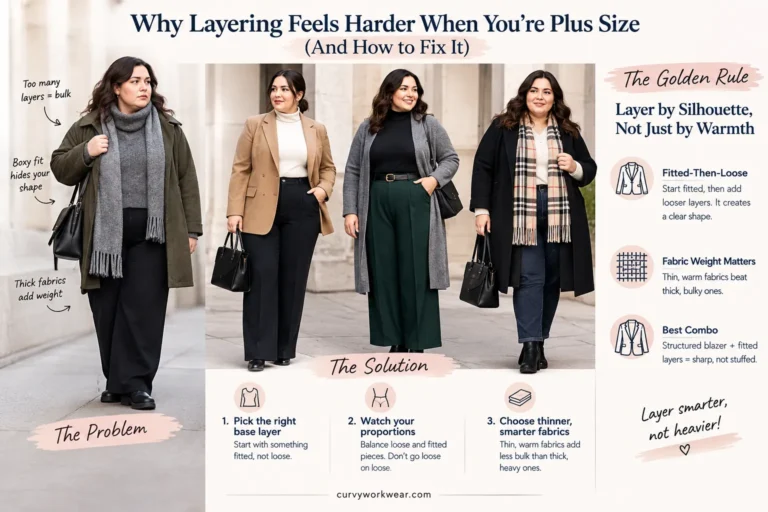
Choose clothes that follow your natural shape without clinging tightly. Your shoulders, bust, waist, and hips should have enough room. Avoid oversized pieces that hide your shape or look unstructured. Tailored clothing can create a cleaner and more polished appearance. Try sitting, walking, and moving before choosing your final size.
How to Prevent Bust Gaping in Button-Down Shirts
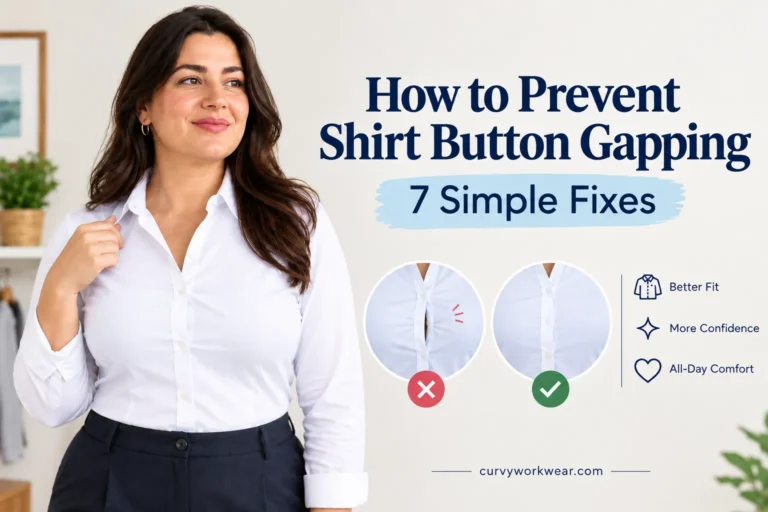
Choose button-down shirts that fit comfortably across your bust. If buttons pull apart, try a larger size or different cut. You can also look for shirts designed with extra bust room. A camisole can provide extra coverage when needed. A well-fitting blazer can also help keep the outfit polished.
How to Avoid Pulling Around the Hips and Waist
Choose trousers and skirts that sit comfortably around your hips. Avoid fabrics that stretch tightly when you sit or move. Check for pulling around the waistband and pockets. If fabric pulls, try a larger size or another cut. Tailoring can also improve the fit around your waist and hips.
How to Choose Comfortable Fabrics for Long Workdays
Choose fabrics that feel comfortable and allow easy movement. Breathable fabrics can help you stay comfortable during long workdays. Cotton, linen, and wool can work well in many office settings. Lightweight fabrics can also help during warmer weather. Always consider your workplace dress code when choosing fabrics.
How to Build a Versatile Curvy Workwear Wardrobe
A versatile workwear wardrobe should include pieces you can style easily. Choose comfortable clothes that match your workplace dress code. Focus on simple pieces that work across different outfits and occasions.
Essential Pieces for a Business Casual Wardrobe
Start with tailored trousers, blouses, sweaters, and comfortable skirts. Add a few work-appropriate dresses for easy outfit choices. Loafers, flats, boots, or low heels can complete your look.
Essential Pieces for a Professional Wardrobe
A professional wardrobe needs more structured and polished clothing. Start with a well-fitting blazer, tailored trousers, and professional blouses. You can also include a matching pantsuit or skirt suit. Simple dresses can work well in many professional workplaces.
Choose classic shoes such as loafers, flats, or closed-toe pumps. Keep accessories simple when your workplace has a formal dress code.
How to Use Neutral Colors for Professional Outfits
Neutral colors make it easier to create different professional outfits. Use these shades for trousers, blazers, skirts, and other main pieces.
You can combine two or three neutral shades in one outfit. For example, pair navy trousers with a white blouse. Add a gray blazer for a polished and coordinated look.
How to Add Color Without Looking Too Casual
You can add color while keeping your workwear professional. Try a colored blouse, scarf, handbag, or simple shoes. Burgundy, muted pink, dark green, and blue can add subtle interest.
Keep brighter colors limited when your workplace is more formal. Pair colorful pieces with neutral trousers, skirts, or blazers. Always consider your company’s dress code before choosing bold colors or patterns.
Common Business Casual and Professional Dressing Mistakes
Small clothing mistakes can affect how polished your work outfit looks. The right fit, style, and comfort can make dressing easier. Some outfits may look professional but still feel uncomfortable. Others may look too casual for your workplace expectations. Understanding these common mistakes can help you choose better outfits.
Wearing Clothes That Are Too Tight or Too Loose
Avoid clothes that pull, gape, or restrict your movement. Very loose clothing can also make an outfit look less polished. Choose pieces that fit comfortably around your shoulders, bust, waist, and hips. Well-fitted clothing should allow easy movement throughout your workday.
Choosing Pieces That Look Too Casual
Some casual pieces may not suit your workplace dress code. Avoid worn-out shoes, wrinkled clothes, and overly casual tops. Choose polished pieces that match your office’s expected level of formality. Business casual can still include comfortable clothing with a professional appearance.
Sacrificing Comfort for a Professional Appearance
Professional clothing should still feel comfortable during long workdays. Avoid shoes, fabrics, or clothes that make movement difficult. Choose breathable fabrics and pieces that fit your body comfortably. You can look polished without wearing uncomfortable or restrictive clothing.
Business Casual vs Professional: Which Is Right for You?
The right dress code depends on your workplace and daily responsibilities. Business casual offers more flexibility while keeping your outfit polished. Professional attire creates a more formal and structured appearance.
When to Choose Business Casual
Choose business casual for workplaces with relaxed dress expectations. It works well for many modern office environments and flexible workplaces. You can wear tailored pants, blouses, sweaters, skirts, or dresses. A blazer can make your outfit look more polished. Simple flats, loafers, boots, or low heels can complete your look. Always follow your company’s specific dress code before choosing an outfit.
When to Choose Professional Attire
Choose professional attire for more formal or conservative workplaces. It is common in banking, law, government, finance, and accounting. You can wear tailored trousers, suits, blazers, dresses, or skirts. Keep your accessories simple and your clothing neat. Professional clothing should fit comfortably without looking too loose.
How to Dress More Formally When You Are Unsure
Start by checking your company’s dress code or employee handbook. You can also observe how your coworkers dress each day. If you are unsure, choose a polished outfit with moderate formality. For interviews, dressing slightly more formally can be a safe choice. You can adjust your style after learning the workplace expectations.
Frequently Asked Questions About Business Casual and Professional Dress
Can jeans be considered business casual?
Yes, some workplaces allow jeans as business casual clothing. Rules can vary between companies, industries, and office environments. Choose clean, well-fitting jeans without rips or holes. Dark-wash or black jeans often create a more polished look. Always check your workplace rules before wearing jeans.
Are dresses better than pants for business casual workwear?
Neither option is automatically better for business casual workwear. Both dresses and pants can create polished office outfits. Choose the option that fits your workplace and feels comfortable. Tailored pants can offer easy movement during long workdays. Simple dresses can also create an effortless professional appearance.
Final Thoughts on Business Casual vs Professional Workwear
At the end of the day, great workwear isn’t about following a single formula — it’s about finding pieces that respect your workplace’s expectations while still feeling like you. Pay attention to fabric, cut, and fit rather than chasing trends, and build a small rotation of versatile staples you can mix and match with confidence. The goal is simple: walk into any room ready to focus on your work, not your outfit.
Disclaimer
This article is intended for general informational and styling purposes only. Dress code expectations can vary widely between companies, industries, and regions, so the suggestions shared here may not apply to every workplace. Always refer to your employer’s official dress code policy or HR guidelines before making final clothing decisions for work. Neither the author nor this publication is responsible for any workplace issues arising from the interpretation or application of this content.