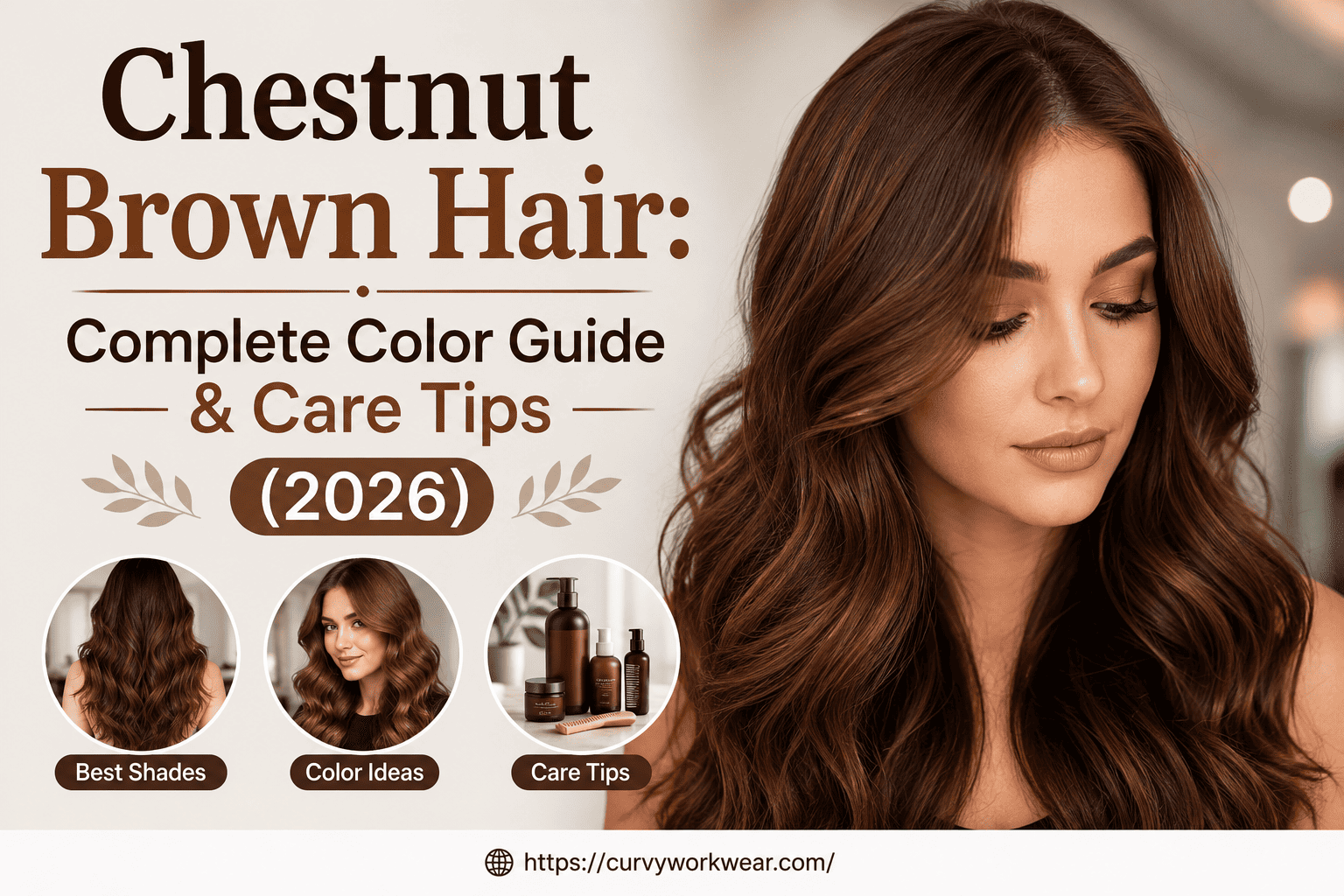
Picture a color that looks like a shiny chestnut fresh off the tree—rich, warm, and a little bit red. That’s chestnut brown hair, and it’s one of the most flattering shades a person can wear.
If you’ve ever wondered whether chestnut brown hair suits your skin tone, or how to keep it from fading, you’re in the right place. This guide covers every shade, the best dyeing tips, and simple ways to make the color last. By the end, you’ll know exactly what to ask for at the salon.
What Is Chestnut Brown Hair?
Chestnut brown hair sits between plain brown and auburn. It has warm red-brown undertones, similar to the shell of a chestnut nut.
Unlike flat, one-dimensional brown, chestnut has depth. It can shift from deep brown in low light to a warm copper glow in the sun. This is why colorists often describe it as a “multi-tonal” shade rather than a single flat color.
Chestnut vs. Regular Brown vs. Auburn
Regular brown hair usually has neutral or ash undertones—no red, no gold, just brown. Auburn, on the other hand, leans much more red, almost like a red velvet cake.
Chestnut sits right in the middle. It has enough warmth to look lively but not so much red that it screams “red hair.” That’s what makes it such a popular, wearable choice.
Chestnut Brown Hair Shades: Finding Your Match
One of the best things about brown hair is how many shades fall under this one name. There’s a version for almost every skin tone and personal style.
Warm Chestnut Brown Hair
Warm chestnut brown hair leans into golden and copper tones. It works beautifully on people with warm or olive skin tones, since it complements yellow and golden undertones in the skin.
This shade often looks sun-kissed, even without highlights. Many people choose warm chestnut for a natural, lived-in look that needs less touch-up.
Dark Chestnut Brown Hair
Dark brown hair is deeper and closer to espresso, but it still holds that signature reddish glimmer underneath. In photos, it can look almost black until the light hits it just right.
This shade suits people who want a bold, deep color without going fully black. It also tends to hide roots a bit longer than lighter shades, which is a nice bonus for low-maintenance hair goals.
Light Chestnut Brown Hair
Light chestnut brown hair is softer, closer to a caramel or toffee tone. It has a gentle warmth that works well for cooler skin tones too, especially when paired with subtle highlights.
This shade tends to look fresh in spring and summer. However, it may fade faster than darker shades, so a bit more upkeep is needed.
How to Choose Your Shade Based on Skin Tone
As a general guide: warm and olive skin tones often suit warm or golden chestnut shades. Cooler, pink-toned skin tends to pair well with deeper or slightly ashier chestnut tones.
That said, this isn’t a strict rule. The best way to know for sure is to test a shade with a wig, hair swatch, or a consultation with a colorist before committing.
Chestnut Brown Hair Dye: DIY vs. Salon
Once you’ve picked a shade, the next question is how to get it. You basically have two paths: box dye at home or a professional colorist.
At-Home Chestnut Brown Hair Dye Tips
Box dyes labeled “chestnut brown” are widely available and easy to use. For example, brands like L’Oréal, Garnier, and Clairol all offer chestnut shades in their permanent color lines.
Before you dye at home, always do a strand test and a patch test first. This helps you avoid surprises with the final color or any allergic reaction to the dye.
Here are a few simple tips for better results at home:
- Apply dye to dry, unwashed hair (natural oils protect the scalp).
- Section your hair before applying for even coverage.
- Leave the dye on for the exact time stated in the instructions—no longer.
- Use a color-safe shampoo starting from your very first wash.
Why a Professional Colorist Might Be Worth It
If you’re going from a very different color (like platinum blonde or jet black), a professional can help you avoid an uneven or brassy result. They can also mix custom shades that box dye simply can’t match.
Professional color is more expensive, but it often lasts longer and looks more natural. Think of it like the difference between a home haircut and a salon cut—the tools and skill make a visible difference.
Chestnut Brown Hair with Highlights
Highlights can turn a simple chestnut brown base into something with real dimension. This is one of the biggest brunette hair color trends heading into 2026.
Popular Highlight Styles for Chestnut Hair
Caramel highlights add warmth and work well with both light and dark chestnut bases. Money-piece highlights (framing the face) are also trending, giving a brightening effect around the face without lightening the whole head.
Babylights—very fine, subtle highlights—are another gentle option. They mimic the way hair naturally lightens in the sun, giving a soft, low-effort glow.
Balayage vs. Traditional Highlights
Balayage is hand-painted, so the color looks more blended and natural, with a soft grow-out line. Traditional foil highlights are more precise and give crisper, more defined streaks.
For chestnut brown hair, balayage is often the more popular pick in 2026. It requires less frequent touch-ups since the regrowth blends in more smoothly.
Chestnut Brown Hair Care Tips
Getting the color is only half the job. Keeping it looking rich and healthy takes a bit of ongoing care.
Preventing Fade
Color-treated hair fades faster when exposed to hot water, sun, and harsh shampoo. Wash with lukewarm or cool water, and try to space out washes to two to three times a week if your scalp allows it.
A UV-protecting hair spray can also help if you spend a lot of time outdoors. Sun exposure is one of the most common (and overlooked) reasons warm tones turn brassy over time.
Best Products for Chestnut Brown Hair
Look for a sulfate-free, color-safe shampoo and conditioner. Sulfates are strong cleansing agents that can strip color faster than gentler formulas.
A weekly deep conditioning mask also helps, since hair dye can be drying. For dark chestnut shades, a purple or blue-based toning product isn’t usually needed—those are mainly for blondes fighting brassiness.
Touch-Up Schedule
Most people need a root touch-up every four to six weeks, depending on how fast their natural hair grows out. Gloss treatments, which add shine without fully re-dyeing, can be done more often to refresh the color between full touch-ups.
Is Chestnut Brown Hair Right for You?
Chestnut brown hair is one of the most versatile shades because it isn’t too bold or too plain. It sits comfortably between natural brown hair colors and a fun red twist, which is exactly why it stays popular year after year.
It also tends to be low-risk for people transitioning from natural brunette hair, since the change feels gradual rather than drastic. If you like the idea of warmth without a huge commitment, this shade is a solid starting point.
FAQs About Chestnut Brown Hair
Does chestnut brown hair suit all skin tones?
Yes, in general, because there are so many shades within the chestnut family. Warmer shades suit warm skin tones, while deeper or slightly cooler chestnut shades often work well on cooler skin tones.
How long does chestnut brown hair dye last?
Permanent chestnut brown dye typically lasts until it grows out, usually needing root touch-ups every four to six weeks. The vibrancy of the color itself may start to soften after around six to eight weeks without proper care.
Can I go from black hair to chestnut brown?
It’s possible, but going from black to chestnut usually requires some form of lightening first, often done by a professional. Doing this at home without guidance can lead to an uneven or brassy result.
Is chestnut brown hair high maintenance?
It’s considered low to medium maintenance compared to very light or very bold colors. Dark chestnut shades especially tend to hide root regrowth longer than light chestnut or blonde shades.
What’s the difference between chestnut and mahogany brown hair?
Chestnut brown has a warm, golden-red undertone, while mahogany brown leans more purple-red. Both are warm brunette shades, but mahogany tends to look more dramatic and red under bright light.
Conclusion
Chestnut brown hair remains a timeless choice because it offers warmth without being too flashy. Whether you go for a warm chestnut brown hair look, a deep dark chestnut shade, or add highlights for extra dimension, there’s a version that fits your style.
The key is picking the right shade for your skin tone, using the correct dye method, and sticking to a simple care routine to keep it glowing. If you’re ready for a change, bring this guide to your next salon visit or use it to guide your at-home dye job—either way, chestnut brown hair is a safe bet that never really goes out of style.