
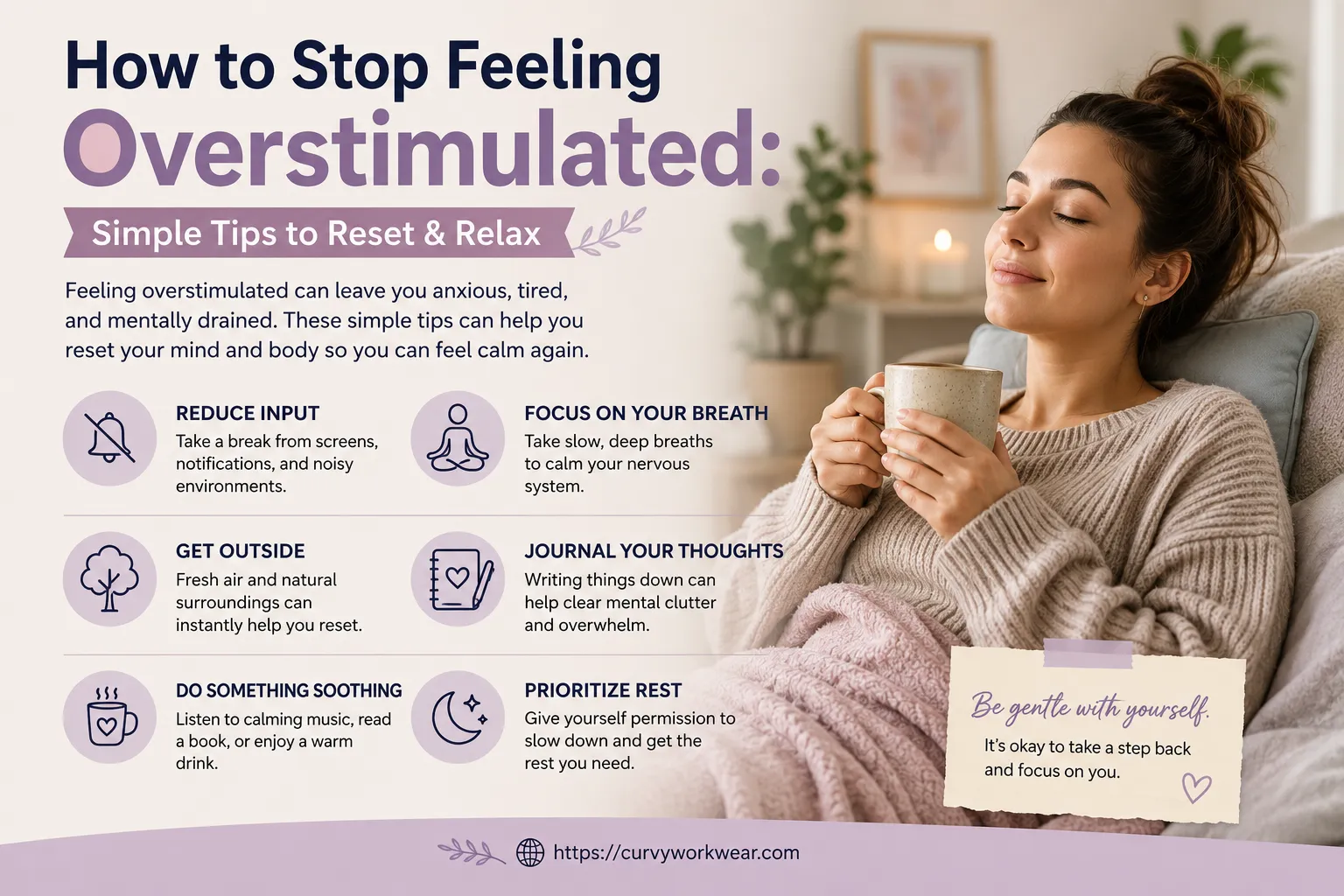
Your phone won’t stop buzzing. The TV is on, someone’s talking to you, and your brain just… shuts down. That foggy, itchy, “get me out of here” feeling has a name: overstimulated.
If this happens to you often, you’re not broken and you’re not alone. Overstimulation is your brain’s way of saying it’s taken in more than it can process right now.
In this guide, we’ll walk through what causes it, how to calm down when overstimulated in the moment, and small daily habits that make it happen less often. No complicated routines, just simple tools you can use today.
What Does It Mean to Feel Overstimulated?
Being overstimulated means your brain has received more sensory or emotional input than it can handle at once. Think of your mind as a cup. Small amounts of noise, light, and stress fill it slowly. Once it overflows, you feel overwhelmed, foggy, or on edge.
This isn’t a character flaw or a sign of weakness. Everyone has a limit, and that limit changes day to day depending on sleep, stress, and health.
Overstimulation vs. Normal Stress
Regular stress usually comes from one clear source, like a work deadline. Overstimulation is different. It often builds from several small things happening at once, like background noise, a cluttered room, and a notification buzzing every few minutes.
That’s why overstimulation can feel confusing. You might not be able to point to one single cause, which makes it harder to explain to someone else.
Common Causes of Overstimulation
Triggers look different for everyone, but they tend to fall into a few categories.
Environmental Triggers That Cause Overstimulation
Loud noises, bright lights, crowded rooms, and strong smells are common culprits. A busy grocery store or a loud restaurant can tip some people over the edge fast.
Emotional Triggers Behind Feeling Overstimulated
High stress, big life changes, or unresolved worry can lower your tolerance for everything else. When your mind is already busy, it takes less input to feel overwhelmed.
Technology Overload and Overstimulation
Constant notifications, scrolling, and multitasking between screens add up. Many people don’t realize how much this drains their mental bandwidth until they take a break from it.
Signs You’re Overstimulated
The signs vary from person to person, but a few show up again and again. You might feel irritable over small things that wouldn’t normally bother you. You might also notice trouble focusing, a racing heart, tight shoulders, or a sudden urge to leave the room.
Some people describe it as their brain going foggy, like trying to think through static. For a deeper breakdown of how these signs show up in adults, Healthline’s guide on overstimulation covers the emotional and physical symptoms in more detail.
How to Calm Down When Overstimulated
When you’re in the middle of it, you need something fast and simple. These techniques work because they give your nervous system a chance to reset.
Remove Yourself From the Overstimulating Trigger
If you can, step away from the noise, crowd, or screen. Even two minutes in a quiet hallway or bathroom can help your brain catch up.
Try Slow, Deep Breathing to Calm Down
Take a slow breath in for four counts, hold for four, then breathe out for six. This kind of breathing signals to your body that it’s safe to relax, which can quiet the fight-or-flight response.
Ground Yourself When You Feel Overstimulated
Notice five things you can see, four you can hear, and three you can touch. This simple exercise pulls your focus away from the overwhelm and back into the moment.
How to Stop Feeling Overstimulated Long-Term
Quick fixes help in the moment, but preventing overstimulation in the first place makes a bigger difference over time.
Build in Recovery Time to Prevent Overstimulation
Give yourself short breaks throughout the day, even five minutes between meetings or errands. Think of it like charging your phone before the battery hits zero, not after.
Reduce Your Baseline Stress to Avoid Feeling Overstimulated
The lower your everyday stress, the more sensory input you can handle before feeling overwhelmed. Regular sleep, movement, and time away from screens all help raise that threshold. A steady daily routine can make a real difference here, since predictability itself lowers mental load.
Set Boundaries With Notifications to Reduce Overstimulation
Turn off non-essential alerts, or set specific times to check your phone instead of reacting to every buzz. Fewer interruptions mean fewer chances for your cup to overflow.
When to Seek Extra Support for Overstimulation
Occasional overstimulation is a normal part of being human, especially during busy or stressful stretches. However, if it happens often, disrupts your daily life, or comes with ongoing anxiety, it’s worth talking to a doctor or therapist. They can help identify whether something else, like chronic stress or a sensory processing difference, is playing a role. For a closer look at how overstimulation connects to the body’s stress response, WebMD’s overview of sensory overload and anxiety is a helpful, medically reviewed resource.
FAQ: Feeling Overstimulated
What does it feel like to be overstimulated?
Most people describe it as a mix of irritability, mental fog, and a strong urge to escape the situation. Physical signs like a racing heart, tight muscles, or a headache often show up alongside it.
What are the main causes of overstimulation?
Common causes of overstimulation include loud or crowded environments, constant notifications, and high emotional or mental stress. Often it’s a combination of several smaller triggers rather than one big one.
How long does overstimulation usually last?
For most people, stepping away from the trigger and using calming techniques brings relief within a few minutes to an hour. If the overwhelmed feeling lingers for days, it may be worth checking in with a healthcare provider.
Can overstimulation happen even in a quiet place?
Yes. Overstimulation can come from internal sources too, like racing thoughts or unresolved stress, not just external noise or crowds. That’s why calming your environment alone doesn’t always solve it.
Is overstimulation the same as sensory overload?
They’re closely related terms that are often used together. Sensory overload specifically refers to the senses being overwhelmed, while overstimulation can also include emotional and mental overload.
Conclusion
Feeling overstimulated doesn’t mean something is wrong with you. It just means your brain hit its limit for the moment, and that limit is different for everyone. With a few grounding techniques and small daily changes, you can calm down faster and stop feeling overstimulated as often.
Start with just one habit from this guide, like a daily quiet break or turning off extra notifications, and build from there. Your nervous system will thank you for the breathing room.
Disclaimer: This article offers general wellness information and isn’t a substitute for professional medical or mental health advice. If overstimulation is affecting your daily life, relationships, or overall wellbeing, please reach out to a licensed doctor or therapist for personalized support.