What Does a Curvy Body Shape Mean?
A curvy body shape means the body has noticeable, rounded proportions. It often includes fuller hips, a fuller bust, or both. The waist may also look more defined compared with these areas.
Curvy does not describe one specific body size. Someone can have a curvy shape at many different clothing sizes.
Common curvy shapes include hourglass, pear, and other variations. Each shape can have different proportions between the bust, waist, hips, and shoulders.
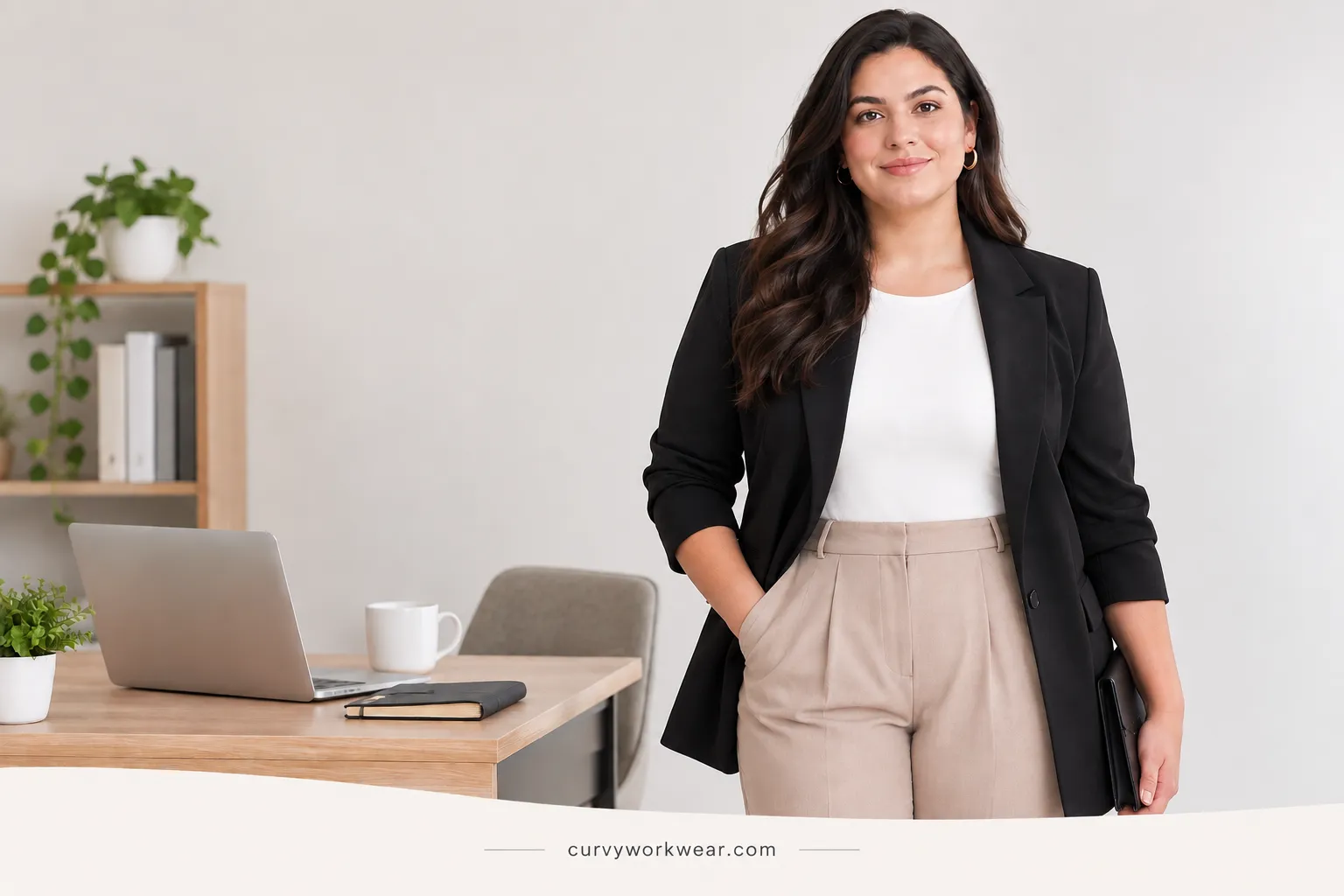
For office dressing, the goal is not to hide your curves. Instead, focus on clothes that fit your measurements comfortably. A good fit can make an outfit look polished and professional.
You also do not need to follow strict body-shape rules. Your comfort, personal style, and workplace dress code should guide your choices.
Start With the Right Fit
The right fit can make office clothes look polished and feel comfortable. Focus on how clothes sit on your body. Do not choose pieces based only on their size label. Sizes can vary between brands, so always check the garment’s measurements when possible.
Choose Clothes That Follow Your Shape
Choose clothes that follow your natural shape without pulling or squeezing. Look for enough room around your bust, waist, hips, and thighs. Your clothes should let you sit, walk, and reach comfortably.
For tops, check how the fabric sits across your bust and shoulders. Buttons should close without pulling across the chest. Shoulder seams should also sit close to your natural shoulder line.
For trousers and skirts, check both the waist and hip fit. The waistband should stay comfortable when you sit down. If one area fits while another does not, consider tailoring.
Avoid Clothes That Are Too Tight or Too Loose
Very tight clothes can restrict movement and create unwanted pulling. You may also spend the day adjusting your outfit. This can become uncomfortable during long office hours.
Very loose clothes can hide your natural shape and look less structured. They may also create extra fabric around your body. Instead, choose relaxed pieces with some shape and structure.
The goal is not to make clothes cling to every curve. Aim for a comfortable fit that follows your proportions. This approach works across different body shapes and clothing styles.
Choose Office Tops That Create a Polished Look
The right office top should feel comfortable and look neat throughout your workday. Focus on fit, fabric, neckline, and coverage. Choose styles that let you move without constant adjusting.
Button-Up Shirts and Blouses
Button-up shirts work well with trousers, skirts, and tailored jeans. Choose one that sits smoothly across your bust and shoulders. The buttons should close without pulling the fabric.
If you have a fuller bust, look for shaped designs. Bust darts, princess seams, and some stretch can provide extra room. These details can help the shirt follow your shape better.
Blouses offer another easy option for professional outfits. Choose fabrics that drape without clinging too closely. A slightly relaxed blouse can also work with tailored bottoms.
Wrap Tops and V-Neck Styles
Wrap tops can create a defined waist without feeling restrictive. They also work well with trousers, skirts, and office layers.
V-neck tops can create a longer-looking neckline. Choose a depth that feels comfortable for your workplace. Your office dress code should always guide how low the neckline goes.
You can also wear a V-neck blouse under a blazer. This creates a simple and polished layered outfit.
How to Handle Shirt Button Gapping
Button gapping often happens when a shirt feels tight across the bust. Check the front while standing, sitting, and moving your arms. The fabric should stay smooth around the buttons.
Try a shirt with more room through the bust. Designs with darts, princess seams, or closer button placement can help. You can also choose a popover blouse instead. It removes the need to manage buttons across the bust.
If the shoulders fit but the waist feels loose, consider simple tailoring. A tailor can adjust the sides without changing the shoulder fit.
Find Work Pants That Balance Your Shape
The right work pants should feel comfortable and look polished all day. Your rise, waist, hips, and preferred leg shape all matter.
High-Rise and Mid-Rise Work Pants
High-rise pants sit at or near your natural waist. They can create a defined waistline and work well with tucked-in tops. Mid-rise pants sit lower and often provide an easy, comfortable fit.
Neither rise works better for every curvy body. Try both styles and notice how they feel when sitting. The waistband should stay comfortable without digging into your skin.
Straight-Leg and Wide-Leg Trousers
Straight-leg trousers create a clean line from the hip downward. They work well with blouses, shirts, sweaters, and blazers. They also offer an easy option for everyday office outfits.
Wide-leg trousers provide more room through the leg. They can work especially well with fuller hips and thighs. Choose fabric with enough weight and drape for a smooth fall.
Balance wider trousers with a tucked or more fitted top. This keeps the outfit looking structured without feeling restrictive.
Choosing the Right Waist and Hip Fit
The waistband should sit comfortably without digging or slipping. Check the fit while standing and sitting. The fabric should lie smoothly across your hips and thighs.
Horizontal pulling can mean the pants feel too tight. Excess fabric can indicate that the fit is too loose.
If the hips fit but the waist gaps, tailoring can help. A simple waist adjustment can improve the overall fit.
Choose Blazers That Fit a Curvy Frame
A well-fitting blazer can make an office outfit look polished and put together. Choose one that gives you room to move comfortably. Focus on the fit across your shoulders, bust, waist, and arms.
Look for Shaped or Slightly Tailored Blazers
A shaped blazer follows your body without feeling tight. Look for gentle waist shaping and enough room through the bust. This creates a neat shape without making the blazer feel restrictive.
Slightly tailored styles can work well with office trousers and skirts. They also create a more structured look than very loose jackets.
You can also choose relaxed blazers for a softer office outfit. Just make sure the shoulders and sleeves still fit properly.
Check the Shoulder, Bust, and Waist Fit
Start by checking where the shoulder seams sit. They should generally meet your natural shoulder edge. A shoulder that sits too far outside can make the blazer look oversized.
Next, check the bust area when the blazer is buttoned. The fabric should close without strong pulling or visible strain. The lapels should also lie smoothly against your body.
The waist should follow your shape without squeezing it. If the shoulders and bust fit well, minor waist adjustments can often help. A tailor can usually make simple waist or sleeve changes.
When to Choose Single-Breasted or Open Blazers
Single-breasted blazers have one main row of buttons. They offer a simple and versatile choice for office outfits. Choose one that closes comfortably across your fullest area.
An open blazer works well when you want a relaxed layered look. It also gives you more freedom around the bust and waist. Wear it over a blouse, knit top, or simple office dress.
You do not need to button every blazer. Choose the style that feels comfortable and suits your workplace.
Wear Office Dresses That Fit Comfortably
Office dresses can look polished while still feeling comfortable. Focus on fit, fabric, length, and your workplace dress code. The dress should let you sit, walk, and move easily.
Wrap and A-Line Dresses
Wrap dresses can work well for curvy body shapes. The adjustable waist helps create a comfortable fit.
A-line dresses fit closer at the top and widen toward the hem. This shape gives your hips and thighs more room. It also creates an easy, polished office look.
Choose fabrics that hold their shape without feeling stiff. A lined or slightly stretchy fabric can also improve comfort. Always check how the dress fits while sitting and moving.
Sheath Dresses With the Right Structure
Sheath dresses create a clean and structured office look. They usually follow the body’s shape without adding much extra volume.
Choose a sheath dress that skims your body without pulling. Look for some stretch if you want more freedom of movement.
Check the bust, waist, hips, and armholes before buying. The fabric should not pull across your fullest areas. A blazer or cardigan can add another polished layer when needed.
Choosing the Right Dress Length
Dress length should match your workplace and personal comfort. Knee-length and midi dresses are common office choices. They also work well with many different office dress codes.
Make sure the hem stays comfortable when you sit down. A dress that rides up can become difficult to manage at work.
Very short dresses may not suit conservative workplaces. Longer dresses can work when the style remains polished and easy to move in. When unsure, observe what others wear in your office.
Use Color and Patterns With Intention
Color and patterns can make office outfits more interesting and polished. Choose combinations that feel balanced and suit your workplace.
Try Tonal and Monochromatic Outfits
Tonal outfits use different shades from the same color family. Monochromatic outfits follow a similar single-color approach.
You can pair navy trousers with a lighter blue blouse. Another option is beige trousers with a cream top.
These combinations create a coordinated look without adding many colors. You can also mix different textures to add more visual interest.
For example, try a smooth blouse with structured trousers. A blazer in another shade can complete the outfit.
How to Use Prints Without Overcomplicating an Outfit
Prints can add personality to an office outfit. If you wear a printed blouse, keep the other pieces simple. Solid trousers or a plain blazer can balance a busy print.
Small patterns can create a subtle look for everyday office wear. Larger prints can work when the overall outfit stays simple. You can also use printed scarves, shoes, or bags as smaller accents. Choose one main pattern instead of mixing several bold prints.
Build Balanced Office Outfits
A balanced office outfit combines comfort, structure, and good proportions. Choose pieces that work well together without feeling restrictive.
Create a Defined Waist
A defined waist can add shape to an office outfit. You can create this effect without wearing tight clothes. Try a tucked-in blouse with high-rise trousers or a skirt.
Belts offer another simple way to define your waist. Choose one that feels comfortable and suits your workplace. You can also choose blazers with light waist shaping.
The goal is a natural shape, not a very tight fit.
Balance Fitted and Relaxed Pieces
Mixing fitted and relaxed pieces can create better outfit proportions. You do not need every piece to fit closely. Try a relaxed blouse with straight-leg or tailored trousers. You can also pair fitted tops with wide-leg trousers.
If your trousers have more volume, choose a simpler top. If your top feels loose, structured bottoms can balance the outfit.
Always make comfort part of the decision. You should move easily without feeling squeezed or restricted.
Use Layers to Add Structure
Layers can add structure and make an office outfit look more polished. Blazers, cardigans, and lightweight jackets work well for this.
Choose layers that fit comfortably over your base clothing. Avoid layers that pull across your bust or shoulders.
A structured blazer can sharpen a blouse and trouser combination. A cardigan can create a softer look for less formal offices.
Keep your layers simple when your outfit already has bold colors or patterns. This keeps the overall look balanced and easy to wear.
Dress for Different Office Dress Codes
Office dress codes can differ between companies, industries, and workplaces. Always check your employer’s specific expectations before choosing an outfit.
Curvy Business Casual Outfits
Business casual is less formal than traditional professional clothing. It still needs to look neat, polished, and work-appropriate.
Try tailored trousers with a blouse, sweater, or simple blazer. You can also wear a professional dress with flats or loafers.
Choose pieces that fit comfortably around your bust, waist, hips, and thighs. Avoid clothes that require constant adjusting throughout the workday.
Curvy Professional Workwear
Professional workwear usually requires a more structured and polished appearance. Suits, tailored trousers, blazers, skirts, and professional dresses can work well.
Choose a blazer that fits comfortably across your shoulders and bust. Pair it with matching trousers or another tailored bottom.
For dresses, choose structured styles that allow comfortable movement. Keep colors, patterns, and accessories suitable for your workplace.
Smart Casual Office Looks
Smart casual combines polished workwear with more relaxed clothing. The exact meaning can vary between different workplaces.
Try dark, non-distressed jeans with a blouse and blazer. You can also wear tailored trousers with a simple knit top.
Clean loafers, flats, or smart sneakers may work in some offices. Always follow your company’s rules before choosing casual pieces.
Common Office Dressing Mistakes to Avoid
Small clothing choices can affect your comfort throughout the workday. Focus on fit, comfort, and your workplace dress code.
Ignoring Fit Because of Clothing Size
Clothing sizes can vary between brands and different clothing styles. A size label does not always show how clothes will fit. Check how the garment fits around your bust, waist, hips, and shoulders. Choose the size that gives you comfortable movement.
If one area fits poorly, consider a different cut or simple tailoring. Good fit matters more than the number on the label.
Choosing Trends Over Comfort
Trendy clothes can look great but may not suit every office. Choose trends that still feel comfortable and professional.
Avoid pieces that restrict movement during long workdays. You can add current trends through colors, accessories, or simple details. This lets you keep your office wardrobe practical and personal.
Wearing Pieces That Need Constant Adjusting
Check your outfit while sitting, standing, walking, and reaching. Look for pulling, slipping, or uncomfortable areas.
Choose clothes that stay in place during normal movement. Small tailoring changes can also improve the fit.
Final Tips
Dressing for work starts with clothes that fit well and feel comfortable. Your outfit should also match your workplace dress code. Choose pieces that fit your bust, waist, hips, and shoulders properly.
Try different cuts to find what feels comfortable on your body. Keep your outfits balanced with a mix of structured and relaxed pieces. Add blazers, belts, or simple layers when they suit your style.
Most importantly, wear clothes that let you move comfortably throughout your workday. A polished outfit should still feel like you.
Disclaimer:
This article provides general fashion and styling advice for office wear. Body shapes and clothing fits can vary from person to person. Always choose clothes based on your comfort, personal style, and workplace dress code.