
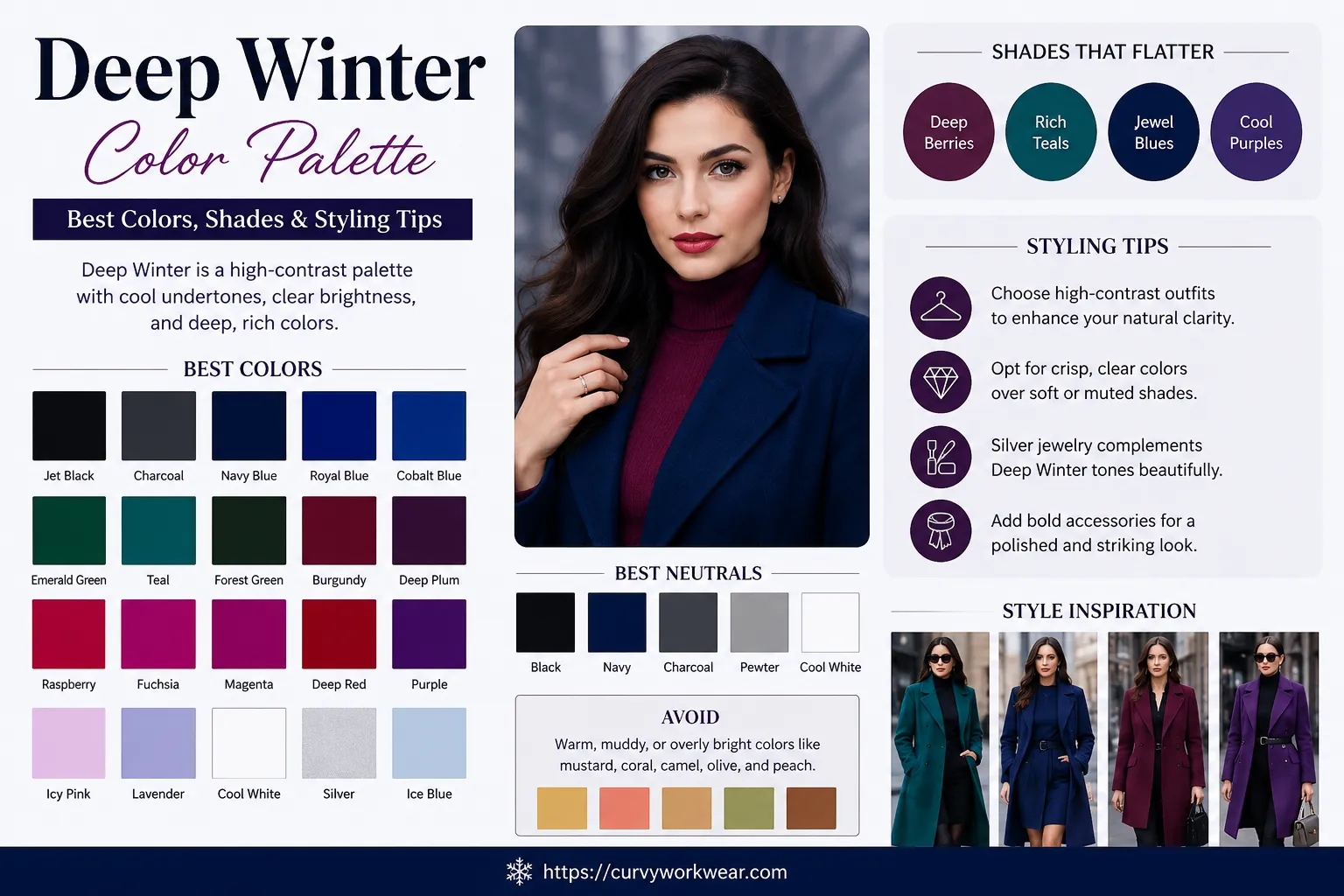
Have you ever put on an outfit that looked fine on the hanger but drained your face the moment you wore it? That’s usually not a style problem. It’s a color problem, and the deep winter color palette might be the fix you’re missing.
If you have dark hair, deep eyes, and skin with cool or neutral undertones, you may belong to this palette group. It’s bold, rich, and full of contrast, just like the person wearing it.
In this guide, we’ll break down what the deep winter color palette actually is. We’ll cover the best shades, the ones to avoid, and how to use this knowledge in your daily wardrobe. No fashion degree needed.
What Is the Deep Winter Color Palette?
Deep winter is one of the twelve palettes used in seasonal color analysis. This system groups people based on their natural coloring, not the season outside.
People with the deep winter type usually have dark hair. This includes black, dark brown, or deep espresso shades. They also have deep brown or dark eyes, and skin that leans cool or neutral. The key word here is “deep.” Everything about this coloring is rich and saturated, not soft or muted.
Think of anyone with jet black hair and striking, high-contrast features. That intensity is the whole point of the deep winter color palette.
How Deep Winter Differs From Other Winter Types
Seasonal color systems usually split winter into three types: cool winter, clear winter, and deep winter. Cool winter leans icy and blue-based. Clear winter is bright and high-contrast, almost like a vivid photo.
Deep winter colors, however, focus on depth and richness rather than brightness. The shades are dark and full, similar to a forest at dusk rather than a sunny sky. If jewel tones suit you better than pastel or icy colors, deep winter is likely your group. For a wider breakdown of all twelve seasons, The Concept Wardrobe’s seasonal guide is a useful starting point.
Best Colors for the Deep Winter Palette
The deep winter color palette works best with shades that are dark, saturated, and slightly cool. These colors match the natural intensity of dark hair and deep eyes instead of competing with them.
Rich Jewel Tones
Jewel tones sit at the heart of this palette. Think emerald green, sapphire blue, deep ruby red, and amethyst purple. These colors earned the name “jewel tones” for a reason. They carry the same depth and shine as gemstones, which is exactly what deep winter coloring needs.
Emerald green tends to look striking against dark hair and cool-toned skin. It’s a safe first color to try if you’re new to the deep winter color palette.
Deep, Cool Neutrals
Neutrals matter just as much as bold colors. For deep winter, the best neutrals are black, charcoal grey, navy, and pure white. These aren’t just “safe” choices. They actually boost the natural contrast that deep winter people already have.
Avoid neutrals like beige, camel, or ivory. These warm, soft shades can wash out deep winter features instead of highlighting them.
Bold Reds and Pinks
Skip anything pastel. Deep winter reds should be intense, like true red or deep wine red. Pink shades work best when they lean toward magenta or fuchsia rather than baby pink.
A deep magenta lipstick often looks more natural on deep winter skin than a soft coral one does. The rule of thumb is simple: go bold or skip it.
Colors to Avoid in the Deep Winter Palette
Not every shade complements everyone, and that’s perfectly fine. Understanding which colors to avoid can help you save both time and money.
Muted or Dusty Shades
Muted colors, like dusty rose, sage green, or soft mauve, tend to fight against the natural intensity of deep winter colors. These shades work better for soft summer or soft autumn palettes instead.
Warm, Earthy Tones
Warm oranges, mustard yellow, and golden browns can make deep winter skin look tired or sallow. These colors belong more to warm autumn palettes, where golden undertones take center stage.
Pale Pastels
Light pastels like baby blue, pale pink, or light lavender often look washed out next to dark hair and deep eyes. They simply don’t carry enough depth to match the natural contrast of this coloring.
Advantages and Disadvantages of the Deep Winter Palette
Knowing your palette has real upsides, but it also comes with a few limits worth understanding before you rebuild your wardrobe around it.
Advantages
- Faster shopping decisions. Once you know your best shades, you can skip items that were never going to suit you.
- A cohesive wardrobe. Pieces in the deep winter color palette tend to mix and match easily since they share the same depth and undertone.
- A polished, put-together look. Bold jewel tones and sharp neutrals often read as intentional and elegant rather than random.
- Less wasted spending. Fewer wrong-color purchases can mean fewer items left unworn in your closet.
Disadvantages
- It can feel restrictive. Some people miss wearing pastels or warm tones they personally love, even if those shades aren’t their “best” ones.
- Self-analysis isn’t always accurate. Lighting, camera filters, and personal bias can make it hard to judge your own undertone correctly at home.
- It’s a guide, not a rule. Real life includes uniforms, gifted clothing, and personal taste, so treating this palette as absolute can backfire.
- Professional draping costs money. A confirmed diagnosis from a certified color analyst is more reliable than online quizzes, but it isn’t free.
How to Build a Deep Winter Wardrobe
Once you know your best deep winter colors, the next step is putting them to use. You don’t need to throw out your whole closet. Start small and build from there.
Start With Your Basics
Begin with neutral basics in black, navy, and charcoal. These pieces, like blazers, trousers, and coats, form the foundation of almost any outfit. Because they already sit inside your palette, they pair easily with bolder pieces later. For outfit inspiration built around classic silhouettes, this sheath dress styling guide is a good place to start.
Add One Jewel Tone at a Time
Instead of buying five new colors at once, add one jewel tone first, like emerald or sapphire. See how it feels and how often you reach for it. Then slowly add ruby, amethyst, or true red.
Mix Bold With Neutral
A common styling trick pairs one bold jewel-tone piece with neutral basics. For example, an emerald green sweater with black trousers looks balanced, not overwhelming. Fabric choice matters too here; textured pieces like lace detailing can add interest without fighting your palette, as long as the color stays deep and cool.
Deep Winter Makeup and Hair Color Tips
Clothing isn’t the only place the deep winter color palette applies. Makeup and hair color choices matter too.
Makeup Shades That Work
For eyeshadow, look for deep plum, charcoal, or navy shades instead of light beige or shimmery gold. For lips, bold red or deep berry tones tend to look more natural than soft nudes. Browse more makeup shade ideas for inspiration on building out a routine around these tones.
Hair Color Considerations
If you color your hair, staying close to your natural depth usually works best. Deep espresso brown or jet black tends to suit deep winter coloring far better than warm caramel or honey blonde tones.
Before committing to a foundation or new hair shade, it also helps to confirm your undertone with a simple test. Maybelline’s undertone guide walks through a few quick ways to check at home.
Styling Tips for Everyday Life
Knowing your palette only helps if you can apply it in real life. Here are a few simple habits to build.
- Keep a small color swatch or photo of your best shades on your phone for quick reference while shopping.
- When trying a new color, hold it close to your face in natural light before buying.
- Don’t force pastels into your wardrobe just because they’re trending. Trends fade, but your natural coloring doesn’t.
- Use bold jewel tones for statement pieces like scarves, bags, or blazers if you’re not ready to wear them head-to-toe.
Over time, these small habits make outfit choices faster and far less stressful.
FAQ: Deep Winter Color Palette
What skin tone matches the deep winter color palette?
Deep winter usually suits skin with cool or neutral undertones, paired with dark hair and deep brown or dark eyes. The overall look carries strong natural contrast rather than a soft, blended appearance.
Can I be deep winter with warm skin undertones?
It’s uncommon but not impossible, since deep winter is defined mainly by depth and contrast rather than undertone alone. If you’re unsure, a professional color analysis can give a clearer answer than guessing at home.
What is the best lipstick color for deep winter?
True red, deep berry, or magenta shades usually work best. These bold, saturated tones match the natural intensity of dark hair and deep eyes far better than soft nude or pastel pink shades.
Is black a good color for deep winter?
Yes, black is one of the strongest neutrals in the deep winter color palette. It boosts natural contrast instead of flattening it, which is why so many deep winter wardrobes rely heavily on black basics.
How do I know if I’m a deep winter and not a deep autumn?
The main difference is undertone. Deep winter leans cool or neutral, while deep autumn leans warm. If jewel tones like emerald and sapphire suit you better than warm colors like rust or olive, you’re likely deep winter.
Conclusion
The deep winter color palette is all about embracing depth, contrast, and bold jewel tones instead of fighting your natural coloring. From emerald green to true red to classic black, these are the shades that make deep winter features stand out.
You don’t need to overhaul your closet overnight. Start with one or two colors from the deep winter color palette, see how they feel, and build from there. Once you find your best shades, getting dressed becomes a lot simpler, and a lot more fun.
Disclaimer: This article is meant for general styling guidance only. Color perception can shift with lighting, screen settings, and personal taste, so results may vary from person to person. For a confirmed diagnosis, consider a session with a certified color analyst rather than relying on self-assessment alone.