Picture a wedding dress, a christening gown, or a delicate curtain fluttering in the breeze. Chances are, white lace is involved. But what exactly makes this fabric so special, and why has it stayed popular for centuries?
White lace is an openwork fabric made by looping, twisting, or knotting threads into decorative patterns. It’s known for its delicate, see-through look and elegant texture. People use it in clothing, home decor, and even crafts.
If you’ve ever wondered what white lace really is, how many types exist, or how to style it, you’re in the right place. This guide breaks it all down in simple terms, so you can pick the right lace for your next project or outfit.
What Is White Lace?
White lace is a fine, decorative fabric made from cotton, silk, polyester, or a blend of these materials. Unlike solid fabrics, lace has open spaces woven right into its design. This gives it that airy, romantic feel.
The “white” part simply refers to the color. However, not all white lace looks the same. Some shades lean toward ivory or cream, while others are bright, stark white. This matters a lot when matching lace to a wedding dress or existing decor, since mismatched whites can look off.
A Quick Look at Its History
Lace-making began centuries ago in Europe, particularly in Italy and Belgium. Skilled artisans created it by hand using needles or bobbins, and it was originally a symbol of wealth and status.
Today, machines make most lace, which is why it’s now affordable and widely available. Still, handmade lace exists and is prized for its craftsmanship. Museums like the Victoria and Albert Museum hold large lace collections and are a good resource if you want to see historical examples up close.
Advantages and Disadvantages of White Lace
Before you buy or style white lace, it helps to know both its strengths and its limits. Like any fabric, it works well in some situations and less well in others.
Advantages
- Elegant look: Lace adds instant texture and detail, so even a simple outfit or room looks more put-together.
- Versatile: It works for weddings, casual wear, and home decor alike.
- Lightweight and breathable: Cotton-based lace is comfortable in warm weather.
- Timeless style: Lace doesn’t really go out of fashion; it just gets reinterpreted season after season.
Disadvantages
- Delicate fabric: Lace can tear or snag more easily than solid fabrics, especially handmade or fine varieties.
- Care requirements: Many lace pieces need hand washing, which takes more time than machine washing.
- Yellowing over time: White lace can turn yellow or dull if stored or cleaned improperly.
- Higher cost for quality: Well-made lace, especially Alençon or handmade styles, tends to cost more than plain fabric.
Knowing these trade-offs helps you decide where lace makes sense, such as a wedding dress, and where a sturdier fabric might serve you better, such as everyday workwear.
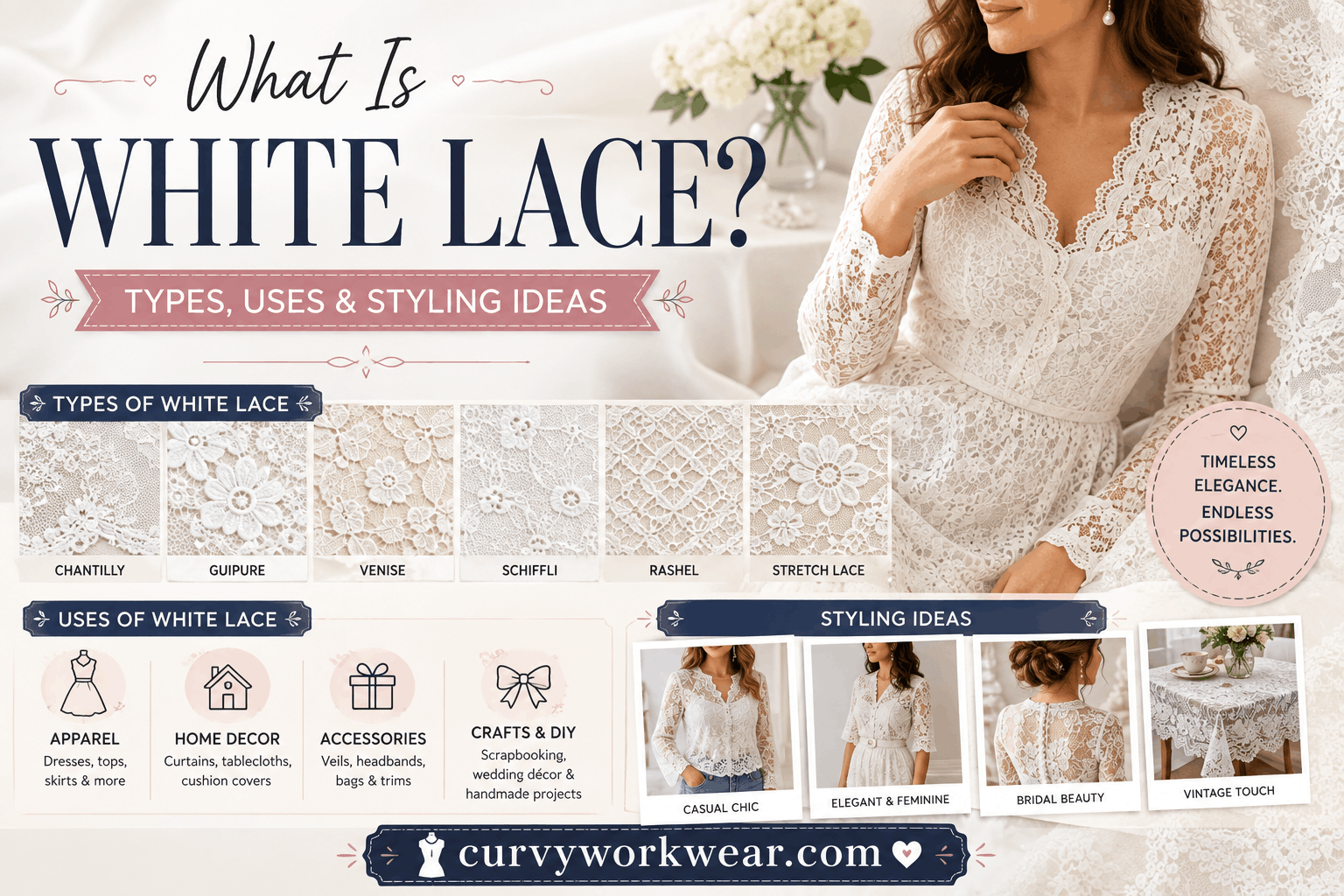
Types of White Lace
Not all lace is created equal. Knowing the different types of white lace helps you choose the right one for your needs, whether that’s a dress, a tablecloth, or a craft project.
1. Chantilly Lace
Chantilly lace is light, fine, and often has a floral or scroll pattern. It’s a favorite for wedding gowns and veils because of its delicate, romantic appearance. Moreover, its soft texture drapes beautifully over other fabrics.
2. Guipure Lace
Guipure lace is bolder and heavier than Chantilly. It doesn’t have a mesh background, so the pattern stands on its own, connected by small threads. This makes it sturdier and great for structured dresses or bold decor accents.
3. Alençon Lace
Named after a French town, Alençon lace features a solid outline around floral motifs, giving it a raised, 3D-like texture. It’s often used for high-end bridal gowns and adds a touch of luxury.
4. Venise Lace
Venise lace has a heavier, more textured look, often with intricate floral or geometric designs. Unlike Chantilly, it doesn’t rely on a net background, so it looks more solid and dramatic.
5. Crochet Lace
Crochet lace is made using a hook and thread, creating a handmade look with visible loops and knots. It’s commonly used for doilies, table runners, and vintage-style clothing.
6. Eyelet Lace
Eyelet lace, sometimes called broderie anglaise, has small round or oval holes stitched into the fabric. It has a fresh, simple look, making it popular for summer dresses and baby clothes.
In short, each type of white lace has its own personality. Some are delicate and romantic, while others are bold and structured. The right choice depends on the look you’re aiming for.
Common Uses of White Lace
White lace shows up in more places than you might expect. Let’s look at where it’s most commonly used.
Fashion and Clothing
This is probably the first thing that comes to mind. White lace is a staple in:
- Wedding dresses and veils
- Christening or baptism gowns
- Blouses and dresses for special occasions
- Lingerie and sleepwear
Designers love lace because it adds texture without needing extra embellishments. A plain white dress can look completely different with a lace overlay.
Lace details also show up in everyday fashion pieces, not just special occasion wear. If you enjoy exploring how different fabrics and textures work in outfits, this style guide on jorts shows how a casual item can be dressed up or down, a similar idea to how lace shifts a plain dress from simple to special.
Home Decor
White lace isn’t just for clothes. It also plays a big role in interior design, especially in vintage or cottagecore-style homes. Common uses include:
- Curtains and window treatments
- Tablecloths and table runners
- Decorative pillow covers
- Doilies under vases or lamps
For example, a simple white lace tablecloth can instantly make a plain dinner table feel like it’s set for a special occasion.
Crafts and DIY Projects
Crafters often use white lace for:
- Scrapbooking and card-making
- Gift wrapping accents
- Handmade jewelry
- Costume design
Because lace is easy to cut and glue, it’s a favorite material for beginners trying out DIY projects.
How to Choose the Right White Lace
With so many types available, picking the right one can feel overwhelming. Here’s a simple way to narrow it down.
Consider the Occasion
A wedding dress calls for something delicate like Chantilly or Alençon lace. On the other hand, a casual summer top might work better with lightweight eyelet lace.
Check the Fabric Blend
Cotton lace feels soft and breathable, making it good for warm weather or baby items. Polyester lace, however, tends to be more durable and budget-friendly, though it may not feel as soft against the skin.
Match the Shade of White
As mentioned earlier, white lace comes in different shades. Always compare lace samples in natural light before buying, especially if you’re matching it to an existing dress or decor piece.
Styling Ideas for White Lace
Now for the fun part: how to actually style white lace so it looks intentional, not outdated.
In Fashion
- Layer a lace top over a solid-colored slip dress for contrast.
- Add a lace trim to sleeves or hemlines for a subtle touch.
- Pair lace pieces with minimal jewelry, since the fabric already has plenty of detail.
In Home Decor
- Use lace curtains with simple, solid-colored walls to avoid a busy look.
- Layer a lace tablecloth over a solid one for depth.
- Frame a small piece of vintage lace as wall art.
Mixing Textures
White lace pairs beautifully with contrasting textures like leather, denim, or wood. For instance, a lace blouse with jeans instantly balances soft and casual elements. This mix keeps the look modern rather than overly formal.
Footwear matters too when you’re building a full lace-inspired outfit. If you’re not sure what shoes to pair with softer, textured pieces, this guide on espadrille shoes is a helpful next read for warm-weather styling.
Caring for White Lace
Lace is delicate, so proper care keeps it looking fresh for years.
- Hand wash when possible, using cold water and a gentle detergent.
- Avoid wringing it out; instead, press out excess water gently.
- Air dry flat to keep the pattern from stretching out of shape.
- Store folded in a breathable fabric bag, not plastic, to prevent yellowing.
If you’re unsure about a specific piece, especially an antique or heirloom item, it’s worth asking a professional cleaner for advice before washing it yourself.
FAQ
What is white lace made of?
White lace can be made from cotton, silk, polyester, or blends of these materials. Cotton and silk feel softer and more breathable, while polyester is often more affordable and durable.
What is the most popular type of white lace for weddings?
Chantilly and Alençon lace are the most popular choices for wedding gowns and veils. Both offer a delicate, romantic look that photographs beautifully.
Can white lace be dyed a different color?
Yes, lace made from natural fibers like cotton or silk can usually be dyed. However, polyester lace resists dye, so it’s best to check the fabric content first.
Is white lace only used in clothing?
No, white lace is also popular in home decor, such as curtains and tablecloths, as well as in crafts like scrapbooking and gift wrapping.
How do I keep white lace from turning yellow?
Store lace in a breathable fabric bag away from direct sunlight and humidity. Avoid plastic storage bags, since they can trap moisture and speed up yellowing over time.
Conclusion
White lace is more than just a pretty fabric. It’s a versatile material with a rich history, ranging from delicate Chantilly lace to bold Guipure designs. Whether you’re shopping for a wedding dress, decorating your home, or starting a craft project, understanding the types of white lace helps you make a better choice.
The next time you spot white lace in a store or online, you’ll know exactly what you’re looking at and how to use it well. Ready to add a touch of lace to your next project? Start with a small piece and see how it transforms your space or outfit.
Disclaimer: The washing and storage tips above are general guidelines. Always check the care label on your specific garment or fabric first, since blends and finishes can react differently. For valuable, antique, or heirloom lace, consult a professional textile cleaner rather than relying on general advice.