Summer is coming, and your feet deserve better than stiff sneakers. That’s where espadrilhas come in.
If you’ve ever seen a shoe with a soft canvas top and a woven rope-like sole, you’ve already met an espadrilha. But what are espadrilhas exactly, and why do so many people wear them every summer? This guide explains everything in simple, easy-to-understand language.
We’ll cover the history, the main types of espadrilles, popular espadrilhas styles, the pros and cons, and easy ways to wear them with your everyday outfits. By the end, you’ll know exactly which pair fits your life.
What Are Espadrilhas?
Espadrilhas (also spelled espadrilles) are casual shoes with a fabric upper and a flexible sole made from jute or braided rope. According to Merriam-Webster, the word simply means a shoe or sandal with a fabric upper and a flexible sole.
The name comes from “espardenya,” a word from the Catalan region of Spain, where the shoe style first became popular. These shoes were originally worn by farmers and workers in the Pyrenees mountains between Spain and France.
They were cheap to make, easy to wear, and perfect for hot weather. Over time, they moved from farm fields to fashion runways.
Why the Rope Sole Matters
The rope sole is what makes an espadrilha different from a regular shoe. It’s lightweight, bends with your foot, and lets air pass through.
This is why espadrilhas feel so breathable in summer. Unlike rubber soles, jute rope doesn’t trap heat against your foot.
A Quick Look at Their History
Espadrilles have a documented history in Europe going back to at least 1322, when the shoe was first described under its Catalan name, according to Wikipedia’s entry on espadrilles. Workers wore them because they were affordable and simple to make by hand.
The shoe later caught the attention of major cultural figures. As Esquire has reported, artists like Pablo Picasso and Salvador Dalí wore espadrilles long before they became a mainstream fashion item.
By the 1960s and 1970s, designers and celebrities started wearing espadrilles on vacation. That’s when the shoe shifted from workwear to a beach and resort staple.
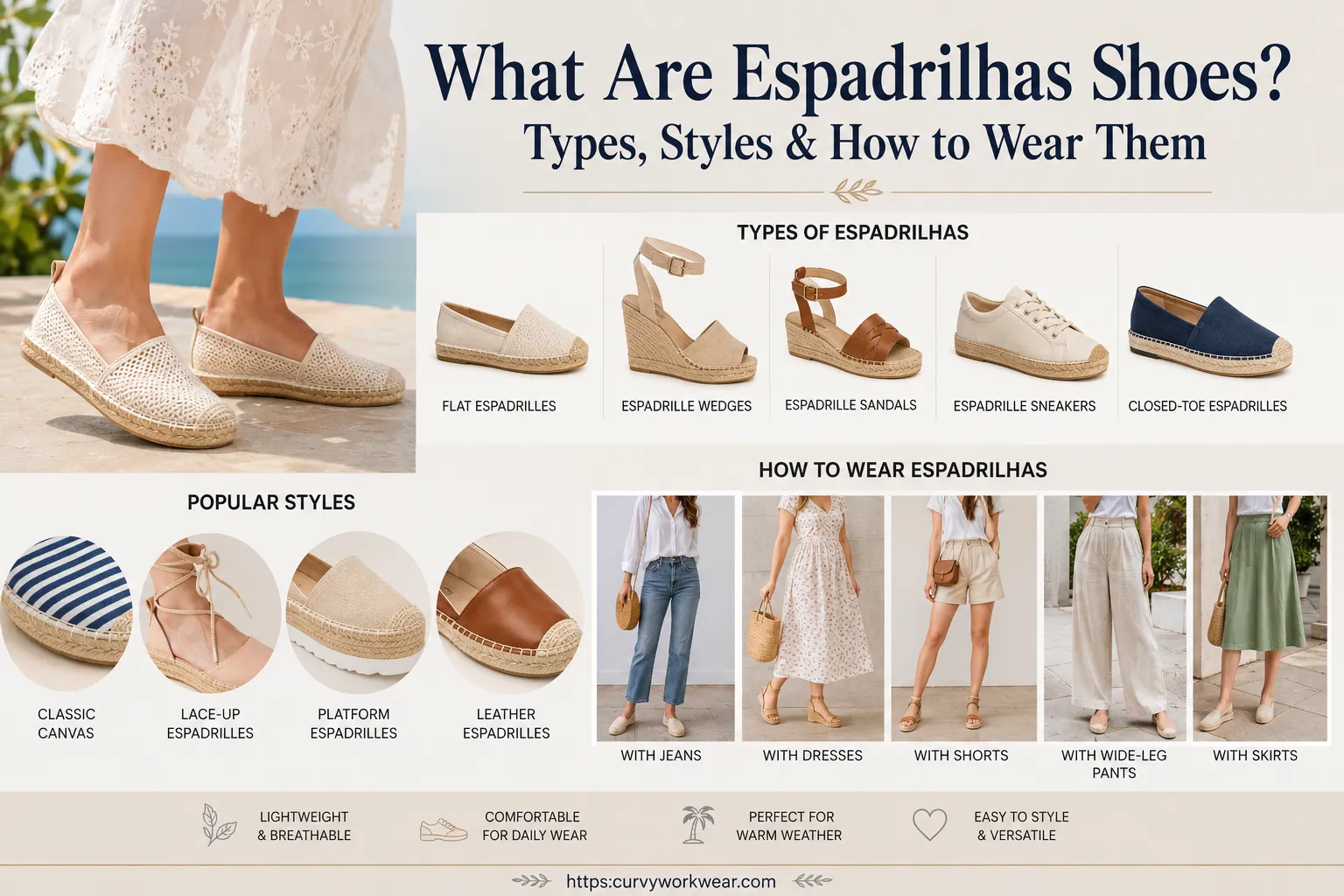
Types of Espadrilles You Should Know
Not all espadrilles look the same. Knowing the types of espadrilles helps you pick the right pair for the right occasion.
Flat Espadrilles
This is the original, classic style. Flat espadrilles sit low to the ground and have a simple slip-on design.
They work well for casual days, walking around town, or lounging at the beach. If you’re building a capsule shoe wardrobe, our Shoe Fashion section has more everyday footwear ideas.
Wedge Espadrilles
Wedge espadrilles have a raised heel made from stacked rope or jute. The wedge shape adds height without feeling as wobbly as a thin high heel.
Many women choose wedge espadrilles for summer weddings, garden parties, or dressy casual outfits.
Lace-Up Espadrilles
These have long fabric laces that wrap around the ankle or lower leg. They add a bit more structure and can be tied tighter for a secure fit.
Lace-up styles are popular in both flat and wedge versions.
Slip-On Espadrilles
Slip-on espadrilles have no laces at all. You simply step into them, which makes them fast and convenient.
This type is a favorite for men’s summer shoes and everyday casual wear.
Platform Espadrilles
Platform espadrilles have a thicker, flatter sole throughout the shoe, not just at the heel. This gives extra height while keeping the shoe more stable than a wedge.
They’re a good middle ground if you want lift without struggling to balance.
Popular Espadrilhas Styles
Beyond the basic shapes, espadrilhas styles also change based on materials, colors, and design details.
Canvas and Cotton Espadrilhas
The most traditional option uses plain canvas or cotton fabric. These are simple, affordable, and easy to match with almost any outfit.
Printed and Patterned Espadrilhas
Stripes, florals, and bold prints are common in modern espadrilhas. These add personality and work well for vacation or resort outfits.
Leather and Suede Espadrilhas
Some brands now make espadrilles with leather or suede uppers instead of canvas. These feel more polished and can be worn for slightly dressier occasions.
Espadrilhas with Ankle Straps or Ribbons
Many wedge espadrilhas include ribbons or straps that tie around the ankle. This detail adds a feminine touch and helps keep the shoe secure while walking.
Advantages and Disadvantages of Espadrilhas
Like any shoe, espadrilhas have upsides and downsides. Knowing both sides helps you decide if they fit your lifestyle.
Advantages
- Lightweight and breathable, thanks to the rope sole design.
- Easy to style with jeans, dresses, shorts, or linen pants.
- Affordable options are widely available compared to leather shoes.
- Good for warm weather, since fabric uppers don’t trap heat.
- Wide variety of styles, from flat to wedge to platform.
Disadvantages
- Not fully waterproof; the rope sole absorbs water and can weaken.
- Limited arch support, which may not suit people with foot conditions.
- Wedge styles can wobble on uneven ground, like cobblestones or grass.
- Shorter lifespan than leather or rubber-soled shoes, especially with frequent wear.
- Not ideal for winter, since canvas doesn’t insulate against cold.
How to Wear Espadrilhas
Now that you know the types and styles, let’s talk about actually wearing them. Espadrilhas are one of the easiest shoes to style because they go with so much.
With Casual Outfits
Pair flat or slip-on espadrilhas with jeans, shorts, or a simple sundress. This is the most common and comfortable way to wear them.
For example, roll up your jeans slightly so the shoe shows. It keeps the look relaxed but put together. For more pairing ideas, check out our Outfit Ideas section.
With Summer Dresses
Wedge espadrilhas look great under flowy summer dresses or skirts. The wedge adds height without the discomfort of a stiletto heel.
This combination works well for brunch, garden parties, or daytime events.
At the Beach or Resort
Flat espadrilhas are ideal for beach vacations, boat trips, or poolside lounging. They handle sand and light water splashes better than leather shoes.
However, they are not designed to get fully soaked, so keep them away from deep water.
For Semi-Formal Occasions
Leather or suede espadrilhas with a wedge heel can work for semi-formal summer events. Pair them with linen pants, a midi dress, or a light blazer.
Just avoid wearing them to strictly formal events like black-tie weddings. Our Style Guides section covers more dress-code breakdowns like this one.
Espadrilhas for Men vs Women
Espadrilhas aren’t only a women’s shoe. Men’s espadrilles are usually flat, slip-on, or lace-up, often in neutral colors like navy, beige, or white.
Women’s espadrilhas offer more variety, including wedges, platforms, and decorative details like bows or straps. Still, the core comfort and breathability stay the same for both.
How to Take Care of Your Espadrilhas
Espadrilles are casual shoes, but a little care helps them last longer.
- Avoid heavy rain or deep puddles, since the rope sole absorbs water.
- Spot-clean canvas fabric with a damp cloth and mild soap.
- Let them air dry naturally; never use a dryer or direct heat.
- Store them somewhere dry to prevent the rope sole from weakening.
With basic care, a good pair of espadrilhas can last through several summer seasons.
FAQ: Common Questions About Espadrilhas
What are espadrilhas made of?
Espadrilhas typically have a canvas, cotton, or leather upper and a sole made from jute or braided rope. Some modern versions add rubber to the bottom of the sole for extra durability.
Are espadrilhas comfortable for all-day wear?
Yes, flat espadrilhas are generally comfortable for all-day casual wear because they’re lightweight and flexible. Wedge styles may need a short break-in period, especially for long walking.
Can espadrilhas get wet?
Espadrilhas can handle light moisture, like a quick splash or damp sand, but they shouldn’t be soaked. The rope sole can weaken or lose shape if it stays wet for too long.
What is the difference between espadrilles and sneakers?
Espadrilles use a soft fabric upper and a flexible rope sole, while sneakers usually have a rubber sole and more cushioning. Espadrilles are better for warm, casual settings, while sneakers suit activity and support.
Are espadrilhas in style right now?
Espadrilhas remain a popular summer shoe choice year after year, especially in warm-weather fashion. Trends around color and print change, but the classic silhouette stays relevant.
Conclusion
Espadrilhas are a simple, comfortable shoe with a long history and a lot of style options. From flat and slip-on designs to wedges and platforms, there’s a type of espadrille for nearly every outfit and occasion, though they do come with trade-offs like limited arch support and low water resistance.
Now that you understand what espadrilhas are, their pros and cons, and how to wear them, picking your next pair should feel a lot easier. Try starting with a classic flat or slip-on style, then build your collection from there as you find the espadrilhas styles that fit your life best.
Disclaimer: This article is for general informational and styling purposes only. It is not medical or podiatric advice. If you have foot pain, arch problems, or a diagnosed condition, please consult a podiatrist or healthcare professional before choosing footwear.