
Walk past any perfume counter and you’ll smell it before you see it: soft rose, sweet jasmine, or a hint of fresh peony in the air. That’s ladies floral perfume at work, and it’s one of the most loved fragrance styles in the world.
But what actually makes a perfume “floral”? Is it just flower scents, or is there more to it? If you’ve ever felt confused standing in front of a wall of perfume bottles, you’re not alone.
This guide breaks down everything you need to know about ladies floral perfume, from the notes that build the scent to the different types you’ll come across while shopping. We’ll also cover the real advantages and disadvantages of wearing floral scents, so you get a balanced picture, not just a sales pitch. By the end, you’ll be able to walk into any store, or browse our fragrance section here on the blog, and know exactly what to look for.
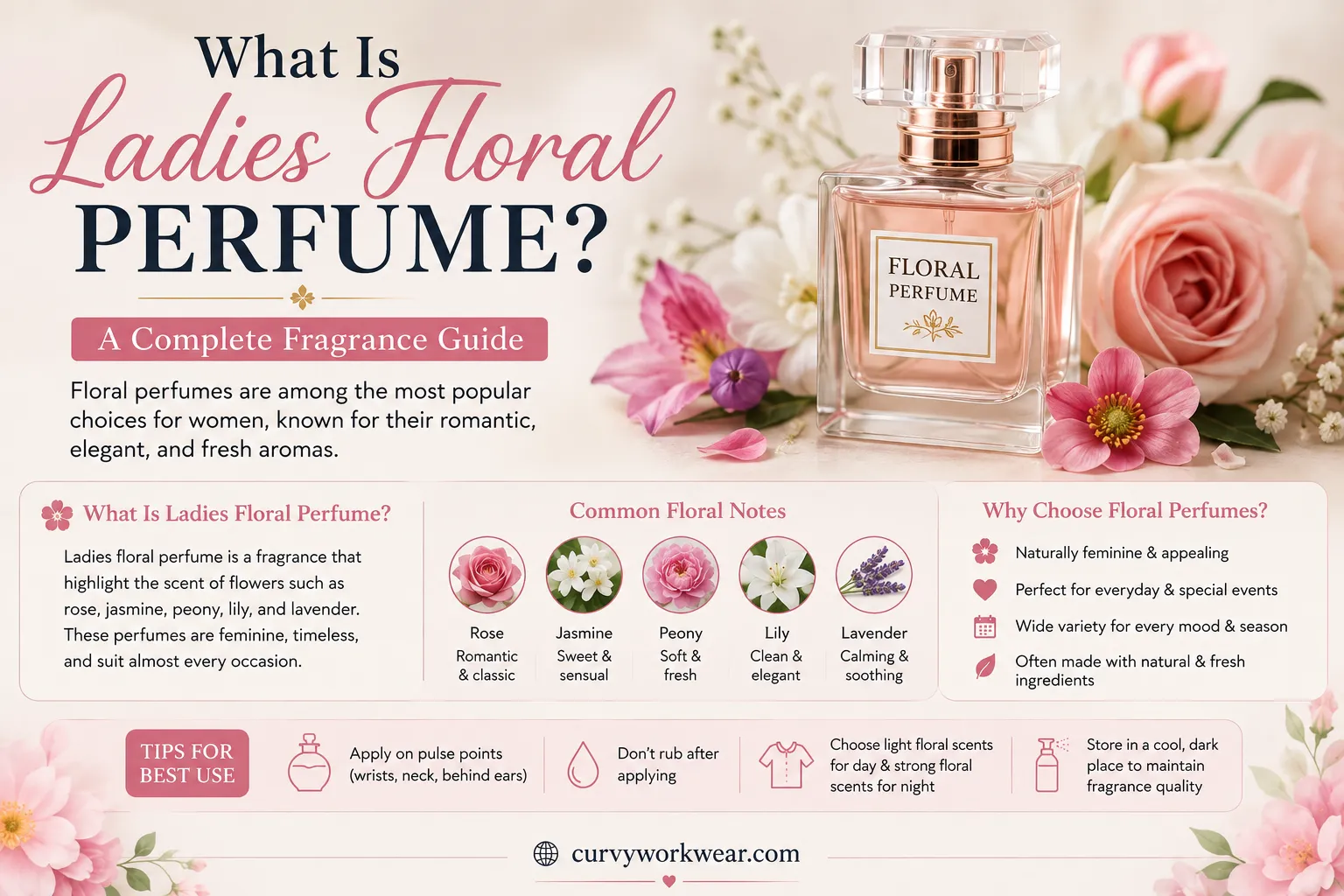
What Is Ladies Floral Perfume?
Ladies floral perfume is a fragrance built mainly around flower scents. Think rose, jasmine, lily of the valley, or peony. These flower notes form the heart of the perfume, giving it a soft, feminine, and often romantic character.
Floral is one of the oldest and biggest fragrance families in perfumery. Long before modern perfume bottles existed, people crushed real flower petals to create scented oils. Today, most floral perfumes use a mix of natural flower extracts and lab-made scent molecules that recreate flower smells more affordably.
That doesn’t mean floral perfumes are simple, though. A single floral perfume can blend five, ten, or even more ingredients to create one balanced scent. The flower notes usually take center stage. They’re often supported by fruity, woody, or musky touches in the background.
A Short History of Ladies Floral Perfume
Ladies floral perfume isn’t a modern invention. People have been capturing flower scents for thousands of years, long before glass bottles or spray pumps existed.
Ancient Egyptians, Greeks, and Romans crushed flower petals, leaves, and resins to make scented oils. These were worn on the body, burned as incense in temples, and even used in early medicine for skin and lung issues. Perfume back then was also a status symbol, worn by royalty, athletes, and priests.
Archaeologists have found real proof of this. Excavations at Pyrgos in Cyprus uncovered what’s considered one of the oldest perfume-making workshops in the world, dating back nearly 4,000 years. That means people were already blending flower-based scents long before recorded fragrance history properly began.
This long history is part of why floral perfume still feels so timeless today. It’s one of the few scent styles that has stayed relevant across thousands of years of changing fashion.
Understanding Ladies Floral Perfume Notes
To really understand ladies floral perfume notes, it helps to know how perfumers build a scent. Every perfume, floral or not, is made of three layers called notes, a structure sometimes described in perfumery as the “fragrance pyramid,” as explained on Wikipedia’s overview of perfume notes. Each layer appears at a different time as the perfume dries on your skin.
Top Notes
Top notes are what you smell first, right after spraying. They’re light and fade quickly, usually within 15 to 30 minutes. In floral perfumes, top notes are often citrusy or green, like bergamot, mandarin, or fresh leaves, added to create a bright first impression.
Middle Notes (Heart Notes)
This is where the floral part really shines. Middle notes appear once the top notes fade and can last a few hours. Rose, jasmine, ylang-ylang, and peony are classic middle notes that give a floral perfume its main identity.
Base Notes
Base notes are the deepest layer. They show up last and stick around the longest, sometimes for many hours. Common base notes in floral perfumes include musk, sandalwood, amber, and vanilla, which add warmth and help the flower scents last longer on skin.
The Secret of “Mute Flowers”
Here’s something most beginner guides skip: not every flower can actually be turned into perfume directly. Delicate flowers like violet, peony, lily of the valley, and gardenia are known in the industry as “mute flowers.” Their true scent can’t be captured through extraction, so perfumers recreate it in the lab using a careful blend of other natural and synthetic ingredients.
That’s also why heavier white flowers like jasmine and tuberose smell so rich and almost heady up close. They naturally contain a compound called indole, which in small amounts smells sweet and floral, and helps give these notes their intense, slightly narcotic character.
Rose is one of the few flowers that can go through steam distillation to make pure rose essence, but it’s an expensive process. It can take around four tons of rose petals to produce just one kilogram of rose essence. That’s part of why real rose oil costs so much more than synthetic rose accords.
Types of Ladies Floral Perfume
Not all ladies floral perfume smells the same. In fact, there are several floral fragrance types, and each one has its own personality. Knowing these types makes it much easier to pick a scent you’ll actually enjoy wearing.
Single Floral (Soliflore)
A soliflore focuses on one flower and lets it lead the whole scent. A rose soliflore, for example, is built to smell as close to a real rose as possible. These perfumes are simple, honest, and great if you already know which flower you love.
Floral Bouquet
A floral bouquet blends several flowers together instead of highlighting just one. This is the most common type of floral perfume, since it gives perfumers room to create a fuller, more layered scent. Many popular women’s perfumes fall into this category.
Floral Oriental (Floral Amber)
This type pairs flowers with warm, spicy, or sweet base notes like vanilla, amber, or spices. The result feels rich and cozy, often better suited for evening wear or cooler weather.
Floral Fruity
Floral fruity perfumes mix flower notes with fruit notes like peach, apple, or berries. These scents tend to feel young, playful, and easygoing, which is why they’re popular with beginners and younger wearers.
Floral Woody
Here, flowers are balanced with woody notes such as sandalwood, cedar, or vetiver. This combination feels more grounded and sophisticated, often chosen by women who want a floral scent that doesn’t feel too sweet.
Floral Green
Floral green perfumes add fresh, leafy, or grassy notes to the flower base. They smell crisp and natural, almost like walking through a garden after rain, and work well for daytime or warm-weather wear.
Popular Notes Used in Ladies Floral Perfume
Some flowers show up again and again in women’s floral fragrance because they blend well and smell great on skin. Here are a few of the most common ones.
- Rose – Classic, romantic, and one of the most used notes in all of perfumery
- Jasmine – Rich, slightly sweet, and often described as intoxicating
- Peony – Soft, fresh, and slightly powdery
- Lily of the Valley – Clean, delicate, and green-tinged
- Tuberose – Bold, creamy, and heady, often used in stronger evening perfumes
- Ylang-Ylang – Sweet, tropical, and slightly fruity
- Violet – Soft, powdery, with a hint of sweetness
- Iris (Orris) – Cool, powdery, and elegant, often considered a luxury note
- Magnolia – Light, citrusy-floral, and fresh
- Gardenia – Creamy, tropical, and slightly buttery
Perfumers often combine two or three of these notes rather than using just one. That’s why two rose-based perfumes can smell quite different from each other.
Advantages and Disadvantages of Ladies Floral Perfume
Floral scents are popular for good reason, but they aren’t the right fit for every person or every occasion. Here’s a balanced look at both sides before you commit to a bottle.
Advantages
- Wide appeal: Floral notes feel familiar and pleasant to most noses, which makes them a safe, versatile choice for daily wear.
- Range of moods: From light floral greens to deep floral orientals, there’s a version for almost any season or occasion.
- Emotional connection: Because scent is closely tied to memory, floral perfume can evoke comfort, nostalgia, or romance in a way few other fragrance families do.
- Long fragrance history: Floral scents have stayed relevant for thousands of years, so formulas and quality standards are well established.
- Layering flexibility: Floral notes blend easily with fruity, woody, or oriental accords, giving you more room to personalize a scent.
Disadvantages
- Can feel overpowering: Heavier florals like tuberose or gardenia can smell too strong in enclosed spaces such as offices or elevators.
- Fading top notes: Light florals, especially floral greens and floral fruities, tend to fade faster than woody or musky fragrances.
- Risk of skin sensitivity: Fragrance ingredients, floral ones included, are a recognized cause of allergic contact dermatitis in a portion of the population, as documented by DermNet NZ’s overview of fragrance allergy.
- “Mute flower” limitations: Since some flowers can’t be naturally extracted, certain floral perfumes are lab interpretations rather than a true match to the real bloom.
- Cost of natural extracts: Genuine steam-distilled florals, such as rose otto, are expensive, which pushes up the price of higher-concentration floral perfumes.
Why Ladies Floral Perfume Is So Popular
Floral scents have stayed popular for one simple reason: they feel natural and familiar. Most people grow up around flowers in gardens, gifts, or celebrations, so floral smells often carry a sense of comfort.
Floral is also widely considered the largest and most popular fragrance family in perfumery, and it has been the dominant category in women’s fragrance since advances in scent extraction made flower-based perfumes more accessible in the 19th century. Perfume experts often use a classification tool called the Fragrance Wheel, created by perfume historian Michael Edwards, to map out floral and its many sub-types alongside other families like woody, fresh, and oriental.
Floral perfumes are also versatile. Light floral scents work fine for the office or daytime errands, while richer floral orientals suit dinner dates or evening events. This range is part of why ladies floral perfume remains one of the most sought-after categories on the market. You can browse more of our beauty coverage in the Curvy Workwear Beauty section if you want tips on pairing fragrance with your everyday style.
There’s also an emotional side to it. Scent is closely linked to memory, so a floral perfume can remind someone of their grandmother’s garden or a wedding bouquet. That connection is hard to replicate with other fragrance families.
How to Choose the Right Ladies Floral Perfume for You
Picking the right ladies floral perfume isn’t just about liking the smell in the bottle. A few small factors can change how a scent actually performs on you.
Test It on Your Skin, Not Just Paper
A perfume can smell different on skin than on a paper strip, since your skin’s natural oils and warmth change how the notes develop. Always spray a small amount on your wrist and wait at least 15 to 20 minutes before deciding.
Think About the Occasion
Light floral bouquets or floral greens work well for daily wear, school, or work. Floral orientals with deeper base notes are better saved for evenings, dinners, or special occasions.
Match It to the Season
Fresh floral greens and floral fruity scents feel more suited to spring and summer. Floral orientals, with their warmer, spicier base, tend to feel cozier in fall and winter.
Start with Samples
If you’re new to ladies floral perfume, buying full-size bottles right away can get expensive. Most perfume counters offer small samples, and you can also check our Fragrance archive on Curvy Workwear for more scent guides, so you can test a few floral fragrance types before committing to a full bottle.
How to Apply Ladies Floral Perfume the Right Way
Even the best ladies floral perfume won’t perform well if it’s applied the wrong way. A few small habits make a real difference in how long it lasts and how it develops on your skin.
- Spray on pulse points: Wrists, neck, and behind the ears generate natural warmth, which helps the fragrance diffuse steadily through the day.
- Don’t rub your wrists together: It feels instinctive, but rubbing crushes the top notes and can actually change how the perfume smells and shortens how long it lasts. Let it dry naturally instead.
- Apply after a shower: Skin that’s slightly damp and warm holds fragrance better than dry skin.
- Layer for longer wear: Using an unscented or matching-scent body lotion underneath your perfume helps floral notes stick around longer, especially light florals that tend to fade fast.
Floral Perfume vs. Other Fragrance Families
Floral isn’t the only fragrance family out there. Understanding how it compares to others makes it easier to know if floral is really the right fit for you.
- Floral vs. Fresh: Fresh perfumes lean on citrus, aquatic, or green notes and feel light and clean. Floral perfumes are softer and more romantic in comparison.
- Floral vs. Woody: Woody perfumes center on notes like cedar, sandalwood, or oud, giving off a warm, earthy feel. Floral perfumes are usually lighter and sweeter.
- Floral vs. Oriental: Pure oriental perfumes lean heavily on spice, vanilla, and resin. Floral orientals sit in between, blending flowers with that same warmth.
Many perfumes actually blend across these families, which is why fragrance labels can list a scent as “floral woody” or “floral fruity” instead of one single category.
FAQ: Ladies Floral Perfume
What is the most popular floral note in perfume?
Rose is generally considered the most widely used floral note in perfumery. It appears in countless women’s perfumes, either as the main note or as part of a larger floral blend.
Are floral perfumes only for older women?
No, that’s a common myth. Floral fruity and floral green perfumes are popular with younger wearers, while floral oriental blends tend to suit those who prefer richer, more mature scents.
How long does floral perfume usually last on skin?
This depends on the perfume’s concentration. Eau de parfum versions of floral scents generally last longer, often 6 to 8 hours, while eau de toilette versions tend to fade sooner, usually within 3 to 5 hours.
Can floral perfume be worn in summer?
Yes, in fact many floral fragrance types, like floral green or floral fruity, are specifically designed to feel light and refreshing, which makes them a good match for warm weather.
What’s the difference between floral and floral oriental perfumes?
Floral perfumes focus mainly on flower notes with a light, fresh base. Floral oriental perfumes still feature flowers, but add warm, sweet, or spicy base notes like vanilla or amber for a richer, deeper finish.
Why do some floral perfumes smell nothing like the real flower?
Some flowers, like violet, peony, and lily of the valley, can’t be extracted the way rose or jasmine can. Perfumers call these “mute flowers” and have to recreate their scent using other natural and synthetic ingredients, so the perfume version is really an interpretation rather than an exact copy.
Are floral perfume ingredients regulated for safety?
Yes. Fragrance houses generally follow usage limits set by the International Fragrance Association (IFRA), which restricts or caps ingredients based on safety research, though individual sensitivity can still vary from person to person.
Conclusion
Ladies floral perfume covers a lot more ground than most people expect. From light floral greens to rich floral orientals, there’s a version of this fragrance family for almost every mood, season, and occasion, along with a few trade-offs worth knowing before you buy.
Once you understand ladies floral perfume notes, the main floral fragrance types, and the real pros and cons, choosing a scent stops feeling like guesswork. Try a few samples, test them on your skin, and pay attention to how each one changes over a few hours.
The right floral perfume isn’t the one that smells best in the store. It’s the one that still smells good on you, and comfortable on your skin, by the end of the day.
Disclaimer: This section is for general information only and isn’t medical advice. If you have sensitive skin, a history of allergies, or asthma, patch-test any new floral perfume on a small area of skin and wait 24 to 48 hours before full use, and speak with a dermatologist or allergist if you notice irritation.