Shea butter is a popular natural ingredient in many hair care products. People use shea butter for hair because of its rich texture and its ability to soften dry strands. It may help reduce frizz, improve manageability, and protect hair from friction, which is why many people with curly, coily, and textured hair rely on it. But is it right for every hair type? Its thick consistency can weigh down fine hair or leave unwanted buildup when overused.
Understanding the benefits, uses, and possible drawbacks can help you decide whether it belongs in your routine. This guide covers everything you need to know before trying it.
What Is Shea Butter and How Does It Work on Hair?
Shea butter comes from the nuts of the shea tree. It contains fats that help soften hair and reduce moisture loss. Many hair care products use shea butter because of its rich texture. People also apply it directly to dry hair.
Shea butter does not add water to hair. Instead, its oily texture helps slow moisture loss and smooths the hair surface. This can make rough strands feel softer and easier to manage. However, its thick consistency may feel heavy on fine hair.
Benefits of Shea Butter for Hair
Shea butter offers several benefits for dry, curly, and textured hair. Its effects depend on your hair type and how much you use. Here are some common ways it can support your hair care routine.
Helps Moisturize Dry Hair
Dry hair often feels rough and becomes harder to manage. Shea butter helps reduce moisture loss by coating the hair strands. This can leave hair feeling softer and smoother. It works best when paired with a suitable moisturizing routine.
Helps Reduce Frizz and Improve Hair Manageability
Frizz often appears when hair becomes dry or reacts to humidity. Shea butter can smooth the outer surface of hair strands. This may help reduce flyaways and make styling easier. Use a small amount to avoid leaving your hair greasy.
Softens Hair and Adds Shine
Rough hair can look dull and feel unpleasant to touch. Shea butter coats the strands and helps create a smoother surface. This can make hair feel softer and appear shinier. However, using too much may leave a heavy residue.
Helps Reduce Breakage Caused by Friction
Hair can break when strands rub against clothing, brushes, or each other. Shea butter adds lubrication, which may reduce friction during styling. This can help limit some breakage caused by handling. However, it cannot repair split ends or reverse existing hair damage.
Supports Curly and Coily Hair Care
Curly and coily hair often needs extra care to manage dryness. Shea butter can help soften curls and reduce friction between strands. It may also make detangling and styling easier. Start with a small amount and adjust it to your hair’s needs.
Benefits of Shea Butter for Different Hair Concerns
| Hair Concern | Potential Benefit |
|---|---|
| Dry hair | Helps reduce moisture loss |
| Frizzy hair | Helps smooth the hair surface |
| Curly hair | Helps improve manageability |
| Rough ends | Adds softness and lubrication |
| Coily hair | Helps reduce friction between strands |
Possible Drawbacks of Shea Butter for Hair
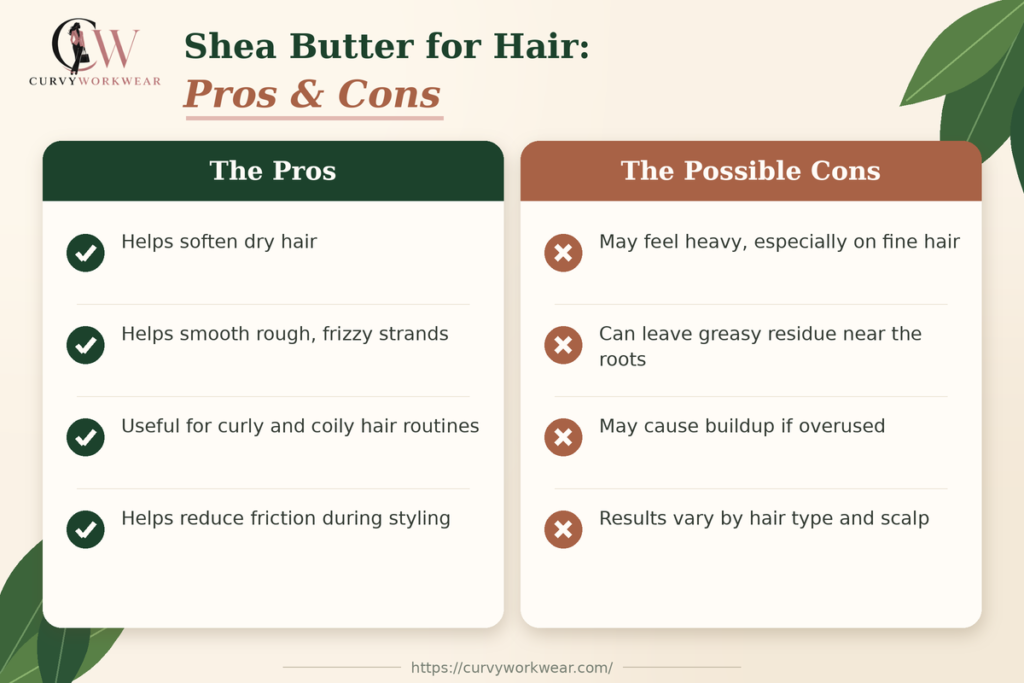
Shea butter can help soften hair, but it does not suit everyone. Its thick texture may cause problems for certain hair types. Using too much can also make hair harder to wash. Understanding these drawbacks helps you decide how to use it.
Can Weigh Down Fine or Thin Hair
Fine hair can lose its natural volume when products feel too heavy. Shea butter has a rich texture that may flatten delicate strands. This can make hair look limp and less full. If you have fine hair, start with a tiny amount. Apply it mainly to your ends rather than your roots.
May Cause Product Buildup
Using too much shea butter can leave residue on your hair. This buildup may make strands feel coated, dull, or difficult to clean. Applying it repeatedly without proper washing can increase this problem. Use a small amount and wash your hair when needed. A clarifying shampoo can help remove leftover product.
Can Leave Hair Greasy
Shea butter contains fats that give it a rich, oily texture. Applying too much can leave your hair looking greasy. This happens more easily when you use it near your roots. Spread a small amount between your palms before applying it. Then focus on dry lengths and ends. If your roots still look oily between washes, you can refresh them with dry shampoo.
May Not Suit Every Scalp
Some people may experience irritation from shea butter or other product ingredients. Applying it to an already irritated scalp may worsen discomfort. People with sensitive skin should introduce new products carefully. Stop using the product if you notice itching, redness, or irritation. Seek medical advice if symptoms persist or become severe.
Shea Butter Pros and Cons
| Pros | Possible Cons |
|---|---|
| Helps soften dry hair | May feel heavy |
| Helps smooth rough strands | Can leave greasy residue |
| Useful for curly hair routines | May cause buildup |
| Helps reduce friction | Results vary by hair type |
How to Use Shea Butter for Hair
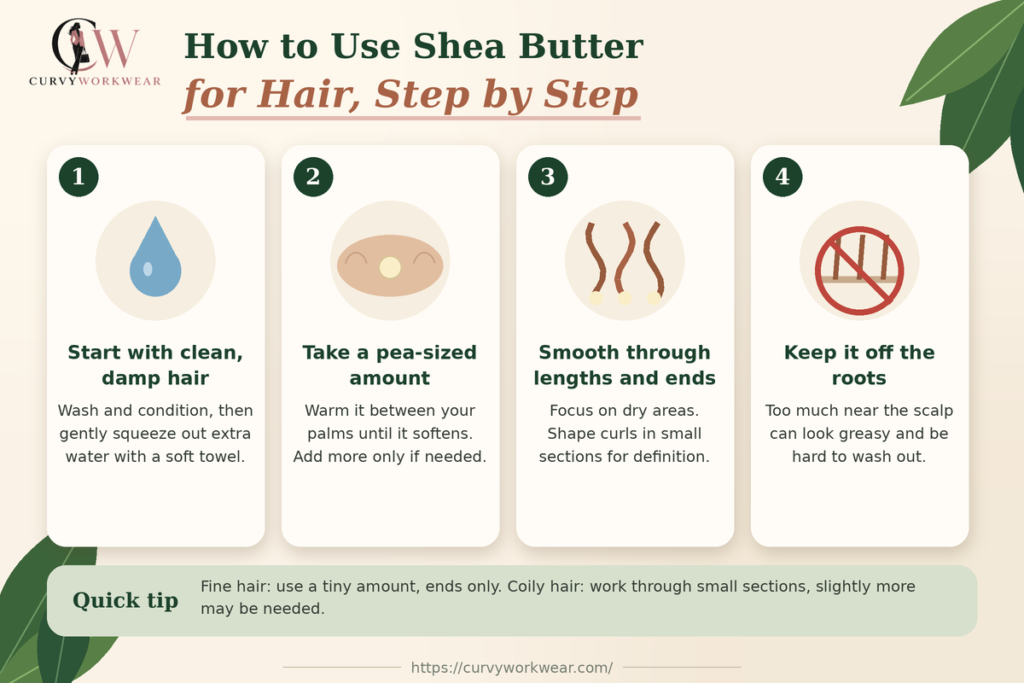
Using shea butter correctly can help you enjoy its benefits without excess buildup. Start with a small amount and see how your hair responds. Your hair type and routine will help determine the best method. Here are some simple ways to use shea butter at home.
Apply Shea Butter to Damp Hair
Start by washing your hair with a suitable shampoo and conditioner. Gently squeeze out excess water with a soft towel. Take a small amount of shea butter and rub it between your palms. Apply it lightly to your hair lengths and ends. Damp hair can help spread the product more evenly. Avoid using too much, especially if your hair is fine.
Use Shea Butter as a Pre-Shampoo Treatment
Shea butter can work as a treatment before washing your hair. Apply a small amount to dry hair lengths and ends. Leave it on for about 15–30 minutes before shampooing. This may help reduce friction during washing and leave hair feeling softer. Rinse and shampoo thoroughly to remove any remaining residue. Adjust the amount if your hair feels greasy afterward.
Use Shea Butter to Style Curly Hair
Shea butter can help smooth curls and improve their manageability. First, apply a lightweight moisturizer or leave-in conditioner if needed. Rub a tiny amount of shea butter between your palms. Gently smooth it over your curls, focusing on dry areas. Avoid applying too much, as heavy layers may flatten curls. You can also shape individual sections for better definition.
Mix Shea Butter With Other Hair Products
You can use shea butter alongside other hair care products. For example, apply a moisturizing leave-in conditioner before using a little shea butter. The conditioner provides moisture, while shea butter helps reduce moisture loss. Avoid mixing several products together without checking their ingredients. Some combinations may feel too heavy or leave unwanted residue. Follow product instructions and test new combinations carefully.
How Much Shea Butter Should You Apply?
The right amount depends on your hair’s thickness, length, and texture. Start with a pea-sized amount for short or fine hair. Longer, thicker, or coily hair may need slightly more. Warm the butter between your palms before applying it. Add a little more only when necessary. If your hair feels greasy or flat, reduce the amount next time.
Is Shea Butter Good for Different Hair Types?
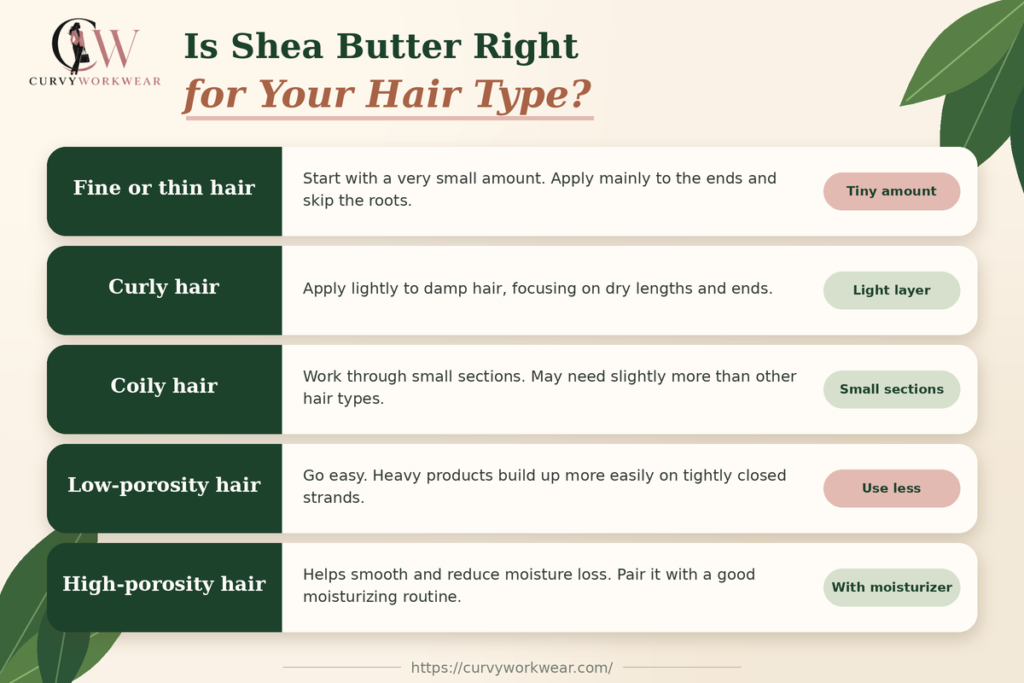
Shea butter can work well for some hair types but not others. Your hair’s texture, thickness, and condition affect how it feels. The right amount also makes a difference. Understanding your hair type can help you decide whether shea butter suits your routine.
Shea Butter for Curly and Coily Hair
Curly and coily hair can sometimes feel dry and become difficult to manage. Shea butter may help soften strands and reduce friction during styling. It can also help smooth frizz and improve curl manageability. Apply a small amount to damp hair for easier distribution. Focus on dry lengths and ends rather than coating every strand heavily. If you have wavy hair, use even less, since light waves can lose their shape under heavy products.
Shea Butter for Fine and Thin Hair
Fine or thin hair may struggle with rich, heavy products. Shea butter can weigh down strands and reduce their natural volume. It may also leave hair looking greasy when you apply too much. If you want to try it, start with a tiny amount. Apply it mainly to your ends and avoid your roots.
Shea Butter for Low-Porosity Hair
Low-porosity hair often resists absorbing water quickly because its outer layer lies tightly. Heavy products can build up on this hair type more easily. Shea butter may feel too rich when applied in large amounts. Start with a small amount and check how your hair responds. A lightweight conditioner may work better for regular moisture.
Shea Butter for High-Porosity Hair
High-porosity hair can lose moisture more easily than some other hair types. This may happen naturally or because of chemical treatments and heat damage. Shea butter can help smooth the hair and reduce moisture loss. However, it does not repair damaged hair or restore its structure. Combine it with a suitable conditioner and gentle hair care habits.
Shea Butter for Dry or Damaged Hair
Dry hair may benefit from shea butter’s softening and smoothing effects. It can help reduce friction when you comb or style your hair. This may limit some breakage caused by rough handling. However, shea butter cannot repair split ends or reverse existing damage. Use it alongside conditioner and reduce excessive heat styling.
How to Use Shea Butter Based on Your Hair Type
| Hair Type | Recommended Approach |
|---|---|
| Fine hair | Start with a very small amount |
| Curly hair | Apply lightly to damp hair |
| Coily hair | Work through small sections |
| Low-porosity hair | Avoid applying too much |
| High-porosity hair | Use alongside a suitable moisturizing routine |
Shea Butter vs. Other Hair Oils and Butters
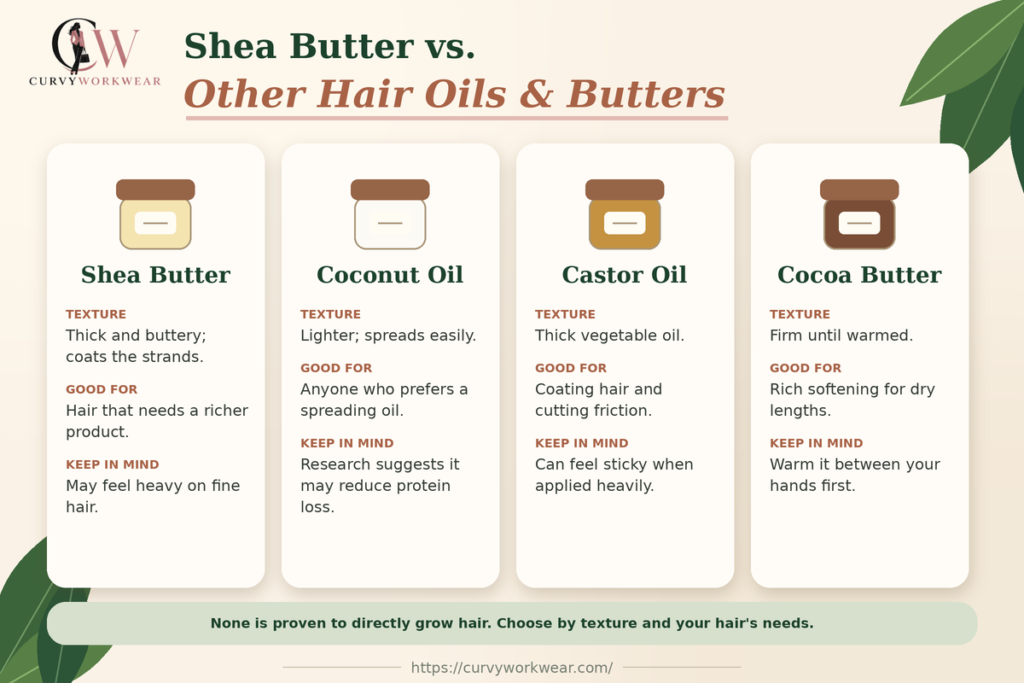
Shea butter is one of several ingredients used in hair care products. Coconut oil, castor oil, and cocoa butter offer different benefits. Their textures and effects can vary across hair types. Comparing them can help you choose a suitable product.
Shea Butter vs. Coconut Oil
Shea butter and coconut oil both contain fats that condition hair. Shea butter has a thick, buttery texture that coats hair strands. Coconut oil is lighter in texture and spreads more easily. Research suggests coconut oil can reduce protein loss from hair. Evidence for similar effects from shea butter remains limited. Choose coconut oil if you prefer a spreading oil. Try shea butter if your hair needs a richer product.
Shea Butter vs. Castor Oil
Castor oil is a thick vegetable oil used in many hair products. Shea butter is a solid butter that softens when warmed. Both can coat hair and help reduce friction during styling. Castor oil can feel sticky, especially when applied heavily. Shea butter may feel heavier on fine hair. Neither ingredient has strong evidence proving it directly increases hair growth. Choose based on texture, comfort, and your hair’s needs.
Shea Butter vs. Cocoa Butter
Shea butter and cocoa butter both come from plant sources. Shea butter comes from shea tree nuts, while cocoa butter comes from cocoa beans. Both have rich textures and can help soften hair. Cocoa butter may feel firm before you warm it between your hands. Shea butter often spreads more easily once softened. Neither is automatically better for every hair type. Test a small amount before adding either product to your routine.
How to Choose the Right Shea Butter Hair Product
Choosing the right shea butter product depends on your hair type. Consider its texture, ingredients, and how you plan to use it. A suitable product should fit comfortably into your regular routine.
Raw Shea Butter vs. Refined Shea Butter
Raw shea butter receives less processing than refined shea butter. It may retain more of its natural scent and colour. Refined shea butter undergoes extra processing to create a more consistent product. Its colour and scent can vary depending on the refining method. Both types can soften hair when used appropriately. Neither type is proven to promote hair growth directly. Choose the one you prefer and check its ingredient label.
Shea Butter Hair Creams vs. Pure Shea Butter
Pure shea butter contains shea butter without added ingredients. Its thick texture may make spreading difficult for some people. Hair creams often combine shea butter with water, oils, or conditioning agents. These formulas may spread more easily and feel less heavy. If you are checking a brand before buying, you can read whether Nylah’s Naturals is a beauty brand first. However, their effects depend on the complete formula. Check the label to understand what each product contains. Choose pure butter for a simple formula or cream for easier application.
Ingredients to Check Before Buying
Always read the ingredient list before choosing a hair product. Look for shea butter if you want it as a main ingredient. Water and conditioning agents may help creams spread more easily. Added oils can change the product’s texture and feel. Fragrances may irritate people with sensitive skin. Avoid ingredients that have caused reactions for you before. Choose products suited to your hair and follow their directions.
Tips for Using Shea Butter Safely
Shea butter can be useful in your hair care routine when applied carefully. A few simple steps can help prevent greasy hair and unwanted buildup. Always consider your hair type and scalp condition before using it.
Start With a Small Amount
Begin with a pea-sized amount of shea butter. Rub it between your palms to soften it. Apply it gently to your hair lengths and ends. Add more only if your hair needs it. Using less helps prevent greasy hair and heavy buildup. Fine hair usually needs less than thick or coily hair.
Avoid Applying Too Much to the Scalp
Shea butter is thick and may leave residue on your scalp. Applying too much can make your roots feel greasy. It may also become difficult to wash out completely. Focus on your hair lengths and ends instead. If you choose to apply it to your scalp, use a small amount. Stop if you notice discomfort or irritation.
Stop Using It if Irritation Occurs
Some people may react to shea butter or added product ingredients. Watch for itching, redness, swelling, or a burning feeling. Stop using the product if these symptoms appear. Gently wash away any remaining product if needed. Seek medical advice if symptoms persist or worsen. Get urgent help for severe swelling or trouble breathing.
Frequently Asked Questions About Shea Butter for Hair
Is It Good to Put Shea Butter in Your Hair?
Yes, shea butter can soften hair, reduce frizz, and help prevent moisture loss. Use a small amount to avoid greasy hair and buildup.
Which Is Better for Your Hair, Coconut Oil or Shea Butter?
Coconut oil may help reduce hair protein loss, while shea butter softens hair. The better choice depends on your hair type and needs.
How Long Should I Leave Shea Butter in My Hair?
For a pre-shampoo treatment, leave shea butter in your hair for 15–30 minutes. You can also use a small amount as a leave-in styling product.
What Can I Mix With Shea Butter for Hair Growth?
No mixture with shea butter has been proven to directly increase hair growth. You can mix it with conditioner to help soften and manage your hair.
What Is the Disadvantage of Shea Butter on Hair?
Shea butter may weigh down fine hair, cause greasy residue, or lead to buildup. Use a small amount and stop if irritation occurs.
What Can Naturally Thicken Hair?
Eating enough protein and essential nutrients supports healthy hair growth. Gentle styling can reduce breakage, but noticeable thinning may need medical advice.
Conclusion
Shea butter can help soften dry hair, reduce frizz, and improve manageability. It works well for many curly and coily hair routines. However, its thick texture may weigh down fine hair or cause buildup. Start with a small amount and see how your hair responds. Choose products that suit your hair type and scalp needs. With proper use, shea butter can be a helpful part of your hair care routine.
Disclaimer: This article is for informational purposes only and does not replace professional medical advice. Hair care results may vary depending on your hair type and scalp condition. Always check product ingredients before use and stop using any product that causes irritation. Consult a healthcare professional if you experience persistent scalp problems or unusual hair loss.