Your hair looks flat and oily, but you don’t have time to wash it. This is exactly the problem dry shampoo was made to solve.
Knowing how to use dry shampoo properly can save you time and keep you looking fresh all day. However, most people use it the wrong way and wonder why it doesn’t work.
In this guide, you will learn how to use dry shampoo, how does dry shampoo work, and the small mistakes that ruin the results. Whether you’re a student rushing to class or a professional prepping for a meeting, this guide covers what you need.
What Is Dry Shampoo and How Does Dry Shampoo Work?
Dry shampoo is a hair product that comes in a spray, powder, or foam. It does not use water like regular shampoo. Instead, it soaks up oil right at the roots.
So, how does dry shampoo work exactly? Most formulas contain starch or alcohol-based ingredients. These ingredients absorb the extra oil, called sebum, that your scalp produces. Once the oil is absorbed, your hair looks cleaner and less greasy.
Think of it as a paper towel absorbing a spill. The oil does not disappear. It gets trapped in the powder instead of sitting on your hair strands. According to the Cleveland Clinic, the alcohol or starch in these products absorbs excess oil and grease, which gives hair a fresher look without actually cleaning it the way water does.
Ingredients to Know
- Starch-based dry shampoos (like rice starch or oat starch) tend to be gentler and better for sensitive scalps.
- Alcohol-based dry shampoos dry out oil fast but can feel harsher with frequent use.
- Powder formulas often give the most natural, invisible finish.
How to Use Dry Shampoo: Step-by-Step Guide
Learning how to use dry shampoo correctly makes a real difference. The American Academy of Dermatology recommends store-bought formulas over homemade versions, since homemade mixes can clump and irritate the scalp. Here is the simple process.
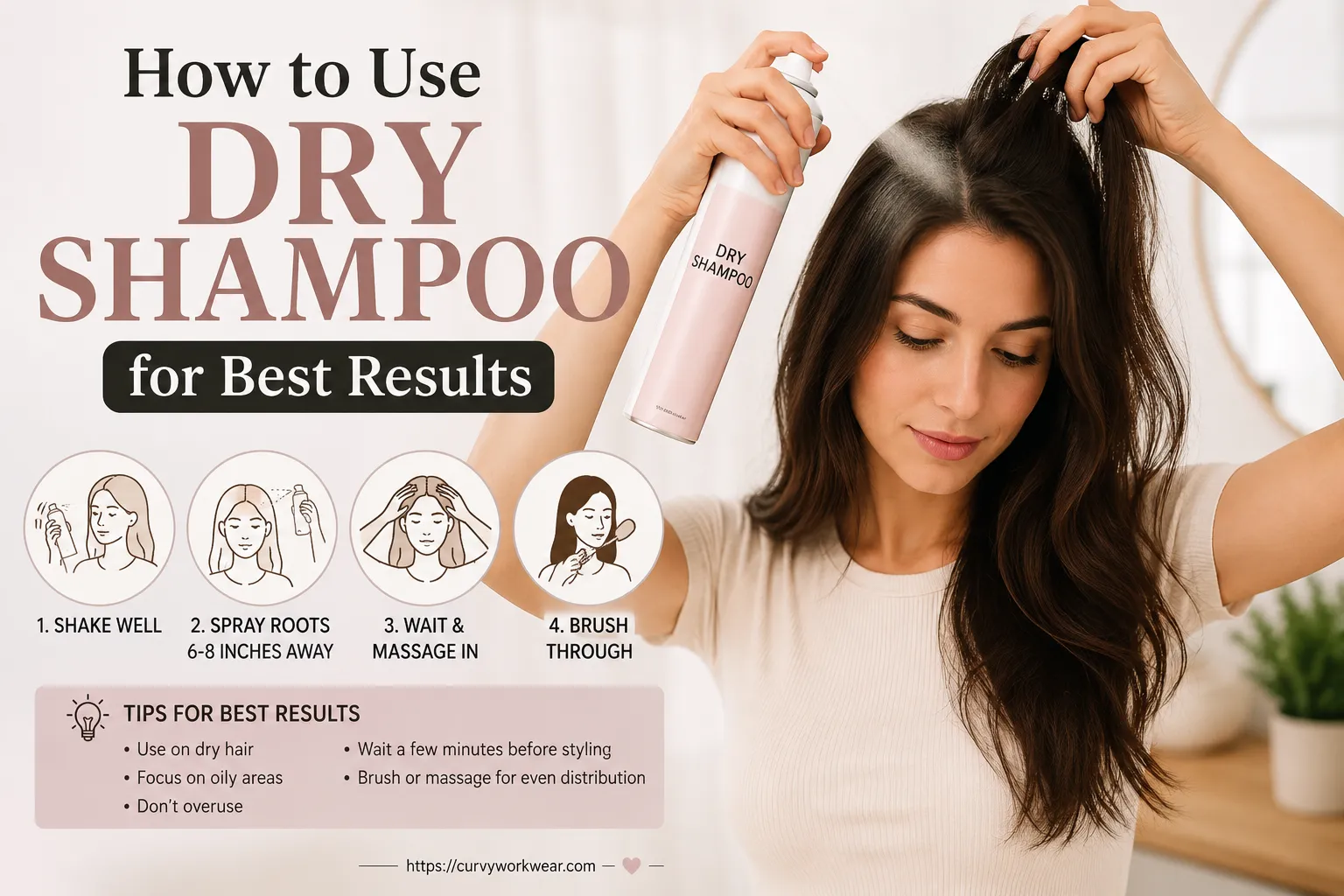
Step 1: Shake the Can Well
Shake the bottle well for a few seconds before spraying. This mixes the ingredients evenly. Skipping this step is one reason people end up with white, chalky patches.
Step 2: Section Your Hair
Part your hair into sections, especially at the crown and around your hairline. These areas usually get oily first. Working in sections helps the product reach your scalp, not just the surface of your hair.
Step 3: Spray at the Right Distance
Hold the can about 6 inches (roughly 15 cm) away from your scalp. Spraying too close causes clumping. Spraying too far wastes product and misses your roots.
Step 4: Wait Before You Touch It
Give the product 1 to 3 minutes to absorb the oil. This waiting time matters. If you rush, the product won’t have time to do its job.
Step 5: Massage and Brush It Out
Use your fingertips or a brush to work the product into your roots. Then brush through your hair. This step blends the powder in and removes any white residue.
If you also use clarifying shampoo on your regular wash days, it helps clear out any leftover dry shampoo buildup before you reapply.
Advantages and Disadvantages of Dry Shampoo
Like any hair product, dry shampoo has real benefits and real limits. Knowing both sides helps you decide how often to use it.
Advantages of Dry Shampoo
- Saves time. You can refresh your hair in minutes without washing and blow-drying.
- Extends hairstyles. It helps blowouts, curls, and color-treated styles last longer between washes.
- Adds volume. The powder coats hair strands, which can make fine hair look fuller.
- Reduces washing frequency. This can be gentler on hair that gets dry or damaged from daily washing.
- Convenient for busy days. It works well after workouts, during travel, or when you’re short on time.
Disadvantages of Dry Shampoo
- Does not truly clean hair. It masks oil and dirt instead of removing them from the scalp.
- Can build up with overuse. Skipping regular washes for too long may clog hair follicles.
- May leave residue. Some formulas leave a white or gray cast, especially on dark hair.
- Can dry out strands. Alcohol-based formulas may make hair more prone to breakage over time.
- Not a full replacement. Your scalp still needs regular washing with water to stay healthy.
Once you know how to use dry shampoo the right way, and in moderation, the advantages generally outweigh the drawbacks for most people.
Best Time to Use Dry Shampoo
Many people only reach for dry shampoo once their hair already looks oily. However, timing matters more than you think.
Apply It the Night Before
Using dry shampoo before bed gives it more time to absorb oil overnight. In the morning, you just need to brush it out. This trick works well for people with oily scalps.
Use It on Freshly Washed Hair Too
You can apply a light layer on clean, dry hair. This adds texture and volume from the start. It also delays oil buildup, so your next wash day gets pushed further out.
Common Mistakes to Avoid When Using Dry Shampoo
Even with the right steps, small errors can ruin your results. Here are the most common ones.
Using Too Much Product
More product does not mean cleaner-looking hair. Over-spraying leads to a dull, powdery look. Start with a small amount and add more only if needed.
Applying It on Wet Hair
Dry shampoo is designed for dry hair only. If your hair is damp, the product will clump and stick instead of absorbing oil.
Skipping the Brush-Out Step
Forgetting to brush your hair afterward leaves visible white or gray residue, especially on dark hair. Always brush it through for a natural finish.
Using It Every Single Day
Dry shampoo works best as an occasional fix between washes. Healthline notes that using it too often can trap dirt and grease on your scalp instead of removing it, which can lead to buildup over time.
Tips for Best Results Based on Hair Type
Not all hair reacts to dry shampoo the same way. Here’s how to adjust based on your hair type.
Fine or Thin Hair
Use a light hand. Too much product can weigh fine hair down instead of adding volume. A powder formula usually works better than a heavy spray.
Thick or Curly Hair
Focus on the roots and scalp, not the ends. Thick and curly hair often needs slightly more product to reach the scalp, but still apply it in small amounts.
Dark Hair
Look for tinted dry shampoos made for dark or brunette hair. These formulas blend in better and avoid the gray or white cast that regular dry shampoo can leave.
Color-Treated Hair
Choose a gentle, alcohol-free formula if your hair is color-treated. Harsh ingredients can sometimes affect color vibrancy over time. For more grooming basics, check out these grooming tips.
How Dry Shampoo Fits Into Your Hair Care Routine
Dry shampoo works best as a helper, not a replacement for regular washing. It’s a great tool for busy mornings, travel days, or post-workout freshening up.
For example, if you wash your hair every three days, dry shampoo can help you stretch that to four or five days without your hair looking greasy. This can also be gentler on your hair, since washing too often can strip natural oils. On wash days, you can add moisture back with natural options like shea butter for hair.
Still, your scalp needs a real wash eventually to stay clean and healthy. Balance is key. You can browse more hair care guides for other ways to keep your routine balanced.
FAQ: How to Use Dry Shampoo
Does dry shampoo actually clean your hair?
No, dry shampoo does not clean your hair the way water and shampoo do. It only absorbs oil at the roots to make your hair look and feel less greasy. You still need to wash your hair regularly with water.
Can dry shampoo cause hair loss?
Dry shampoo itself is not proven to directly cause hair loss. However, heavy buildup from overuse without proper washing may clog hair follicles over time, so it’s best used in moderation alongside regular washing.
How often should I use dry shampoo?
Most dermatologists suggest using dry shampoo no more than two to three times a week, between regular washes. Using it every day for long stretches isn’t ideal for scalp health.
Can I use dry shampoo on wet hair?
No, dry shampoo only works properly on dry hair. Applying it to wet or damp hair causes clumping and won’t absorb oil effectively.
Is dry shampoo bad for your scalp?
Occasional use is generally considered safe for most people. However, frequent overuse without washing it out can lead to product buildup, which may cause irritation or clogged follicles in some people.
Conclusion
Knowing how to use dry shampoo the right way turns it from a quick fix into a real hair care tool. Shake the can, section your hair, spray at the right distance, wait a few minutes, then brush it through.
Weigh the advantages and disadvantages, avoid overusing it, and pick a formula that matches your hair type and color. With these small habits, you’ll get fresher-looking hair in minutes, without the flat, oily look holding you back. Try these steps the next time you’re short on time, and see the difference for yourself.
Disclaimer: This article is for general information only. It is not a substitute for advice from a dermatologist or hair care professional. Results can vary based on your hair type, scalp condition, and the product you use.