Introduction
Your skin feels tight by lunchtime, even after you moisturized this morning. Sound familiar? That dry, dull feeling usually means your skin is missing water, not oil, and a pure hyaluronic acid serum is one of the fastest ways to fix it.
This is where a pure hyaluronic acid serum comes in. It’s one of the simplest ways to pull moisture back into your skin and keep it there. But how does it actually work at the molecular level, and is it really safe for daily, long-term use?
In this guide, we’ll go beyond the basics. You’ll learn what dermatologists and researchers actually say about this ingredient, how it behaves once it’s on your skin, real side effects to watch for, and how to build it into a routine that gets results. If you’re new to actives in general, our skincare section has more beginner-friendly guides to pair with this one.
What Is a Pure Hyaluronic Acid Serum?
Hyaluronic acid (HA), also called hyaluronan, is a substance your body already makes. It’s a type of sugar molecule known as a glycosaminoglycan, and it’s found in your skin, joints, and eyes.
Interestingly, your skin alone holds about one-third of all the hyaluronic acid in your body. Its main job everywhere is the same: trap and hold water. As you age, your natural HA production slows down. This is a big reason skin looks less plump and more lined over time, according to a Harvard Health overview of the ingredient, which notes that hyaluronic acid acts as a powerful humectant that attracts and traps water in the skin.
A pure hyaluronic acid serum is a lightweight, water-based liquid built around this ingredient, without heavy oils, added fragrance, or filler ingredients. “Pure” generally means the formula stays simple and focuses on hydration rather than doing five other things at once.
How Much Water Can It Actually Hold?
You’ll see different numbers thrown around online, and that’s because HA molecules vary in size and source. What’s consistently agreed upon is that hyaluronic acid can hold well over a thousand times its own weight in water. That’s part of why even a small amount in a serum can make a noticeable difference.
Where Does the Hyaluronic Acid in Serums Come From?
Most cosmetic-grade hyaluronic acid today is made by fermenting certain bacteria in a lab, a process similar to how some other food and cosmetic ingredients are produced. It can also come from animal sources, but bacterial fermentation is now the more common method for skincare products.
How It Differs From Regular Moisturizers
Moisturizers often rely on oils or thick creams to seal moisture into the skin. A serum works differently.
It’s thinner, absorbs faster, and is designed to pull water into the upper layers of skin rather than just sit on top of it. Many routines use both together: serum first for hydration, moisturizer right after to lock that hydration in.
The Science: How Molecular Weight Changes What Your Serum Does
This is a detail most people never hear about, but it changes how you should shop for a hyaluronic acid serum.
Hyaluronic acid molecules come in different sizes, referred to as “molecular weight.” The size determines how the ingredient behaves on your skin.
High Molecular Weight HA
Larger HA molecules are too big to pass into the skin. Instead, they sit on the surface, forming a light film that helps reduce water loss from the top layer of skin.
Low Molecular Weight HA
Smaller HA molecules can penetrate a bit deeper into the skin. They hold less water than the larger molecules, but they work at a level the bigger ones can’t reach.
Why “Multi-Weight” Formulas Matter
Because each size works differently, serums that combine multiple molecular weights tend to perform better overall. A peer-reviewed review of topical hyaluronic acid research found that multi-molecular-weight formulations improved skin hydration, elasticity, and the appearance of fine lines in clinical studies, some in as little as one to two weeks of regular use. If a product’s packaging or website mentions “multi-molecular weight” or lists both high and low molecular weight HA, that’s generally a good sign.
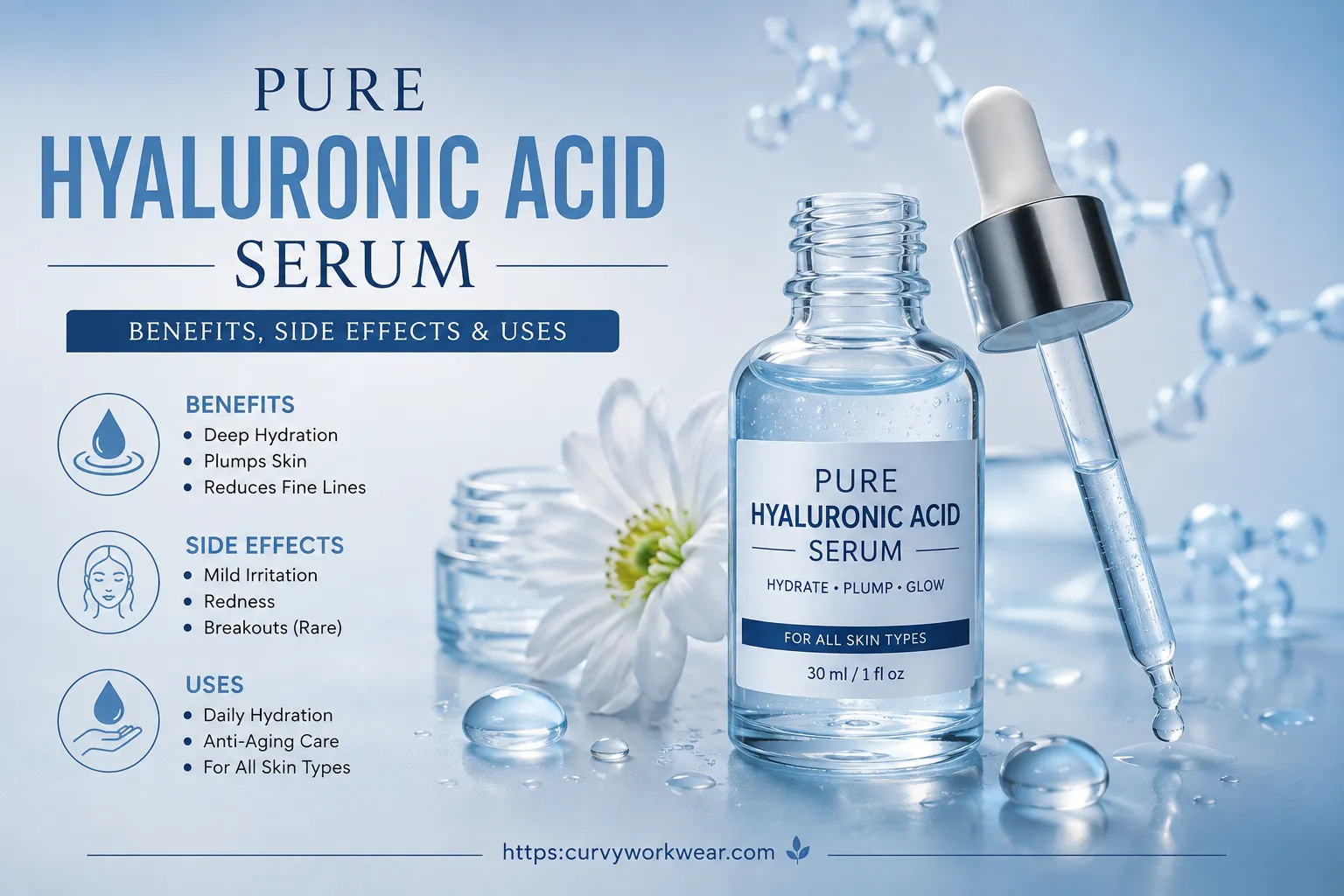
Hyaluronic Acid Serum Benefits
The hyaluronic acid serum benefits go beyond just a temporary hydration boost. Here’s what dermatologists and clinical research generally support.
1. Deep, Lasting Hydration
This is the main reason people use it. HA draws moisture from the air and from deeper skin layers up to the surface, leaving skin feeling plump instead of tight. One study following women between the ages of 30 and 65 found that applying a topical hyaluronic acid product twice daily for six weeks improved skin hydration, smoothness, and plumping.
2. Softer-Looking Fine Lines
When skin holds more water, it naturally looks smoother. A dermatologist at a major U.S. teaching hospital compares it to a water balloon: full and taut looks smooth, while an empty one looks wrinkled. Fine lines caused by dryness (not deep, structural wrinkles) tend to look less noticeable once skin is properly hydrated.
3. Works for Most Skin Types
Because it’s water-based, it suits oily, dry, and combination skin. Oily skin types often assume serums will add more shine, but hyaluronic acid actually helps balance moisture without clogging pores or adding oil.
4. Supports Other Active Ingredients
HA can act as a buffer. It helps skin tolerate stronger actives, like retinol or exfoliating acids, better by keeping the skin barrier hydrated, which can reduce irritation from those products. If you’re also exploring other exfoliating skin treatments, our guide on vibradermabrasion covers a different approach worth knowing about.
5. May Help With Wound Healing and Skin Barrier Repair
Beyond basic hydration, hyaluronic acid plays a role in how skin heals. It’s involved in regulating inflammation and has been studied for helping minor wounds and post-procedure skin recover.
6. Gentle Enough for Sensitive Skin
Since it’s naturally found in the body, most people tolerate it well. This makes it a reasonable starting point for anyone new to active skincare ingredients. The American Academy of Dermatology lists hyaluronic acid as one of the science-backed ingredients board-certified dermatologists commonly recommend for hydration.
Advantages and Disadvantages of Pure Hyaluronic Acid Serum
Like any active ingredient, hyaluronic acid has real strengths and real limits. Here’s a balanced look at both sides.
Advantages
- Draws and holds large amounts of water in the skin for a plumper, smoother look.
- Suits nearly every skin type, including oily and acne-prone skin.
- Rarely causes breakouts on its own, since it doesn’t clog pores.
- Layers well with other actives like vitamin C, retinol, and exfoliating acids.
- Naturally occurs in the body, so tolerance is generally high.
- Mild enough for twice-daily, long-term use.
Disadvantages
- Needs humidity or a moisturizer on top to work well; in dry air, it can pull water from your skin instead of the atmosphere.
- Effects are temporary and depend on consistent use, not a permanent fix for lost collagen or deep wrinkles.
- Some formulas add fragrance, alcohol, or other ingredients that can irritate sensitive skin, even though the HA itself rarely does.
- Not independently reviewed by the FDA for cosmetic efficacy claims, so marketing claims vary in reliability between brands.
- Quality and molecular weight vary a lot between products, so cheaper serums may perform noticeably worse.
Is Hyaluronic Acid Serum Good for Everyday Use?
Short answer: yes, for most people. It’s mild enough for daily use, morning and night, unlike stronger actives such as retinol or exfoliating acids.
However, “everyday use” doesn’t mean “use it however you like.” A few details make a real difference in results.
Apply It on Damp Skin
Hyaluronic acid needs nearby moisture to pull from. Applying it to completely dry skin, especially in a dry climate or air-conditioned room, can sometimes pull water from deeper skin layers instead of the air. This may leave skin feeling drier rather than hydrated.
Always Follow With a Moisturizer (Ideally One With an Occlusive)
Think of the serum as the water and the moisturizer as the lid on a cup. Without the lid, the water evaporates. For best results, check that your follow-up moisturizer contains an occlusive ingredient, such as petrolatum, mineral oil, shea butter, cocoa butter, or jojoba oil. These form a barrier that helps keep the water the HA just pulled in from escaping again.
Layer Thinnest to Thickest
A general skincare rule applies here: apply the thinnest product first (your HA serum), then move to thicker products like moisturizer or cream. Thin liquids are designed to absorb; thicker products are designed to sit closer to the surface and seal things in.
Frequency
Most people can use it twice daily, morning and evening after cleansing. If your skin is very oily, once a day may be enough, applied before your other lightweight daytime products. For more everyday beauty routine basics, check our grooming tips section.
Hyaluronic Acid Serum Side Effects
While generally considered safe and well tolerated, it’s worth understanding the hyaluronic acid serum side effects that have been reported, even if they’re uncommon.
Mild Irritation
Some formulas include added ingredients like fragrance, alcohol, or preservatives that can cause redness or itching in sensitive skin. This is usually caused by those added ingredients, not the hyaluronic acid itself.
Breakouts Traced to Other Ingredients
If you break out after starting a new HA serum, check the rest of the ingredient list before blaming the hyaluronic acid. Ingredients like cocoa butter or lanolin, sometimes included in the same formula, are more likely culprits.
Dryness From Incorrect Use
Using it in a dry room without a moisturizer afterward, or applying it to bone-dry skin, can sometimes worsen dryness instead of fixing it. This is one of the most common mistakes people make when they’re new to serums.
Allergic Reactions (Rare but Possible)
True allergic reactions to hyaluronic acid are uncommon, but they can happen. Signs of a more serious reaction can include:
- Swelling of the face, lips, mouth, or throat
- Hives or a skin rash
- Trouble breathing or wheezing
- Dizziness or a racing heart
- Nausea or stomach cramps
If you notice any of these symptoms, stop use right away and seek medical attention. For mild redness or itching that doesn’t involve these symptoms, simply discontinuing use and watching your skin is usually enough.
A Note on Regulation
In the United States, hyaluronic acid used in cosmetic skincare products has not been specifically reviewed by the FDA for safety and effectiveness in the way prescription drugs are. This doesn’t mean it’s unsafe. It simply means the claims on packaging aren’t independently verified by a regulator the way medications are. It’s one more reason to pay attention to how your own skin responds rather than relying only on marketing claims.
Who Should Be Extra Careful
- People with a history of severe allergic reactions or anaphylaxis to skincare ingredients
- People who are pregnant or breastfeeding. Sources differ on this: some consider topical use generally safe, while others note that research is still limited. It’s worth a quick check with a doctor or dermatologist if you want extra reassurance
- Anyone experiencing ongoing irritation, who should stop use and consult a dermatologist
A patch test before full use is always a smart first step, regardless of how “gentle” a product claims to be.
How to Choose a Good Pure Hyaluronic Acid Serum
Not all serums labeled “hyaluronic acid” are the same. Here’s what to look for.
Check for Multiple Molecular Weights
As covered earlier, a combination of high and low molecular weight hyaluronic acid tends to perform better than a single-weight formula, since each size works at a different depth of the skin.
Look at the Ingredient List
A genuinely pure formula usually has few ingredients: water, hyaluronic acid (sometimes listed as sodium hyaluronate), and maybe a gentle preservative. Long lists with alcohol or strong fragrance near the top may work against the hydration benefits.
Packaging Matters
HA can break down when exposed to too much air or light over time. Opaque bottles or airless pumps help the product stay effective for longer.
Patch Test First
Apply a small amount to your inner arm or jawline and wait 24 hours before using it on your whole face. This simple step avoids most unpleasant surprises.
How to Use It in Your Skincare Routine
Here’s a simple order that works for most routines:
- Cleanse your face with a gentle cleanser.
- Apply the hyaluronic acid serum while skin is still slightly damp.
- Follow with a moisturizer that contains an occlusive ingredient to seal in hydration.
- In the morning, finish with sunscreen.
This order isn’t rigid. If you use a vitamin C serum, apply that first, especially if it contains L-ascorbic acid, since that form is more sensitive to air, light, and pH changes and needs to go on clean, dry skin to work properly. Apply your hyaluronic acid serum afterward, then moisturizer.
If you use retinol or an exfoliating acid, applying hyaluronic acid beforehand can help your skin tolerate these stronger ingredients with less irritation.
Other Uses of Hyaluronic Acid Beyond Serums
Since hyaluronic acid isn’t just a skincare ingredient, it helps to know the bigger picture. This context can also explain why you’ll see it turn up in more than just your serum bottle.
- Joint injections: Used for knee osteoarthritis when other treatments haven’t worked, though guidelines generally advise against this approach for hip osteoarthritis.
- Dermal fillers: Injectable HA is used under the skin to restore volume or soften wrinkles, always administered by a trained professional.
- Eye drops: Found in various over-the-counter and prescription drops for dry eyes.
- Wound care: Used in some clinical settings to support healing of wounds, ulcers, or post-surgical scars.
- Oral supplements: Available as pills or drinks; some research suggests oral HA may also support skin hydration, though topical application remains the most direct way to target visible skin concerns.
None of this changes how you’d use a facial serum, but it explains why hyaluronic acid shows up in so many different products.
FAQ
Can I use hyaluronic acid serum every day?
Yes, it’s generally safe for daily use, morning and night, for most skin types. Just remember to apply it on damp skin and follow with a moisturizer that has an occlusive ingredient for the best results.
Does hyaluronic acid serum cause breakouts?
On its own, hyaluronic acid is unlikely to cause breakouts since it doesn’t clog pores. Breakouts are more often linked to other ingredients in the same formula, like cocoa butter or lanolin, or from layering too many heavy products together.
Can I use hyaluronic acid serum with retinol or vitamin C?
Yes, they work well together. Apply vitamin C first (especially if it’s L-ascorbic acid), then hyaluronic acid, then your moisturizer. If you use retinol at night, applying hyaluronic acid first can help reduce the dryness and irritation retinol sometimes causes.
Is pure hyaluronic acid serum suitable for oily skin?
Yes, its lightweight, water-based texture makes it a good match for oily skin. It hydrates without adding extra oil, and well-hydrated skin can sometimes even help regulate excess oil production.
How long does it take to see results?
Some people notice plumper, softer-looking skin within days. Research on multi-molecular-weight serums has shown visible improvements in dryness, roughness, and fine lines in as little as one to two weeks, with continued improvement over several weeks of consistent use.
Is hyaluronic acid serum safe during pregnancy?
Topical hyaluronic acid is generally considered low-risk since it’s a substance your body already produces, but research specifically on pregnancy and breastfeeding is still limited. If you want extra peace of mind, it’s worth a quick conversation with your doctor or dermatologist.
Conclusion
A pure hyaluronic acid serum remains one of the simplest, most research-backed ways to add real hydration to your skincare routine. It suits most skin types, layers well with other actives, and rarely causes problems when used correctly.
What makes the difference between an average result and a great one often comes down to details: choosing a multi-molecular-weight formula, applying it to damp skin, and always sealing it in with a proper moisturizer. Side effects, while rare, are usually linked to added ingredients or incorrect use rather than the hyaluronic acid itself.
If your skin often feels tight, dull, or dehydrated, this hyaluronic acid serum might be the simple addition your routine has been missing. Start with a patch test, build it into your routine step by step, and give it a few weeks before judging the results.
Disclaimer: This article is for general informational purposes only. It is not medical advice and should not replace a consultation with a licensed dermatologist or doctor. Everyone’s skin is different, so results and reactions can vary from person to person.