Introduction
Finding the right work pants can be difficult when you have a curvy pear shape. The right fit can improve comfort and create a polished office look.
This guide covers the best pants, fabrics, lengths, and styling tips to try.
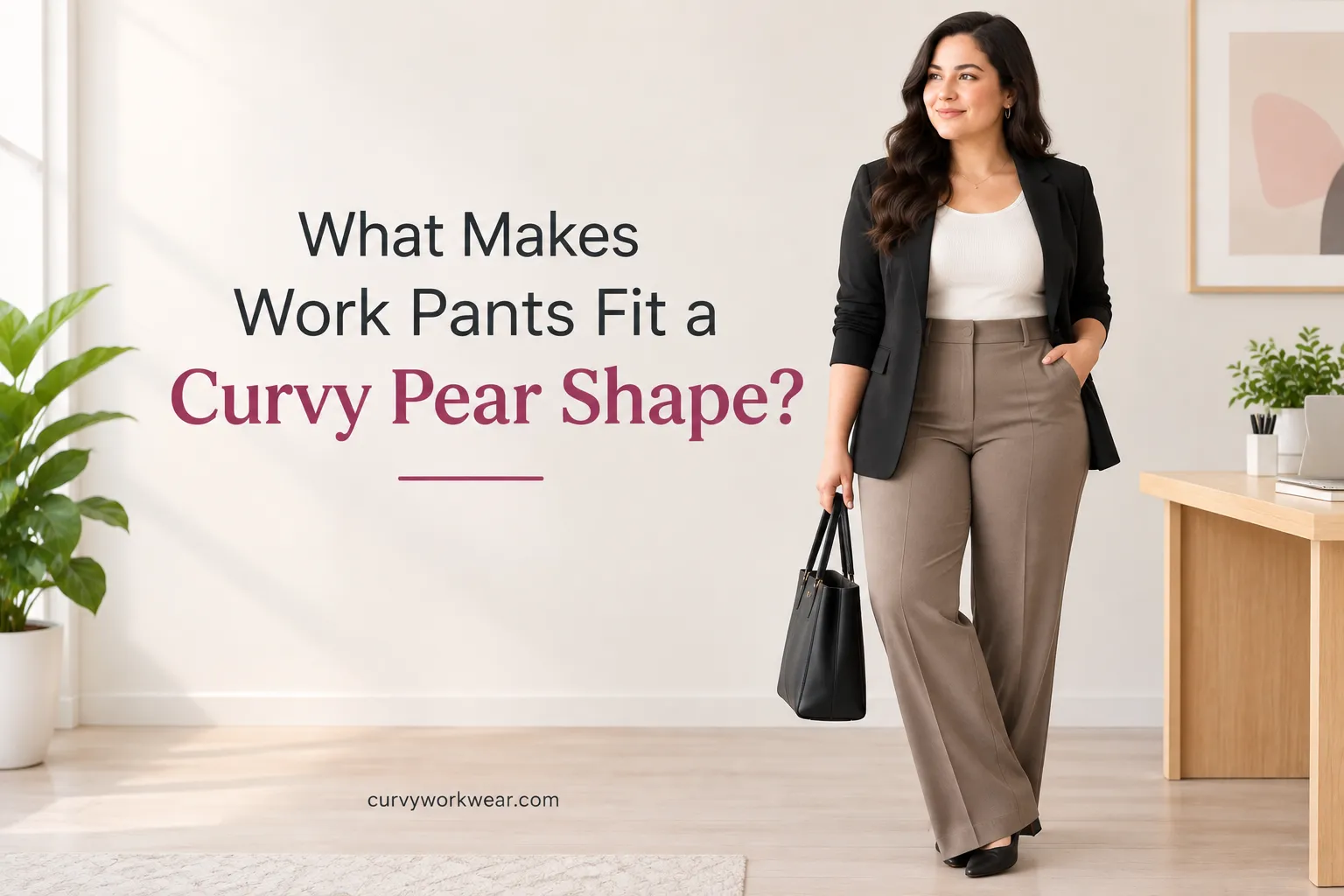
What Makes Work Pants Fit a Curvy Pear Shape?
The right work pants should feel comfortable and look polished throughout the day. For a pear shape, the hips and thighs are usually wider than the waist. This can make finding a comfortable waistband more challenging.
Focus on Hip and Thigh Fit
Do not choose a smaller size just to fit your waist. A slightly larger size can provide a better fit through the hips. You can then have the waistband adjusted if needed.
Straight-leg and wide-leg trousers can both work well for curvy figures. Wide-leg styles are also a current option for polished workwear in 2026.
Choose a Waistband That Sits Securely
A good waistband should stay in place without digging into your skin. Look for a waistband that follows your natural waist comfortably. High-rise and mid-rise styles can both work, depending on your proportions.
If the hips fit but the waist gaps, tailoring can help. Some pants also use curved waistbands or back elastic for extra comfort.
The goal is a secure fit without constant pulling or readjusting. This helps your work pants stay comfortable during long office days.
Best Work Pant Styles for a Curvy Pear Shape
Different trouser cuts can work well for a curvy pear shape. The best choice depends on comfort, fit, and personal style. Straight, wide-leg, bootcut, tailored, and pull-on pants can all suit workwear.
High-Rise Straight-Leg Pants
High-rise straight-leg pants create a clean, simple line through the legs. The higher waist can also provide a secure fit around the smaller waist.
Choose a pair with enough room through the hips and thighs. A little stretch can improve comfort without making the pants look too casual.
Wide-Leg Work Pants
Wide-leg pants offer more room through the hips, thighs, and legs. Their relaxed shape can also create a smooth line from the waist down.
Choose fabric that drapes well instead of clinging to the body. Full-length wide-leg trousers remain a popular workwear choice in 2026.
Bootcut and Flared Work Pants
Bootcut pants stay closer through the thighs before opening slightly below the knee. This creates a gentle change in shape toward the hem.
A subtle flare can add balance to fuller hips and thighs. These pants also pair well with loafers, pumps, and low heels.
Tailored Trousers
Tailored trousers give your outfit a polished and structured appearance. Look for styles that fit the hips without pulling or feeling restrictive.
A clean front and well-shaped waistband can create a neat office look. Choose the size based on your hips, then tailor the waist if needed.
Pull-On Work Pants
Pull-on work pants can provide comfort without losing a polished appearance. Many modern styles use stretch fabrics and clean waistbands for office wear.
Choose structured fabric instead of thin, clingy material for a professional finish. Straight-leg and bootcut pull-on styles can both work well for office outfits.
Best Fabrics for Curvy Work Pants
The right fabric can make work pants feel more comfortable and look polished. Choose materials that suit your body, workplace, and weather.
Stretch Fabrics for Comfort
Stretch fabrics give you more freedom to move during the workday. A small amount of stretch can make sitting and walking more comfortable.
Look for fabrics that stretch but still keep their original shape. Avoid very thin stretch fabrics that cling too closely around the hips.
Structured Fabrics for a Polished Look
Structured fabrics help work pants keep a neat and professional shape. They can also create a smoother appearance around the hips and thighs.
Wool blends, twill, and ponte can work well for office trousers. Choose a fabric with some flexibility if you sit for long periods.
Lightweight Fabrics for Warmer Days
Lightweight fabrics can help you stay more comfortable during warmer weather. Cotton blends and linen blends can offer breathability without feeling too heavy.
Linen can wrinkle easily, so blends may work better for busy office days. Choose lightweight fabric that drapes well and does not cling to your body.
How to Choose the Right Work Pant Length
Pant length can change how your whole work outfit looks. The right length should match your height, trouser cut, and shoes. Your pants should also feel practical when walking and sitting.
Full-Length Pants
Full-length pants can create a clean and polished workwear look. They work especially well with straight-leg, wide-leg, and tailored trousers.
The hem should reach the shoe without dragging along the floor. Try on full-length pants with the shoes you plan to wear. This helps you choose a practical hem length.
For wide-leg pants, the hem should not bunch heavily around your shoes. A small break can work well with straight-leg trousers. The exact length can vary with the trouser cut and shoe height.
Ankle-Length Pants
Ankle-length pants usually finish around the ankle bone or slightly above it. They can work well with flats, loafers, sneakers, and low heels.
This length can make everyday work outfits feel lighter and easier to move in. It can also be useful for petite women who find full-length pants too long.
Check the hem carefully before buying ankle-length pants. It should look intentional rather than appearing accidentally too short. The trouser shape and workplace dress code also matter.
How to Style Work Pants for a Pear Shape
The right styling can make work pants feel polished and comfortable. Focus on balanced proportions rather than hiding your natural shape.
Balance Wide-Leg Pants With the Right Top
Wide-leg pants already add volume through the lower half. A tucked blouse or fitted top can define the waist. This keeps the outfit from looking too loose overall.
You can also choose tops with interesting necklines or shoulder details. These details naturally bring more attention toward the upper half.
Add Structure With Blazers and Jackets
A structured blazer can give your outfit a polished office-ready finish. Look for defined shoulders and a comfortable fit through the body.
A blazer should not pull across your hips when buttoned. Slightly shaped styles can define the waist without feeling restrictive.
You can wear the blazer open when you want more relaxed styling. Keep the layers comfortable and suitable for your workplace dress code.
Choose Shoes That Work With the Trouser Cut
Your shoes should work with the length and shape of your trousers. Loafers, pointed flats, low heels, and block heels can suit office pants.
Full-length wide-leg pants usually need enough length to meet your shoes. Avoid hems that drag on the floor or bunch heavily around your feet.
For ankle-length pants, choose shoes that complement the shorter hem. Loafers and pointed flats can create a clean finish for office outfits.
Work Pant Features Worth Looking For
Small design details can make work pants more comfortable and easier to wear. For a pear shape, focus on features that support the waist and hips.
Contoured Waistbands
A contoured waistband follows the natural curve between your waist and hips. This shape can help reduce extra space at the back.
Look for waistbands that sit securely without digging into your skin. A little stretch can also make the waistband more comfortable during long workdays.
Flat-Front Designs
Flat-front pants have a smooth front without visible pleats. They create a clean and simple look for office outfits.
They can work well under tucked-in tops, blouses, and blazers. Choose a size that fits comfortably across your hips without pulling.
Practical Pocket Placement
Pocket placement can affect both comfort and the overall look of work pants. Front pockets should lie flat without pulling open across the hips.
Choose pockets that provide useful space without adding unnecessary bulk. Welt or angled pockets can also keep the front looking clean and polished.
Common Fit Problems to Avoid
The right work pants should feel comfortable and move easily throughout your workday. A few common fit problems can make pants look and feel uncomfortable.
Waist Gaping
Waist gaping often happens when pants fit your hips but feel loose at the waist. This can happen when your waist is smaller than your hips.
Excess Fabric Around the Legs
Too much fabric can make trousers look loose or poorly fitted. This often happens when the leg shape does not suit your proportions.
Choose a leg cut that follows your preferred shape without clinging.
How to Find the Right Fit When Shopping Online
Shopping online can make finding the right pants more challenging. Use measurements, size charts, and reviews before placing your order.
Check the Size Chart and Measurements
Start by taking your current waist and hip measurements. Then compare them with the brand’s size chart. Do not rely only on your usual clothing size. Sizes can vary between brands and different clothing styles.
Check whether the chart shows body measurements or garment measurements. This difference can affect how you choose your size.
For work pants, pay close attention to the waist, hips, and inseam. These measurements help you judge the overall fit more accurately.
Read Reviews for Fit Details
Customer reviews can provide useful details about the actual fit. Look for repeated comments about sizing, stretch, length, or tight areas.
Reviews from shoppers with similar body proportions can be especially helpful. Give more weight to repeated patterns than single comments.
Also check reviews mentioning whether the pants run small or large. These details can help you choose between two sizes.
Final Thoughts
The best work pants should fit your hips comfortably and sit securely at your waist. Choose styles that let you move easily throughout the workday.
When shopping online, always check measurements and read fit reviews carefully. Small details can make a big difference in everyday comfort.
Most importantly, choose pants that suit your workplace and personal style. Your best fit should feel comfortable, practical, and polished.
Disclaimer:
This article provides general fashion and styling advice for informational purposes only. Body shapes, clothing fits, and sizing can vary between individuals and brands. Always check the brand’s size guide and choose what feels comfortable and appropriate for your workplace.