What Are Mid-Rise Jeans?
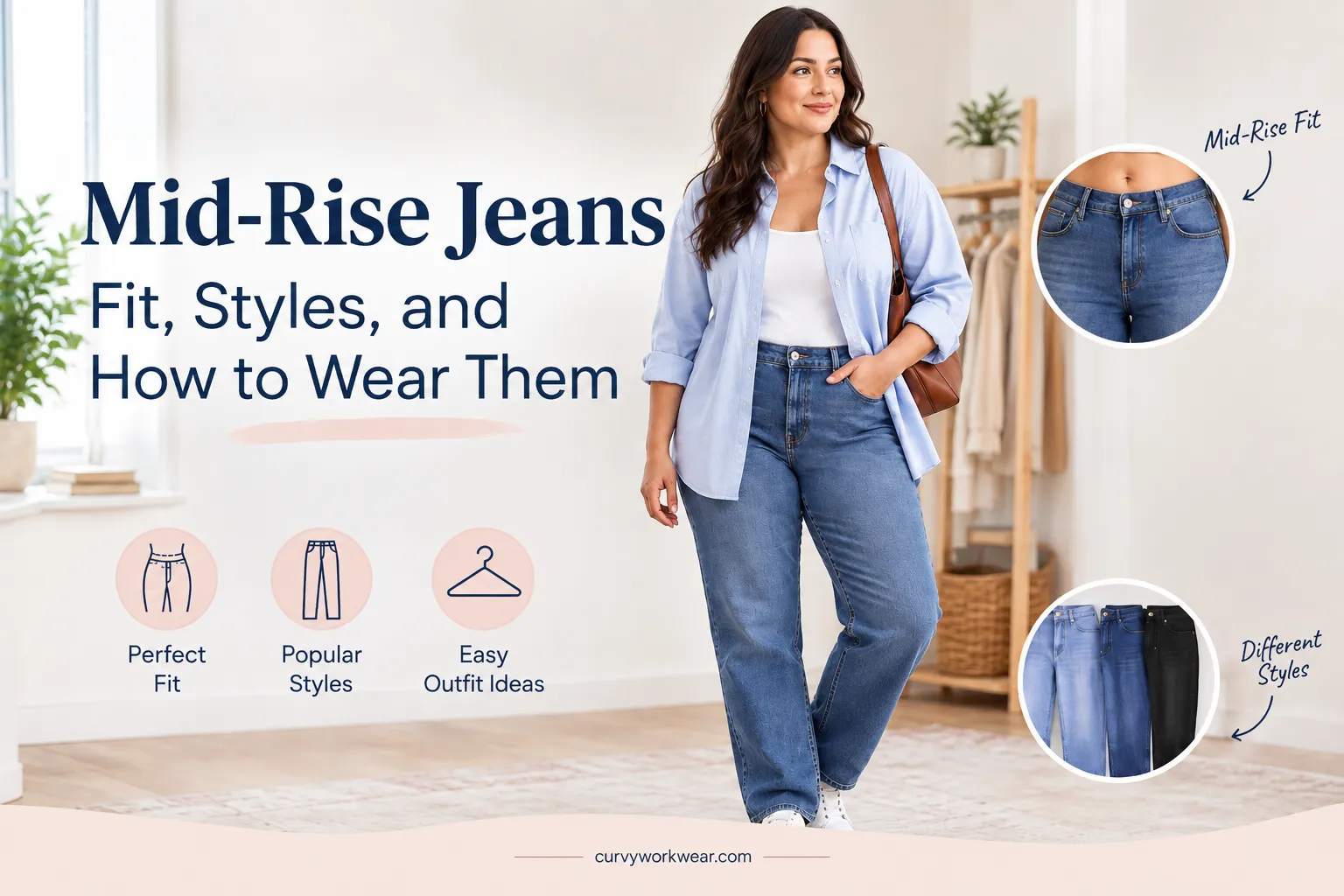
Mid-rise jeans sit right between low-rise and high-rise styles. They sit just below your belly button. This spot is close to your natural waistline. That’s why they feel balanced and comfortable.
You don’t get the squeeze of high-rise jeans. You also skip the low, slouchy feel of low-rise styles. Mid-rise jeans give you the best of both worlds.
They work well for daily wear. You can bend, sit, and move without discomfort. This makes them a smart pick for busy days.
Rise Measurement Explained (Where They Actually Sit)
“Rise” means the distance from the crotch seam to the top of the waistband. It shows how high or low the jeans sit.
Mid-rise jeans usually measure between 8 and 9.75 inches. This places them just below your navel. It’s a natural, relaxed position for most body types.
Compare that to high-rise jeans. Those measure around 10 to 12 inches or more. They sit at or above the belly button. Low-rise jeans sit even lower. Most fall between 6 and 7.5 inches. They rest well below the waist.
So when you check the rise number, you know exactly where the jeans will land on your body. No guesswork needed.
How Mid-Rise Differs From Low-Rise and High-Rise
Each rise type changes how your jeans look and feel. The difference comes down to waist placement and coverage. Low-rise jeans sit below the waist. They create a longer leg line. But they offer less coverage around your core.
High-rise jeans sit above the navel. They hold you in and smooth your midsection. This gives a more structured, polished look. Mid-rise jeans land in the middle. They cover more of your body than low-rise styles. But they feel less tight than high-rise ones.
This makes mid-rise a flexible choice. You get comfort without losing shape. And you avoid feeling too exposed or too cinched.
More people are choosing mid-rise jeans again. After years of high-rise being the go-to, shoppers want a softer, easier fit. Mid-rise gives them that middle ground.
Why Mid-Rise Jeans Are Trending Again in 2026
Fashion trends move in cycles. Right now, the cycle is shifting back to mid-rise. People want jeans that feel easy, not extreme. Ultra-low-rise had its moment. But shoppers are ready for something more wearable. Mid-rise fits that mood perfectly.
This isn’t just a passing trend either. Mid-rise feels less tied to any one era. That makes it a safer, longer-lasting choice.
The Shift Away From Ultra-Low-Rise Denim
Ultra-low-rise jeans made a big comeback in recent years. They brought back the early-2000s Y2K look. At first, it felt fun and nostalgic.
But that excitement is fading fast. Many shoppers found ultra-low-rise hard to wear daily. It often felt uncomfortable and impractical.
Sitting, bending, and moving became a hassle. The style looked great in photos. But it didn’t hold up in real life.
Now, people are stepping away from this extreme fit. They want jeans that move with their body. Mid-rise offers exactly that kind of ease.
Comfort Meets Structure: The New Denim Balance
Today’s denim trends favor comfort first. But shoppers still want a put-together look. Mid-rise jeans deliver both at once.
They hold their shape without feeling restrictive. You get structure without any tightness. This balance makes them very popular.
Softer, stretchier fabrics also play a big role. Brands now blend denim with flexible materials. This makes mid-rise jeans feel even easier to wear.
Straight-leg and slightly relaxed cuts pair well with mid-rise. Together, they create a clean, modern silhouette. It looks intentional, not overdone.
This combination fits real life. You can dress it up or keep it casual. That flexibility is why mid-rise jeans keep gaining ground in 2026.
Who Should Wear Mid-Rise Jeans?
The truth is, mid-rise jeans work for almost everyone. They suit different body types. That’s part of their appeal. They sit at a natural point on your waist.
This makes them easy to wear for most shapes. You won’t feel squeezed or exposed. Still, a few styling tips can help. Small adjustments make the fit feel even better. Let’s break it down by body type.
Best Body Types for a Flattering Fit
Mid-rise jeans suit average and taller frames especially well. They sit close to the natural waistline. This creates a balanced, easy silhouette.
If you have a straighter body shape, mid-rise adds definition. The waistband sits right where your curve naturally falls. This gives a flattering, effortless line.
For those with a fuller midsection, mid-rise offers gentle coverage. It’s not as tight as high-rise styles. But it still smooths your silhouette nicely.
Athletic body types also benefit from this fit. Mid-rise jeans follow your natural waist. They don’t add bulk or gap at the back. No matter your shape, the goal is the same. Find a rise that feels comfortable when you sit and move.
Mid-Rise Jeans for Petite, Tall, and Curvy Frames
If you’re petite, look for a shorter inseam. Mid-rise jeans with straight or slim legs work best. They avoid overwhelming a smaller frame.
Tall frames have more room to play. Wide-leg or slouchy mid-rise jeans look great here. The extra length balances a longer torso and legs.
Curvy frames benefit from stretch-blend mid-rise denim. The added flexibility moves with your body. It hugs curves without pulling or gapping.
For a curvier waist-to-hip ratio, choose jeans with slight stretch. This helps the waistband sit smoothly, not stiffly. Comfort improves instantly with the right fabric.
In the end, mid-rise jeans adapt to your shape. Small tweaks in cut and fabric make a big difference. Everyone can find their perfect fit.
Popular Mid-Rise Jeans Styles This Year
Mid-rise jeans come in many cuts this year. Each style offers something different. You can pick based on your comfort and taste. Some styles focus on clean lines. Others bring a relaxed, easy feel. There’s a mid-rise option for every mood.
Let’s look at the top styles trending right now.
Straight-Leg Mid-Rise Jeans
Straight-leg jeans remain a timeless choice in 2026. They fall evenly from hip to hem. This creates a clean, balanced silhouette.
This style pairs well with almost anything. Wear them with sneakers for a casual look. Or dress them up with heels and a blazer.
Straight-leg mid-rise jeans also suit most body types. They don’t cling too tightly or hang too loose. That’s why they stay a wardrobe favorite.
Wide-Leg and Barrel Mid-Rise Jeans
Wide-leg jeans continue to grow in popularity. They offer a relaxed, roomy fit through the leg. This creates movement and effortless style.
Barrel-leg jeans are a newer twist on this trend. They curve slightly at the thigh and taper at the ankle. This shape adds a modern, structured touch.
Both styles work great with fitted or tucked-in tops. This balances the volume of the wide leg. The result feels put-together, not oversized.
Slim and Tapered Mid-Rise Options
Slim mid-rise jeans give a sleek, streamlined look. They hug the leg without feeling too tight. Stretch fabric keeps them comfortable all day.
Tapered styles narrow slightly at the ankle. This creates a modern shape that pairs well with boots or sneakers. It’s a great choice for a polished, everyday outfit.
These slim and tapered options work well for layering too. Tuck in a sweater or jacket easily. The fit stays neat without bunching at the waist.
How to Style Mid-Rise Jeans
Mid-rise jeans are easy to style for any occasion. They work well with almost every top and shoe. You can dress them up or keep them casual.
The natural waistline makes tucking in simple. You don’t need extra layers to balance the fit. This makes styling quick and stress-free.
Let’s look at three easy ways to wear them.
Casual Everyday Outfits
For a relaxed look, pair mid-rise jeans with a plain t-shirt. Add sneakers to keep things comfortable. This combo works great for running errands.
A cropped hoodie also looks great with mid-rise styles. It highlights the waist without feeling tight. Throw on sandals or flats for extra ease.
You can also try a simple tank top with an open flannel. This adds texture without much effort. It’s perfect for weekend outings or casual hangouts.
Office and Smart-Casual Looks
For work, tuck a button-up shirt into your mid-rise jeans. Add a blazer for a polished finish. Loafers or low heels complete the look.
A fitted sweater also works well for smart-casual settings. Pair it with straight-leg mid-rise jeans. This keeps the outfit neat and professional.
Try adding a structured bag and simple jewelry. These small details elevate the outfit fast. It stays comfortable but still looks put-together.
Evening and Going-Out Combinations
For evening plans, choose a fitted or silky top. Tuck it into slim or straight mid-rise jeans. This creates a sleek, elevated silhouette. Heels instantly dress up any mid-rise jeans style. Add statement earrings or a bold clutch. This makes the outfit feel special.
You can also try a corset top with wide-leg mid-rise jeans. This balances fitted and relaxed elements well. It’s a stylish choice for dinners or nights out.
Choosing the Right Fabric and Wash
Fabric and wash change how your jeans look and feel. Some fabrics stretch and move with you. Others hold a firmer, structured shape.
Wash also affects the overall style. Light washes feel casual and relaxed. Dark washes look sleek and polished.
Let’s break down what to look for.
Stretch Denim vs. Rigid Denim
Stretch denim blends cotton with a bit of elastane. This makes jeans flexible and easy to move in. It’s great for all-day comfort. Rigid denim contains little to no stretch. It holds its shape better over time. Many people like this for a structured, classic look.
Stretch denim suits daily wear and active days. Rigid denim works well for polished, tailored outfits. Choose based on comfort or style needs.
Heavier denim, above 12 oz, lasts longer and keeps its shape. Lighter denim, around 10 oz, feels softer and more relaxed. Both options work well in mid-rise styles.
Light Wash, Dark Wash, and Raw Hem Options
Light wash jeans give a relaxed, summery feel. They pair well with casual tops and sneakers. This wash works great for everyday outfits.
Dark wash jeans look more polished and versatile. They’re easy to dress up for work or dinner. This shade also hides wear and fading longer.
Raw hem jeans have an unfinished, frayed edge at the bottom. This detail adds a modern, effortless touch. It pairs especially well with boots or heels.
Choosing the right wash depends on your style needs. Light wash feels casual, dark wash feels sharp. Raw hem adds a trendy, lived-in finish.
How to Find the Perfect Fit
Finding the right fit takes more than just trying jeans on. A few key checks can save you time. This helps you avoid returns and regret.
Start by knowing your body’s actual measurements. Then compare them to the size chart. This simple step makes a big difference.
Let’s go over what really matters.
Key Measurements to Check Before Buying
First, measure your natural waist. Wrap a tape measure around the smallest part. This is where mid-rise jeans will sit.
Next, measure your hips at the widest point. This number helps you pick the right size. Hips often decide the fit more than waist size. Check the inseam length too. This is the measurement from crotch to ankle hem. It tells you how long the jeans will be.
Finally, look at the rise measurement. This tells you where the jeans sit on your waist. Most mid-rise jeans fall between 8 and 9.75 inches.
Common Fit Mistakes to Avoid
Don’t buy jeans just because they feel tight at first. Stretch denim loosens slightly after a few wears. Give new jeans a little room to adjust.
Avoid choosing a size based on old jeans alone. Brands and cuts vary a lot. Always check the size chart before buying.
Don’t ignore the rise measurement when shopping online. A wrong rise can throw off the entire fit. This mistake often leads to jeans that gap or dig in.
Lastly, avoid skipping the mirror test. Sit down and bend slightly while trying them on. This shows how the jeans will feel in real life.
Mid-Rise Jeans Care and Longevity Tips
Good care keeps your jeans looking fresh longer. Small habits protect the fabric and color. This saves money over time too.
Simple washing and storing steps make a big difference. You don’t need anything fancy. Just a little consistency goes a long way.
Washing and Storing Denim Properly
Wash your jeans less often than you think. Frequent washing wears down the fabric fibers. Aim for once every few wears instead.
Turn jeans inside out before washing. This protects the color from fading fast. It also reduces friction against other clothes. Use cold water instead of hot. Cold water helps keep the denim’s shape. It also prevents the color from bleeding.
Skip the dryer whenever possible. High heat weakens denim fibers over time. Air drying keeps jeans looking newer longer. Fold jeans instead of hanging them daily. Hanging can stretch out the waistband. Folding helps them keep their original shape.
Store jeans in a cool, dry place. Avoid damp areas that trap moisture. This prevents mildew and keeps fabric fresh.
Final Thoughts: Are Mid-Rise Jeans Worth It?
Mid-rise jeans are absolutely worth adding to your wardrobe. They offer comfort without giving up style. That balance is hard to beat.
They work for almost every body type. You get natural waist coverage without feeling too tight. This makes them practical for daily wear.
Styling them is easy too. You can dress them up or keep things casual. One pair works for many different outfits.
They also fit today’s fashion mood. People want comfort, not restriction. Mid-rise jeans deliver exactly that.
If you’re unsure about rise, mid-rise is a safe choice. It sits in the middle, so it rarely feels wrong. That’s why it keeps working, season after season.
In the end, mid-rise jeans are a smart investment. They’re comfortable, flattering, and easy to style. That’s what makes them worth buying.
Disclaimer
This article is for general informational purposes only. Fit, sizing, and styling preferences can vary from person to person and brand to brand. We recommend trying jeans on or checking each brand’s specific size chart before purchasing. Prices, trends, and product availability may change over time. This content does not constitute professional styling or medical advice.