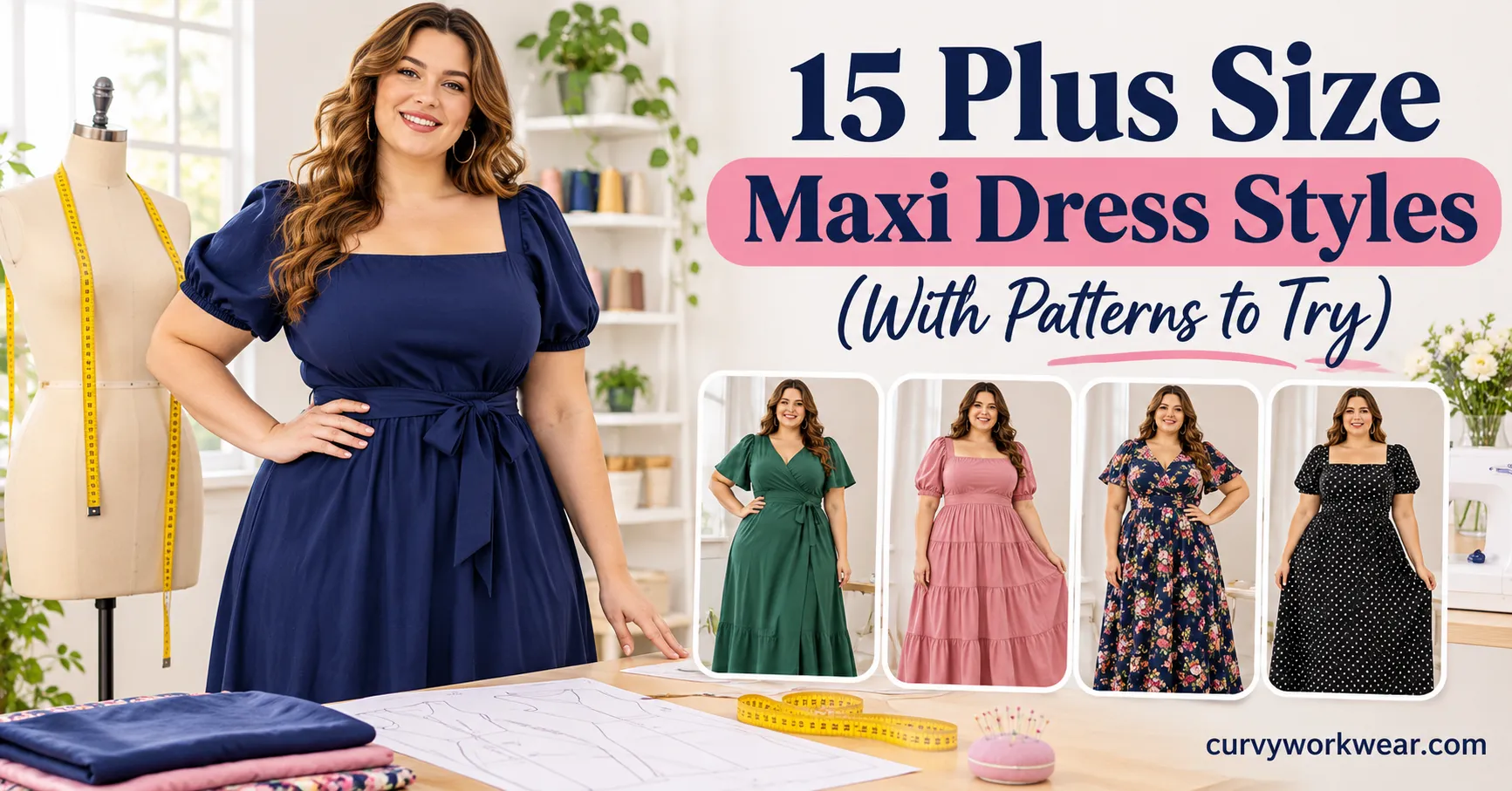
Many sewing patterns offer limited size ranges or do not account for differences in bust, hips and upper arms. As a result, a dress that looks good on a pattern envelope may not fit well after sewing. Choosing the right plus size maxi dress pattern can make a big difference in comfort and fit.
The 15 styles below cover different designs, from simple A-line dresses to elegant wrap and tiered styles. Each includes a practical fitting tip and a sewing pattern to explore.
1. A-Line Style
An A-line maxi dress has a fitted upper section and a skirt that gradually widens toward the bottom. It is a practical choice for everyday wear and casual events.
Plus-size tip: Choose a pattern with separate cup sizes or a princess-seam bodice. This makes a full bust adjustment easier than working with a plain darted bodice.
Pattern to try: Cashmerette Upton Dress & Skirt. It offers different bodice and skirt options, including maxi length.
2. Wrap Style
A wrap maxi dress features overlapping front panels that tie around the waist. Its adjustable design makes it a popular choice for different body shapes.
Plus-size tip: Wrap dresses can gape at the bust. Consider the Cashmerette Hazelton Wrap Dress, which has a lined, no-gape bodice. Check its current length options before choosing it for a maxi dress.
3. Empire Waist Style
An empire waist dress has a seam just below the bust, with a loose skirt falling from that point. It provides extra room around the waist and creates a relaxed look.
Plus-size tip: Measure your underbust instead of relying only on your waist measurement. Check that the seam does not ride up at the front.
Pattern to try: Cashmerette Holyoke Maxi Dress & Skirt. It is a useful option to explore for a flowing maxi silhouette.
4. Tiered Style
Tiered maxi dresses feature several fabric sections joined together to create a flowing skirt. They are popular for summer outfits, vacations and casual gatherings.
Plus-size tip: Tiers add volume around the hips. Keep the first tier narrower and place fuller tiers lower on the skirt. Check the fabric requirements because larger tiered skirts can need five yards or more.
Pattern to try: Simplicity S9265 Tiered Dresses. Check the current size chart before purchasing.
5. Fit-and-Flare Style
A fit-and-flare dress has a fitted bodice and a skirt that opens outward. It works well for dinner outings, parties and special occasions.
Plus-size tip: The waist seam should match your natural waist. Compare the pattern’s waist-to-hip measurements with yours and adjust the bodice length if needed.
Pattern to try: Cashmerette Turner Fit and Flare Dress. Check the available length options if you want a maxi version.
6. Sleeveless Style
A sleeveless maxi dress is a comfortable choice for warm weather. You can choose a round neckline, V-neck or square neckline to match your style.
Plus-size tip: Armholes need special attention. A shallow armhole can dig into your body, while an overly wide one may expose your bra.
Pattern to try: Cashmerette Upton Dress & Skirt, which includes a sleeveless bodice option and maxi skirt variations.
7. Flutter Sleeve Style
Flutter sleeves add soft movement around the shoulders and arms. They are a good option if you want some arm coverage without wearing fitted sleeves.
Plus-size tip: Measure your upper arm before choosing a sleeve size. A tight sleeve cap can pull against your arm and restrict movement.
Pattern to try: Cashmerette Upton Dress & Skirt, which includes flutter sleeve options.
8. Square Neck Style
A square-neck maxi dress has straight edges across the front and sides. It creates a clean look and works with both simple and detailed designs.
Plus-size tip: Square necklines can gape over a fuller bust. A full bust adjustment or a lined and interfaced neckline can help keep the edge flat.
Pattern to try: Cashmerette Upton Dress & Skirt includes a square neckline option and maxi skirt lengths.
9. Off-Shoulder Style
An off-shoulder maxi dress sits below the shoulders and often uses elastic to hold the neckline in place. It is a popular choice for summer parties and vacations.
Plus-size tip: Measure your upper chest above the bust. Cut the elastic to the recommended measurement with enough ease for comfortable movement. Elastic that is too loose can slip, while tight elastic can leave marks.
Pattern to try: Cashmerette Ellington Strapless Dress. It is a strapless starting point, not an exact off-shoulder pattern, so check whether its design suits your project.
10. Shirt-Style
A shirt-style maxi dress combines a long shirt design with a relaxed dress shape. It usually includes a collar, front buttons and sleeves.
Plus-size tip: Button gaping around the bust is a common fitting issue. Moving the top button higher or choosing a full-bust-friendly pattern can help.
Pattern to try: Cashmerette Lenox Shirtdress. Check the available length options before adapting it to a maxi style.
11. Smocked Style
Smocked maxi dresses have stretchy stitching around the bodice. This creates a flexible fit and makes them useful for casual summer outfits.
Plus-size tip: Smocking does not stretch endlessly. Measure your fullest bust and follow the pattern’s recommended ease. Test the shirring on a fabric scrap before sewing the dress.
Pattern to try: Cashmerette Franconia Shirred Dress. Check its current sizing and skirt length options.
12. High-Low Style
A high-low maxi dress has a shorter front hem and a longer back hem. This design creates movement and gives the dress a different look.
Plus-size tip: Try the dress on before hemming. The hem should fall evenly over your hips. A front hem that is too short can look unbalanced, especially on a longer torso.
Pattern to try: McCall’s M8654 Maxi Dress with Scarf. Check its pattern details to see whether the hem shape matches your preferred design.
13. Style With Pockets
Pockets make maxi dresses more practical for everyday use. You can choose hidden side-seam pockets or patch pockets.
Plus-size tip: Pockets placed directly over the widest part of the hips can add bulk. In-seam pockets placed slightly lower and toward the back can sit more comfortably.
Pattern to try: Cashmerette Upton Dress & Skirt offers pocket options with different skirt designs.
14. Bias-Cut Style
A bias-cut maxi dress uses fabric cut diagonally across the grain. This gives the dress a natural drape and allows it to follow the body’s shape.
Plus-size tip: Bias-cut fabric can cling to the body and show lines underneath. Consider a slip or lining. Let the dress hang for 24 hours before hemming because the fabric can stretch.
Pattern to try: Cashmerette Avola Slip Dress & Top. Check the pattern’s length options before using it for a maxi dress.
15. Long-Sleeve Style
A long-sleeve maxi dress offers more arm coverage and works well for cooler weather, family gatherings and casual events.
Plus-size tip: Check the sleeve width at the bicep and compare the sleeve length with your arm measurement. Narrow upper sleeves are a common source of discomfort.
Pattern to try: Cashmerette Upton Dress & Skirt includes long fitted sleeve options and maxi skirt variations.
Fitting Basics for Plus-Size Maxi Dresses
Getting the right measurements before sewing can prevent many fitting problems.
Measure first: Take your full bust, high bust, waist and hip measurements. Sewing pattern sizes are based on body measurements, not your usual clothing size.
Choose your size carefully: If your full bust is more than two inches larger than your high bust, a full bust adjustment may help. Patterns with separate cup sizes can also make fitting easier.
Grade between sizes: If your bust and hips fall into different sizes, blend between the sizes at the waist. This helps create a better overall fit.
Check ease: Look at the finished garment measurements, not just the body measurements. Your maxi dress needs enough hip room for walking and sitting.
Adjust the length: Measure from your shoulder to the floor while wearing your planned shoes. Compare this measurement with the pattern.
Make a muslin: Sew a test version of the bodice using inexpensive fabric. This helps you check the bust, waist and armholes before cutting your main fabric.
Comparison of Plus-Size Maxi Dress Styles
| Style | Best for | Difficulty | Main fitting concern |
|---|---|---|---|
| A-Line | Everyday | Easy | Bust darts |
| Wrap | Adjustable fit | Medium | Bust gaping |
| Empire | Waist comfort | Easy | Seam placement |
| Tiered | Summer | Medium | Fabric yardage |
| Fit-and-Flare | Dressier looks | Medium | Waist position |
| Bias-Cut | Special occasions | Hard | Fabric stretch |
| Smocked | Vacation | Easy | Bodice ease |
Where to Find Plus-Size Maxi Dress Patterns
These sewing pattern websites offer options worth exploring:
- Cashmerette: Patterns designed for curvy bodies, with options for different cup sizes.
- Simplicity and McCall’s: A wide range of dress styles, including plus-size pattern options.
- Burda Style: Sewing patterns in different designs and styles. Check each pattern’s size chart.
- Etsy: Independent designers offer downloadable sewing patterns. Check sizing details and customer reviews before purchasing.
Frequently Asked Questions
What is the best maxi dress pattern for a plus-size beginner?
A simple A-line or empire-waist pattern with fewer pieces and no zipper is a good starting point. Choose a pattern that includes your measurements and has clear sewing instructions.
Do I need a full bust adjustment?
A full bust adjustment may help if your full bust is more than two inches larger than your high bust. It can improve the fit around the bust, neckline and armholes. Patterns with separate cup sizes may reduce the need for this adjustment.
How much fabric does a plus-size maxi dress need?
The amount depends on the design, fabric width and pattern size. A simple maxi dress may need three to four yards, while some tiered or wrap styles need five yards or more. Always follow the pattern’s fabric requirements.
Which fabric is best for a maxi dress?
Rayon challis and cotton lawn work well for flowing designs. Jersey is another comfortable option for relaxed dresses. Choose fabric according to the pattern’s recommendations.
Can I lengthen or shorten a maxi dress pattern?
Yes. Use the pattern’s lengthen or shorten lines on the skirt pieces. This helps maintain the original shape instead of changing the hemline.
Final Thoughts
The best plus size maxi dress pattern is one that fits your measurements and matches your personal style. Whether you prefer an A-line, wrap, tiered or long-sleeve design, the right pattern can make sewing easier and more enjoyable. Take accurate measurements, check the size chart and make a test version before cutting your final fabric. A few fitting adjustments can help you create a maxi dress that feels comfortable and looks just the way you want.
Disclaimer: This article is for informational purposes only. Pattern sizes, prices and availability may change. Always check the official website for updated details before purchasing. Some patterns may need adjustments to achieve your desired maxi dress style or length.