Ever tried making a low-sugar jam that just wouldn’t set? There’s a good chance the recipe needed low methoxyl pectin instead of regular pectin. Most home cooks have never heard the term, yet it solves a problem that trips up a lot of low-sugar cooking.
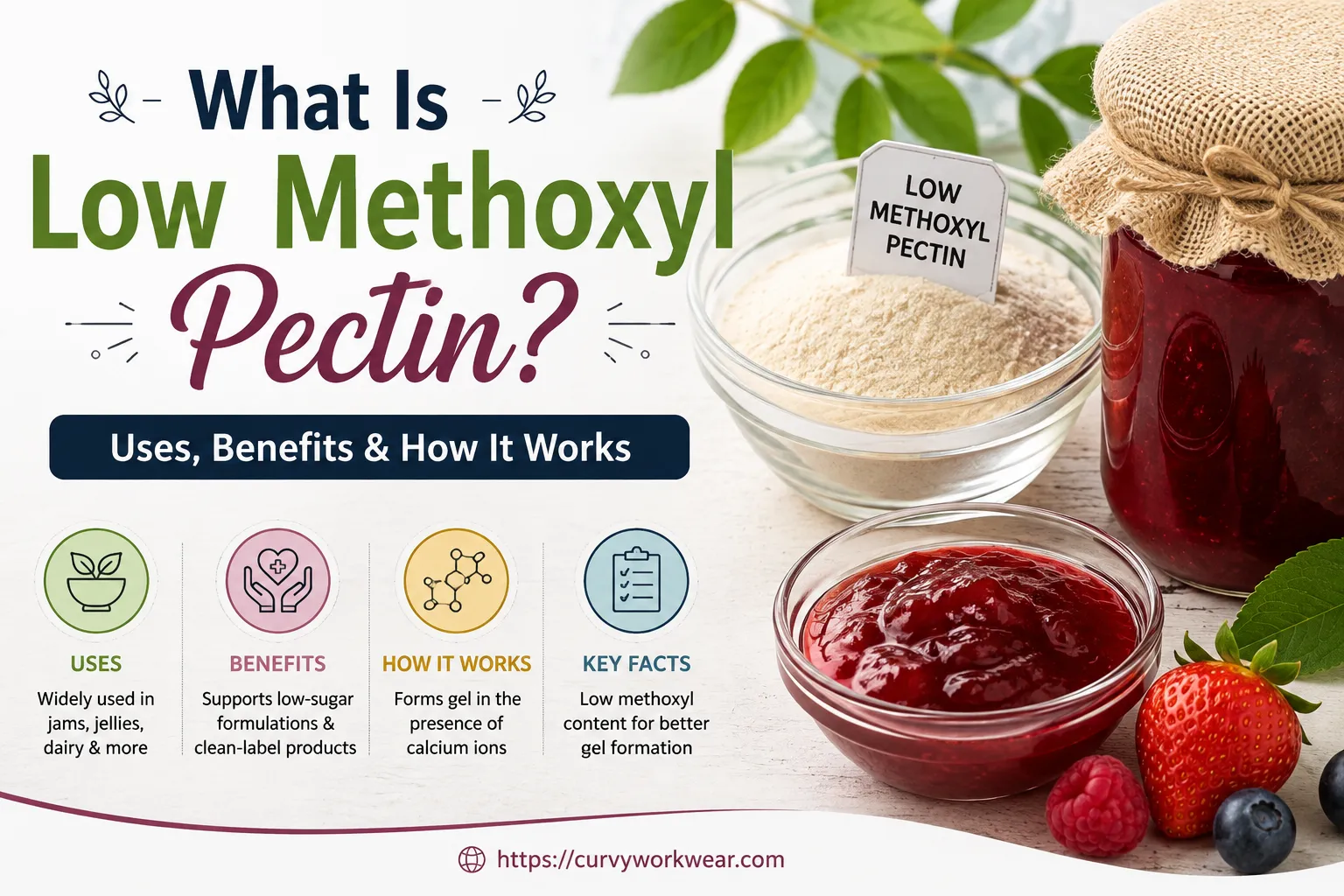
Low methoxyl pectin is a plant-based thickener that gels using calcium instead of sugar. Unlike the pectin found in most grocery store pectin boxes, it doesn’t need a big sugar hit to work its magic. That makes it a favorite in low-sugar jams, dairy products, and even some vegan gummies.
This guide breaks down what low methoxyl pectin actually is, how it works, where you’ll find it, its pros and cons, and how to use it with confidence. Every technical claim below is drawn from published food-science and regulatory sources, linked throughout so you can verify the details yourself.
What Is Low Methoxyl Pectin, Exactly?
Pectin is a natural carbohydrate found in the cell walls of fruits and vegetables. It’s especially abundant in citrus peels, apple pomace (the leftover pulp from pressing apples), and sugar beet pulp. Food makers extract it and use it to thicken, gel, and stabilize all kinds of products.
Not all pectin behaves the same way, though. Scientists measure something called the “degree of esterification,” or DE for short. This number tells you how many methyl groups are still attached to the pectin’s structure.
Low methoxyl pectin has a DE below 50%. High methoxyl pectin, the more common type used in traditional jam-making, sits above that 50% mark. That single number changes everything about how each type behaves in a recipe. The U.S. Food and Drug Administration formally recognizes pectin, including the low-ester (low methoxyl) form, as a food ingredient under 21 CFR § 184.1588, where it’s classified as Generally Recognized As Safe (GRAS) for use as an emulsifier, stabilizer, and thickener.
How Low Methoxyl Pectin Differs From High Methoxyl Pectin
High methoxyl pectin needs both a high sugar content and an acidic environment to gel properly. Think classic strawberry jam, loaded with sugar and a splash of lemon juice.
Low methoxyl pectin skips that requirement entirely. Instead, it needs calcium ions to form a gel, so it works even in low-sugar or sugar-free recipes. That’s a huge advantage for anyone cutting back on sugar without giving up jams, jellies, or fruit spreads.
Where Low Methoxyl Pectin Comes From
Most commercial low methoxyl pectin starts out as regular high methoxyl pectin. Manufacturers then treat it with acid, alkali, or enzymes to strip away some of those methyl groups. This process, called de-esterification, is what pushes the DE below 50% and unlocks its calcium-loving behavior. A USDA National Organic Program technical evaluation report documents this process in detail, noting that acid demethylation is the most common commercial method, though it can reduce pectin’s molecular weight if not carefully controlled.
Some low methoxyl pectin is also sourced from less common plants, like sunflower heads or potatoes, though citrus and apple sources remain the most widely used in commercial products.
How Low Methoxyl Pectin Works
Understanding the science here isn’t complicated once you picture it the right way.
The Role of Calcium
Imagine pectin molecules as long, thin strands lined with tiny negative charges. Calcium ions carry a positive charge, so they act like little clips that pull two strands together. Food scientists call this the “egg-box model,” since the calcium ions sit between pectin chains much like eggs nestled into an egg carton.
This calcium bridge is what creates the gel. Without enough calcium, low methoxyl pectin simply won’t set, no matter how much sugar or acid you add.
Regular vs. Amidated Low Methoxyl Pectin
There are two main types of low methoxyl pectin you’ll come across.
Regular low methoxyl pectin (sometimes labeled LMC) reacts strongly to calcium and needs a fairly precise amount to set well. Amidated low methoxyl pectin (LMA) has some of its groups converted to amides during processing, which makes it more forgiving. It tolerates a wider range of calcium levels, so it’s less likely to turn rubbery or fail to set.
Amidated versions tend to show up more often in commercial low-sugar jams, since manufacturers want consistent results across large batches.
Low Methoxyl Pectin Uses
Low methoxyl pectin uses stretch well beyond homemade jam, even though that’s where most people first encounter it.
Low-Sugar Jams and Jellies
This is the classic use case. Because it doesn’t rely on sugar to gel, low methoxyl pectin lets manufacturers and home cooks make spreads with a fraction of the sugar found in traditional recipes. Penn State Extension covers this application directly, walking through how the calcium packet included with most low methoxyl pectin products is mixed and added during cooking.
Dairy and Plant-Based Products
Yogurt, fruit-on-the-bottom cups, and some plant-based dairy alternatives use low methoxyl pectin to keep fruit pieces suspended and to give the product a smooth, stable texture.
Bakery Fillings and Fruit Preparations
Pie fillings, fruit preparations for pastries, and bakery glazes often rely on low methoxyl pectin. It holds its shape during baking better than sugar-dependent alternatives, especially in reduced-sugar recipes.
Vegan Gummies and Confections
Since low methoxyl pectin doesn’t need gelatin (an animal product) to set, it’s become a go-to ingredient for vegan gummy candies and other plant-based confections.
Other Food and Industrial Applications
Food scientists also use low methoxyl pectin as a fat substitute in products like mayonnaise, where its gel structure mimics the mouthfeel of fat without adding calories. In pharmaceutical research, calcium-set pectin gels are being studied for controlled drug release, though this remains a specialized, evolving area rather than a mainstream consumer use.
Advantages and Disadvantages of Low Methoxyl Pectin
Low methoxyl pectin solves a real problem, but it isn’t a drop-in replacement for regular pectin. Weighing both sides helps set the right expectations before you start a batch.
Advantages
- Works without a lot of sugar. This is the single biggest reason food makers reach for it. Traditional pectin practically demands sugar to function, which isn’t ideal for anyone managing sugar intake or making sugar-free products.
- Performs across a wider pH range. High methoxyl pectin is picky about acidity. Low methoxyl pectin gels reliably across a broader pH range, generally somewhere between pH 2 and 6, which makes it easier to use in products that aren’t naturally acidic.
- Offers more predictable texture control. Because gelling depends on calcium rather than sugar concentration, you can fine-tune texture more precisely. Add more calcium for a firmer set, or less for a softer, spreadable one.
- Produces a reversible gel. Low methoxyl pectin gels are typically thermally reversible, meaning they can soften when heated and reset again as they cool. This is useful for products that go through multiple heating and cooling cycles during manufacturing.
- Recognized as safe for food use. Under FDA regulation 21 CFR § 184.1588, pectin is affirmed as GRAS with no limitation beyond standard manufacturing practice.
Disadvantages
- Needs a precise calcium ratio. Too little calcium and the batch stays runny. Too much and the gel turns tough or grainy. Regular (LMC) pectin is especially unforgiving here, which is why package instructions matter more than they do with traditional pectin.
- Color and shelf stability can suffer. Low-sugar and sugar-free batches made with low methoxyl pectin tend to darken faster in storage than full-sugar versions, an issue Penn State Extension specifically calls out in its low methoxyl pectin guidance.
- Higher cost and less familiarity. Low methoxyl pectin typically costs more than standard pectin and isn’t stocked everywhere, so it can mean a trip to a specialty or online retailer.
- Not interchangeable with regular pectin. You can’t simply swap it into a traditional recipe; you need instructions written specifically for calcium-set pectin, which adds a learning curve for first-time users.
- Rare allergy risk. Pectin is derived from citrus or apple sources, and while reactions are uncommon, case reports of pectin-related allergic responses do exist in people with existing citrus or tree nut sensitivities, according to the USDA technical evaluation report cited above.
How to Use Low Methoxyl Pectin at Home
If you want to try low methoxyl pectin in your own kitchen, a few practical tips make the process smoother.
Get the Calcium Right
Most low methoxyl pectin sold for home canning comes with a small calcium packet or instructions for using calcium water. Follow the ratio on the package closely, since too little calcium means a runny result, and too much can make the gel tough.
Don’t Skip a Taste Test Batch
Because low methoxyl pectin behaves differently from the pectin most people grew up using, it’s worth making a small test batch first. This helps you dial in sweetness and texture before committing a full batch of fruit.
Store It Properly
Keep pectin powder in a cool, dry place, sealed tightly. Moisture is its enemy, and clumped pectin doesn’t dissolve evenly, which can lead to uneven gelling.
Frequently Asked Questions
Is low methoxyl pectin the same as regular pectin? No. Regular (high methoxyl) pectin needs high sugar and acidity to gel, while low methoxyl pectin gels using calcium instead. They’re both pectin, but they behave very differently in a recipe.
Can I substitute low methoxyl pectin in a regular jam recipe? Not directly. Because it needs calcium rather than sugar to set, you’ll need a recipe or package instructions written specifically for low methoxyl pectin, including the correct calcium amount.
Is low methoxyl pectin natural? Yes, it starts as natural pectin from fruit sources like citrus peel or apple pomace. It’s then processed to reduce its methyl content, but the base ingredient remains plant-derived.
Does low methoxyl pectin work for sugar-free recipes? Yes, this is one of its main advantages. Since it doesn’t rely on sugar to form a gel, it’s well suited to sugar-free and low-sugar jams, jellies, and fruit spreads.
Where can I buy low methoxyl pectin? Specialty baking stores, some health food stores, and online retailers carry it, often labeled as “low-sugar pectin” or “LM pectin.” Always check the package for calcium-related instructions before using it.
Conclusion
Low methoxyl pectin solves a real problem: how to get a proper gel without loading a recipe with sugar. By relying on calcium instead, it opens the door to low-sugar jams, smoother dairy products, and even vegan gummies that regular pectin simply can’t handle. It does come with trade-offs, from a stricter calcium ratio to a shorter color-stable shelf life, so it pays to go in with realistic expectations.
Whether you’re a home cook experimenting with a healthier jam or a food professional formulating a new product, understanding how low methoxyl pectin works, and getting that calcium ratio right, makes all the difference. Give it a try in your next batch of low-sugar preserves, and see how it compares to what you’re used to.
For more food, lifestyle, and home how-to guides, visit us on the Curvey Workwear homepage, read more about our team on the About Us page, or browse our Lifestyle section for related everyday tips.
Disclaimer: This article is for general informational and educational purposes only and does not constitute medical, dietary, or professional food-safety advice. Always follow tested, manufacturer-approved recipes and current food-safety guidance (such as USDA or National Center for Home Food Preservation recommendations) when canning or preserving at home. If you have a citrus, tree nut, or other food allergy, or a medical condition affected by diet, consult a qualified healthcare provider or registered dietitian before using low methoxyl pectin or changing your diet.