Why Layering Can Feel Harder When You’re Plus Size
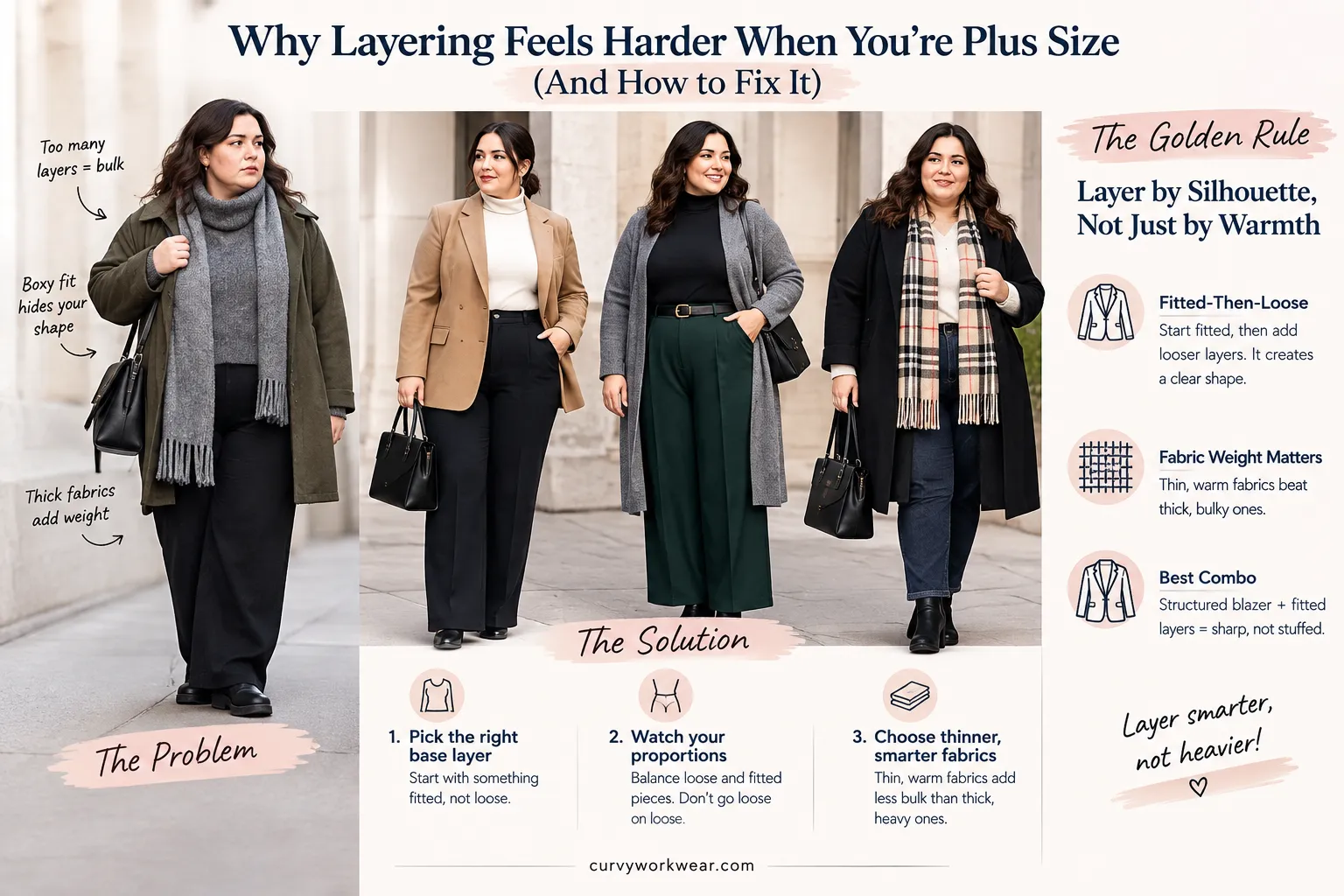
Layering can feel bulky or restrictive when clothes lack enough room through the shoulders, bust, and upper arms. The solution is to focus on fabric weight, comfortable fit, and easy movement rather than avoiding extra layers.
Choose lightweight, warm fabrics. A thin merino wool top or thermal base layer can provide warmth without the bulk of several thick sweaters. Add a mid-layer and weather-appropriate coat when needed.
Check the fit of your outerwear. Try jackets and coats over the clothes you plan to wear underneath. You should be able to reach forward, bend your elbows, and fasten the garment without pulling or tightness.
Mix different lengths and textures. Pair a lightweight top with a structured jacket or wear an open cardigan over a simple base. Different lengths can add visual interest, but choose combinations that suit your personal style.
The key is to build layers that work together: comfortable against your skin, warm enough for the weather, and roomy enough to move freely.
The Golden Rule: Layer by Silhouette, Not Just by Warmth
Most people layer for warmth only. They just keep adding pieces. But shape matters just as much as warmth. How your layers sit together changes how you look. The goal isn’t just staying warm. It’s staying warm while keeping your shape visible. That means thinking about fit, not just fabric count.
Why Fitted-Then-Loose Works Better Than Loose-on-Loose
Start with something fitted close to your body. Then add looser layers on top. This creates a clear shape underneath. Your loose layers have something to follow.
Two loose pieces together lose that shape. Everything blends into one big block. A fitted turtleneck under a loose cardigan works well. A loose shirt under a loose coat does not.
The rule is simple. Fitted first, loose after. Not loose after loose.
Fabric Weight Matters More Than Fabric Count
You don’t need more layers to stay warm. You need the right fabric. Thin, warm fabrics beat thick, bulky ones every time.
Merino wool is a good example. It’s thin but keeps heat in well. Thick cotton sweaters trap less heat but add more bulk. That’s the wrong trade.
Two thin layers often keep you warmer than one thick layer. They also look sleeker. Before adding another piece, check the fabric first. Thin and warm always wins over thick and heavy.
Combo 1 — The Structured Blazer Stack
A structured blazer is the easiest way to look put-together fast. It gives your outfit shape, even over simple basics. But bulk is the enemy here. Get the layers right, and it looks sharp, not stuffed.
What to Wear Underneath So It Doesn’t Bulk Up
Most layering advice is written for straight-size bodies. The tips don’t always translate. A loose cardigan over a loose shirt works differently on curves than it does on a smaller frame.
Skip thick sweaters under a structured blazer. The shoulders and lapels already add shape, so you don’t need extra padding underneath.
Go for thin, close-fitting layers instead. A fine-knit turtleneck works well in cooler weather. A simple cotton tee or fitted button-down works the rest of the year.
Tuck your base layer in. This keeps your waist clean and stops fabric from bunching under the jacket. If you’re layering two pieces, keep the second one thin too, like a lightweight vest or a slim cardigan.
Avoid anything with a bulky collar. Big collars fight with the blazer’s lapels and make your neckline look messy. Stick to crew necks, V-necks, or a plain collar that sits flat.
Watch your sleeve length too. Push shirt sleeves up slightly or choose a slim cut, so nothing pools under the blazer sleeves.
Best Fabrics for a Sharp Blazer Silhouette
Wool blends are a reliable choice for structured blazers because they hold their shape and offer a polished finish. Wool-polyester blends can also be practical for everyday wear and travel.
Cotton twill works well in milder weather, offering a firm texture without the warmth of heavier wool. For added comfort, look for a small amount of elastane in the fabric.
Avoid choosing fabric based on weight alone. Lightweight materials can still look structured when they have a firm weave and good tailoring, while soft, drapey fabrics may create a more relaxed silhouette.
For layering underneath, choose smooth, lightweight tops that sit comfortably under the blazer without bunching around the sleeves or shoulders. The fabric, lining, and fit together determine how cleanly a blazer falls.
Combo 2 — Turtleneck + Open Cardigan
A slim turtleneck paired with an open cardigan creates a cozy, polished outfit without adding unnecessary bulk. The secret is balancing fabric thickness and choosing lengths that feel comfortable and flattering.
Keep the Neckline Simple
Pair a lightweight turtleneck with a chunkier cardigan, or choose a fine-knit cardigan over a thicker top. Keep the cardigan open to create vertical lines, and skip bulky scarves if the neckline already feels full.
Choose Lengths That Work Together
A front-tucked turtleneck can define your waist, while a longer cardigan adds movement and coverage. For a more structured look, try a cardigan that falls below the hips and sits comfortably over your bottoms. Choose a belt only if you enjoy a more defined waist.
Style tip: Focus on comfortable layers rather than strict body-shape rules. Smooth fabrics, flexible fits, and balanced proportions make this combination look intentional without feeling restrictive.
Combo 3 — Wrap Dress with a Tailored Coat
A wrap dress paired with a tailored coat creates a polished, layered outfit while keeping the dress’s natural shape visible. The key is a comfortable waist tie and a coat that complements the dress length.
Define the Waist Comfortably
Tie the wrap dress belt securely at your preferred waist position without pulling the fabric too tight. Smooth out any folds before tying, and adjust the wrap so it stays in place as you move. If the original belt feels too thin, a wider belt can add definition, provided it works with the dress fabric.
Choose a Coat That Complements the Dress
A knee-length or longer tailored coat works well with many wrap dresses. You can leave it open to show the dress’s waistline or fasten it loosely for extra warmth. The coat doesn’t have to end at a specific point relative to the dress hem; focus on balanced proportions and comfortable movement.
Style tip: Look for a coat with enough room across the shoulders and bust to fit comfortably over the dress without pulling at the buttons. A defined shoulder line and a clean fit help keep the outfit looking polished without hiding the dress underneath.
Combo 4 — Monochrome Layering for a Polished Look
Monochrome layering combines different shades of the same color to create a coordinated, polished outfit. Instead of matching every piece exactly, mix tones like charcoal, gray, and silver or camel, beige, and cream. This adds depth while keeping the overall look cohesive.
Mix Shades and Textures
Start with one dominant color and add one or two lighter or darker shades. Combine a smooth blouse, fine-knit sweater, and structured coat to create contrast through texture rather than bold colors. Wool blends, soft knits, and tailored fabrics work well together for office and everyday outfits.
Keep the Layers Balanced
Choose lightweight inner layers to avoid unnecessary bulk, then add a structured blazer or coat for definition. High-waisted trousers can create a clean transition between your top and bottom layers, while matching shoes or a bag to one of your outfit’s shades helps tie everything together.
Style tip: If an all-neutral outfit feels flat, add a subtle texture contrast, such as a ribbed knit with smooth trousers. You can create visual interest without relying on prints or bright colors.
Combo 5 — Vest-Over-Shirt Office Layering
A tailored vest over a button-down shirt is a practical alternative to a blazer. It adds structure without the extra sleeve layers, making it useful for the office, meetings, and transitional weather.
Choose a Vest That Fits Well
Look for a vest that fastens comfortably without pulling or gaping across the bust. A V-neck creates an open neckline, while a shaped waist or adjustable back can help refine the fit. Choose a length that works with your trousers or skirt, and check that the armholes allow comfortable movement without exposing too much of your shirt.
Pair It With Balanced Bottoms
Straight-leg and wide-leg trousers pair well with tailored vests. Tuck in your shirt if comfortable, and smooth excess fabric before fastening the vest. For a softer office look, try a midi skirt with loafers, flats, or low heels.
Keep the Outfit Comfortable All Day
Choose a breathable shirt fabric, such as cotton or a lightweight cotton blend, especially if you’ll wear the outfit for several hours. If the vest feels tight when you sit or reach forward, try a roomier cut rather than sizing based on appearance alone.
Style tip: Keep the vest as the main structured piece. Simple jewelry and understated shoes help the outfit look professional without making it feel overly formal.
Small Details That Make Big Layering Look Intentional
Big layering looks work because of small details. Sleeves and tucking are two of the easiest to get wrong. Get them right, and everything looks planned, not thrown together.
Sleeve Length Coordination Between Layers
Mismatched sleeves are one of the biggest signs of bad layering. Getting them to line up makes a huge difference. Each layer should peek out slightly from the one before it.
A shirt cuff should show just past your sweater sleeve. Aim for about half an inch of peek-out. Any more looks messy, any less looks like a mistake.
If your outer layer has shorter sleeves, roll up the layer underneath. This avoids bunched fabric poking out awkwardly. Match sleeve bulk too.
A thick sweater under a slim-fit jacket will bunch up and strain the seams. Push blazer or coat sleeves up slightly if they’re too long. This shows a bit of wrist and looks more relaxed.
Keep sleeve lengths in mind when you buy separates. Pieces from the same size range usually layer better together.
Where to Tuck (and Where Never To)
Tucking shapes your outfit. But tucking the wrong piece can throw off the whole look. Always tuck your base layer, like a shirt or thin top. This keeps your waistline clean under jackets and cardigans.
Never tuck a bulky sweater into pants or a skirt. It adds bulk right at your waist and looks lumpy. Use a half-tuck for a more relaxed look. Tuck just the front section in, and leave the sides loose.
Don’t tuck your outer layer, like a blazer, cardigan, or coat. These pieces are meant to hang loose over everything else. If a top has a curved or dropped hem, skip tucking it fully. Let the shape show instead of forcing it into pants.
Tuck thin layers only. Thick or stiff fabric won’t tuck smoothly and will create odd lumps at your waist.
Fabrics to Avoid When You’re Layering Multiple Pieces
Some fabrics just don’t layer well. They add bulk, cling, or slide around in annoying ways. Thick fleece, chunky cable knits, and heavy corduroy all add too much width.
They strain the seams of any jacket or blazer worn on top. Stiff denim and rough, textured fabrics like tweed don’t work as base layers either.
They don’t move well under other clothes and feel stiff to wear. Silky fabrics like silk or satin cause a different problem. They slide around and bunch up under other layers instead of sitting flat.
Stretchy spandex blends and puffy quilted fabric also cause trouble as inner or middle layers. Spandex clings to everything underneath it, and quilted fabric is too bulky unless it’s your outer layer.
For the smoothest results, stick to thin, simple fabrics like cotton, fine wool, and light jersey as your base.
How to Layer Without Overheating Indoors
Layering for cold weather is smart, but overheating indoors is a real problem. The trick is picking layers you can remove easily. Plan your outfit so each piece works on its own too.
Choose thin layers over one thick one. A few light pieces trap warmth better and let you peel off layers as needed. Bulky sweaters are harder to manage once you’re inside a warm office or store.
Pick breathable fabrics like cotton or fine wool for your base layer. These let heat escape instead of trapping it against your skin. Avoid synthetic fabrics close to your body, since they trap heat and can feel sweaty fast.
Skip turtlenecks under heavy coats if you’re heading somewhere warm. Choose a lower neckline instead, so you have room to cool down. Layer a scarf loosely too, so it’s easy to remove without messing up your hair or collar.
Carry a tote bag or work bag with room for extra layers. This gives you somewhere to stash a scarf, cardigan, or coat once indoors. Planning ahead means you stay comfortable all day, no matter the temperature changes.
Quick Layering Checklist Before You Leave the House
Use this quick checklist to make sure your layered outfit looks polished and feels comfortable throughout the day.
- Check your base layer: Make sure it feels comfortable and doesn’t bunch under other clothes.
- Test your movement: Raise your arms, sit down, and reach forward to check for tightness.
- Check your proportions: Make sure your jacket, cardigan, or coat works well with your top and bottoms.
- Smooth the sleeves: Adjust any fabric bunching around your wrists and elbows.
- Check your neckline: Avoid unnecessary bulk around your neck if you’re already wearing a high-neck top.
- Adjust your belt: Keep it secure but comfortable enough for sitting and moving.
- Inspect from every angle: Check the front, sides, and back in a mirror.
- Plan for changing temperatures: Make sure you can remove an outer layer without feeling underdressed.
- Keep essentials handy: Carry a bag with enough room for a scarf or lightweight layer if the weather changes.
- Finish with simple accessories: Choose shoes and accessories that complement your outfit without making it feel crowded.
Final Thoughts
Layering looks hard, but it really comes down to a few simple rules. Pick thin base layers, watch your proportions, and let one piece stand out. The rest falls into place naturally once you get those basics right.
Don’t overthink every outfit from scratch. Once you find a combo that works for your body, repeat it with small changes. Swap colors, textures, or accessories, and you’ll always look put-together without much effort.
Start with one or two combos from this list and practice them first. Getting comfortable with sleeve lengths, tucking, and belting takes a little trial and error. But once it clicks, layering becomes second nature, not a daily struggle.
Disclaimer:
This article shares general styling tips based on common fashion principles. Every body is different, so use these ideas as a starting point, not a strict rule. Fit, comfort, and personal style always matter more than any guideline. Try different combos and trust what actually feels right and looks good on you.