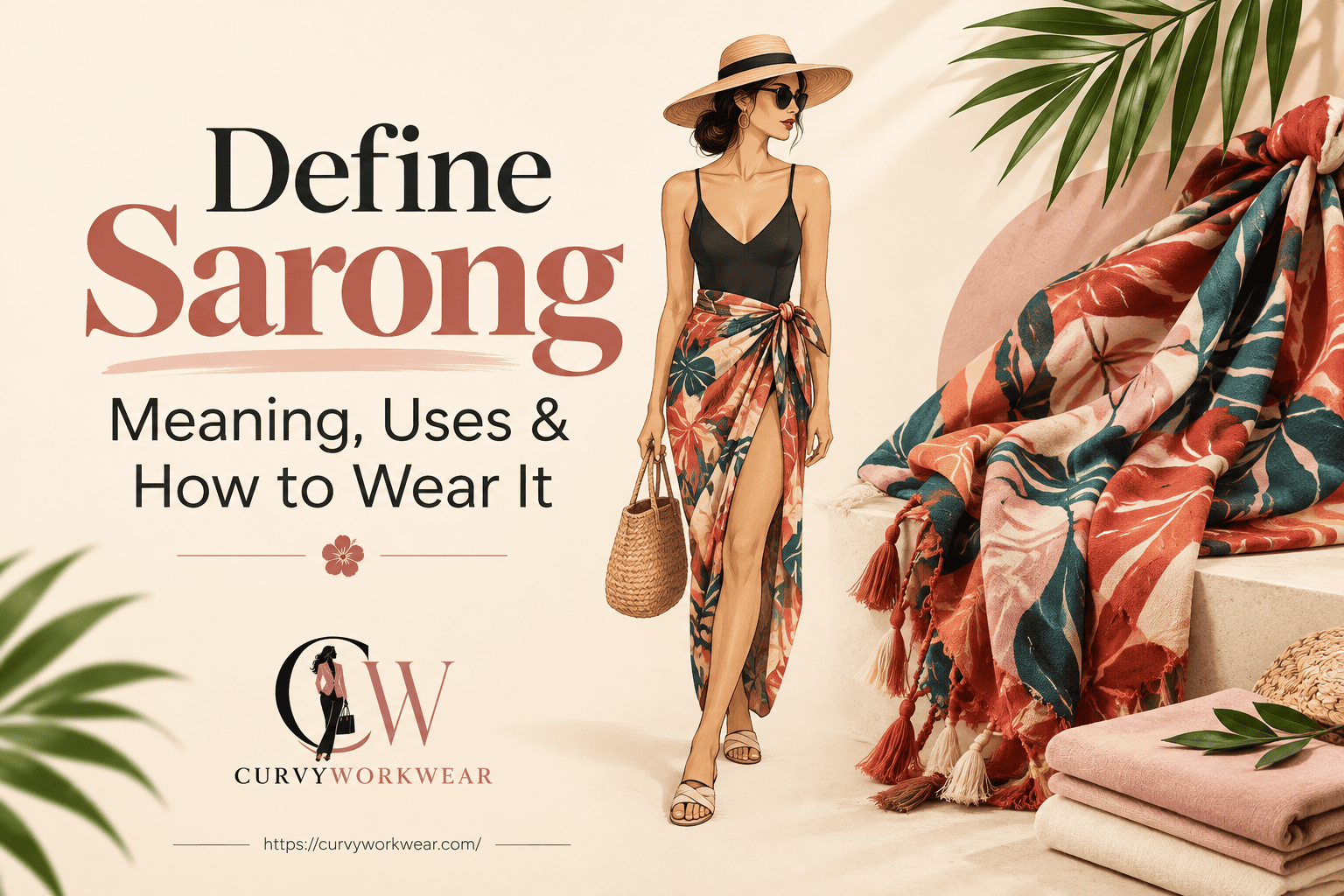
A sarong is a versatile piece of fabric worn around the body in different ways. It is popular for beach trips, summer outfits, and casual occasions. Define Sarong means understanding what this garment is, how people use it, and why it remains popular in fashion. Sarongs come in various fabrics, colours, patterns, and sizes to suit different preferences. You can tie one around your waist, style it as a dress, or wear it as a beach cover-up.
Learning how to Define Sarong also helps you understand its purpose and styling options. This guide explores its meaning, uses, fabrics, and easy ways to wear it.
What Is a Sarong?
A sarong is a piece of fabric wrapped around the body. People wear it as a skirt, dress, or beach cover-up. It is popular in many Southeast Asian cultures and beach destinations. Sarongs come in different sizes, colours, patterns, and fabrics. Some have simple designs, while others feature bright prints or traditional patterns. You can tie a sarong around your waist or wrap it around your upper body. Its flexible design makes it useful for many occasions. People also wear sarongs as part of traditional clothing in different regions.
Sarong at a Glance
| Feature | Details |
|---|---|
| Garment Type | Wraparound clothing |
| Common Shape | Rectangular, sometimes square |
| Common Fabrics | Cotton, rayon, silk, polyester |
| Main Uses | Beachwear, casual wear, traditional clothing |
| Styling Options | Wrap, knot, tie, or drape |
What Does Sarong Mean?
A sarong is a large piece of fabric wrapped around the body. People often wear it around their waist or across their chest. The word commonly describes wraparound clothing worn by men and women. Sarongs come in many colours, patterns, sizes, and fabrics. People choose different styles for comfort, fashion, or cultural reasons.
Where Did the Sarong Originate?
Sarongs have a long history across Southeast Asia and nearby regions. People in Indonesia, Malaysia, and other areas wear traditional sarongs. Similar wraparound garments also appear in parts of South Asia and the Pacific. Different communities developed their own fabrics, patterns, and wearing styles. Sarongs can reflect local traditions, cultural identity, and everyday life. Their exact history varies across regions and communities.
What Are Sarongs Used For?
People wear sarongs for beach trips, everyday activities, and cultural occasions. Their simple design allows people to style them in different ways. Some use sarongs for light coverage in warm weather. Others wear them as part of traditional or religious dress. The fabric, pattern, and wrapping style often depend on the occasion.
Sarongs as Beach Cover-Ups
Many people wear sarongs over swimsuits at beaches and swimming pools. You can tie one around your waist like a skirt. You can also wrap it around your chest like a dress. Lightweight fabrics make many sarongs comfortable in warm weather. Some designs provide more coverage than others. Choose a style that feels comfortable and suits your plans.
Sarongs for Everyday Wear
Sarongs can also work for relaxed outfits outside the beach. People may wear them at home, on holidays, or during casual outings. A cotton sarong can feel comfortable in warm weather. You can pair it with a simple top or sandals. Some people also use sarongs as scarves or light shoulder wraps, similar to these easy linen scarf styles. The best styling choice depends on the fabric and design.
Sarongs in Traditional Clothing
Sarongs have important cultural roles in several regions. In Indonesia and Malaysia, people wear them in different traditional settings. Styles and names vary between communities and local traditions. Some people wear sarongs during ceremonies, religious occasions, or daily activities. Traditional sarongs may feature batik patterns, woven designs, or regional motifs. Their meaning depends on the local culture and how people wear them.
What Fabrics Are Sarongs Made From?
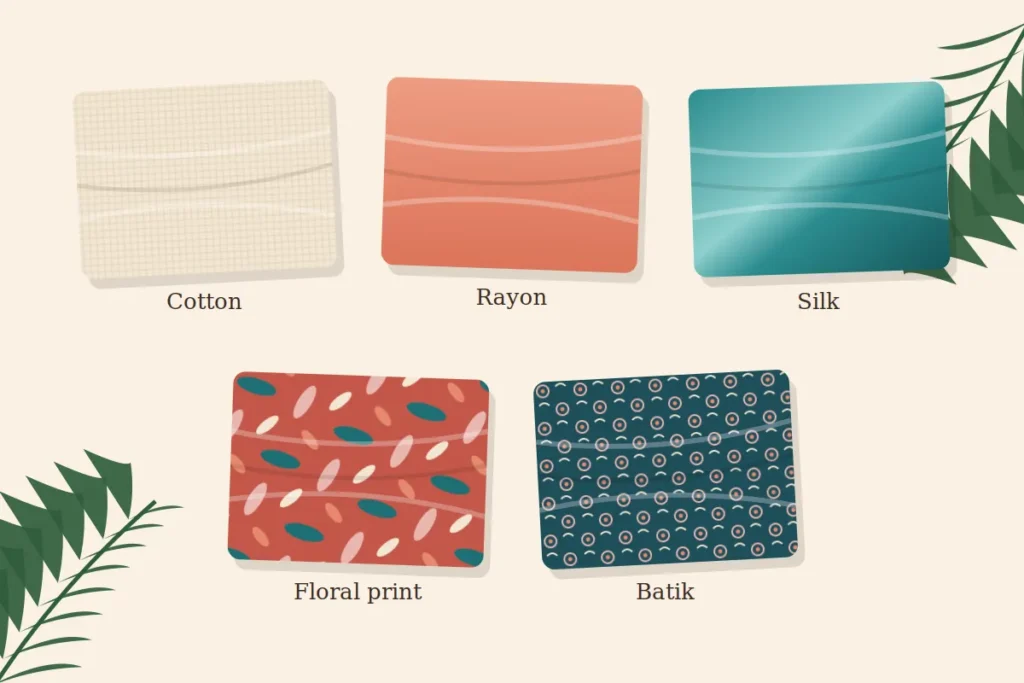
Sarongs come in different fabrics, and each offers a different feel. Some fabrics, like Tencel, feel soft and breathable, while others look smooth and elegant. Your choice depends on comfort, weather, and how you plan to wear it. Cotton works well for everyday use because it allows airflow. Rayon, also known as viscose, drapes nicely and suits lightweight summer outfits. Silk offers a smooth feel for more formal occasions. Polyester often dries quickly, making it useful for travel. Chiffon is lightweight and sheer, so people often layer it over swimwear.
Common Sarong Fabrics Compared
| Fabric | Main Features | Best Use |
|---|---|---|
| Cotton | Breathable and comfortable | Everyday wear |
| Rayon | Soft with a flowing drape | Summer outfits |
| Silk | Smooth and elegant | Dressy occasions |
| Polyester | Durable and often quick-drying | Beach and travel |
| Chiffon | Lightweight and often sheer | Beach layering |
Fabric performance depends on its weave, thickness, and blend. Always check the care label before washing your sarong.
How to Wear and Tie a Sarong
A sarong offers several simple ways to create stylish outfits. You can wrap it around your waist or across your upper body. The way you tie it depends on its size and fabric. Lightweight sarongs usually create soft folds and flowy shapes. Follow these easy methods to style your sarong for different occasions.
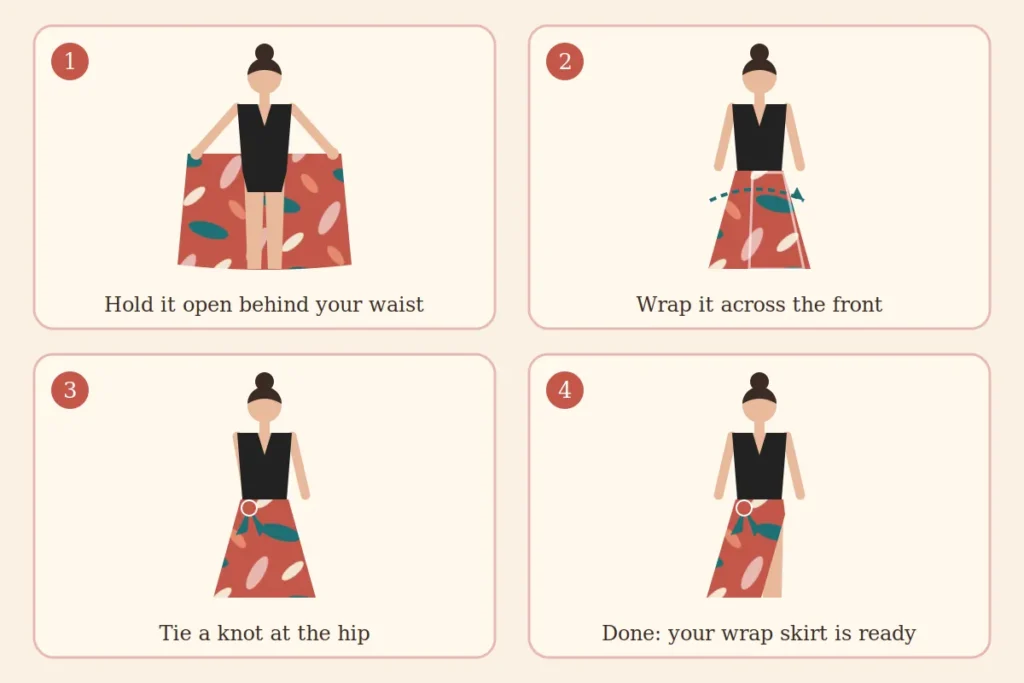
How to Wear a Sarong as a Skirt
Hold the sarong horizontally behind your waist. Wrap both ends around your body until the fabric feels secure. Tie the ends into a knot at your hip or waist. Adjust the fabric to create your preferred skirt length. You can wear this style over swimwear or with a casual top. Choose a secure knot to help keep the sarong in place.
How to Tie a Sarong as a Dress
Hold the sarong behind your back at chest level. Bring both ends forward across your chest. Tie the ends securely behind your neck. Adjust the fabric to create a comfortable fit. You can also tie the ends over one shoulder. This style works best with a large, lightweight sarong. Check the knot before moving around.
How to Wear a Sarong as a Beach Cover-Up
A sarong makes a simple cover-up for beachwear and poolside outfits. Wrap it around your waist over your swimsuit. Tie the ends at one side to create a relaxed look. You can choose a short or long style. For more coverage, wrap the fabric higher around your body. Pick a lightweight fabric that feels comfortable in warm weather.
How to Style a Sarong with Swimwear
Pair a colourful sarong with a simple swimsuit for an easy beach outfit. Choose matching colours for a coordinated look. You can also mix prints with plain swimwear. Add sandals, sunglasses, or a sun hat to complete your outfit. Wear the sarong as a skirt or tie it as a dress. Select a fabric that suits your plans and desired coverage.
How to Choose a Sarong for Your Body Shape
Choosing the right sarong depends on your comfort and personal style. Different lengths and fabrics can create different looks. You do not need to follow strict rules for your body shape. Instead, choose a sarong that makes you feel confident. Consider its size, colour, pattern, and how you plan to wear it. These details can help you find a style that suits your preferences.
Choosing the Right Length and Size
Sarongs come in different lengths and sizes for various styling options. A shorter sarong works well as a simple waist wrap. A longer sarong offers more coverage around your legs. Wider designs provide more fabric for dresses and full-body wraps. Choose a size that allows you to tie the fabric securely. Lightweight materials often drape easily and feel comfortable in warm weather. Always check the measurements before buying a sarong online.
Choosing Colours, Prints, and Patterns
Sarongs come in solid colours, floral prints, stripes, and geometric patterns. Choose colours that match your swimwear or favourite summer outfits. Bright shades can create a bold and cheerful look. Neutral colours offer a simple style that pairs with many outfits. Small prints create a different look from large, bold patterns. You can also mix patterns with plain tops or swimsuits. Most importantly, choose colours and designs that match your personal taste.
Sarong vs. Beach Cover-Up: What’s the Difference?
A sarong and a beach cover-up both offer extra coverage over swimwear. However, they differ in design and styling. A sarong is usually a large piece of fabric wrapped around the body. You can tie it in different ways to create various looks. A beach cover-up is a broader term for clothing worn over swimwear. It can include dresses, shirts, tunics, and lightweight wraps. Your choice depends on your comfort and preferred style.
Sarong vs. Beach Cover-Up
| Feature | Sarong | Beach Cover-Up |
|---|---|---|
| Design | Fabric wrapped around the body | Dress, shirt, tunic, or wrap |
| Fit | Usually tied or knotted | Often ready to wear |
| Styling | Offers different wrapping options | Depends on the garment design |
| Versatility | Can create several looks | Varies by garment type |
A sarong can also serve as a beach cover-up. However, not every beach cover-up is a sarong. Choose a sarong for flexible styling or a ready-made cover-up for convenience.
How to Care for a Sarong
Proper care helps keep your sarong clean, soft, and looking good. Always check the care label before washing it. Different fabrics need different cleaning methods. Cotton sarongs often handle gentle machine washing, depending on their labels. Silk sarongs usually need more careful washing or professional cleaning. Use mild detergent and avoid harsh products that may damage delicate fibres.
Wash bright colours separately if the fabric may bleed. Air-dry your sarong when possible, away from strong sunlight. Store it in a clean, dry place to prevent unwanted smells. Follow the fabric’s care instructions to help your sarong last longer.
Frequently Asked Questions About Sarongs
What Is a Male Sarong Called?
Men wear sarongs in many Southeast Asian cultures. In South Asia, similar garments are often called lungis or mundus.
What Is Another Name for a Sarong?
A sarong is sometimes called a pareo, especially in Polynesian contexts. Names vary across regions and cultures.
What Is a Sarong Used For?
People wear sarongs as skirts, dresses, and beach cover-ups. They are also used for everyday wear and traditional clothing.
Is a Sarong a Lungi?
A sarong and a lungi are similar wraparound garments. However, their names, styles, and cultural uses differ by region.
Final Thoughts
A sarong is a versatile garment with many uses and styling options. You can wear it as a skirt, dress, or beach cover-up. It also holds cultural importance in many regions around the world. Choosing the right fabric, size, and design improves comfort. With proper care, your sarong can remain beautiful for longer. Whether you wear it at the beach or home, it offers comfort and style.
Disclaimer: This article provides general information about sarongs, their uses, fabrics, and styling options. Cultural names, traditions, and wearing styles may vary by region. Always follow the care label instructions for your sarong’s specific fabric. Choose styles and fabrics based on your comfort and personal preferences.