What Causes Hair Breakage?
Hair breakage happens when hair strands become weak and snap easily. Everyday habits can damage hair and make it more fragile. Heat, rough brushing, and tight hairstyles are common causes. Chemical treatments can also weaken hair over time. The good news is that small changes can help protect your hair. Understanding these causes makes it easier to build a gentle hair care routine.
Common Habits That Weaken Hair
Hair breakage happens when strands become damaged and snap. Heat styling, chemical treatments, and rough handling are common causes.
Excessive heat styling: Frequent use of flat irons and curling irons can damage hair. High heat can leave strands dry and brittle.
Chemical treatments: Bleaching, relaxing, and repeated coloring can weaken the hair shaft. Treating already damaged hair can increase breakage.
Rough brushing: Pulling through knots can snap fragile strands. Detangle gently, using a method suited to your hair type.
Tight hairstyles: Tight ponytails, braids, and extensions put stress on hair. Repeated pulling can cause breakage and traction alopecia.
Rough drying: Rubbing hair hard with a towel creates friction. Gently squeeze out excess water instead.
Skipping conditioner: Conditioner reduces friction and makes detangling easier. This helps limit breakage during brushing.
Hair Breakage vs. Hair Loss: What Is the Difference?
Hair breakage and hair loss can both make hair look thinner. However, they happen for different reasons.
| Feature | Hair Breakage | Hair Loss |
|---|---|---|
| What happens? | Hair strands snap along their length. | Hair sheds or stops growing normally. |
| Common signs | Short, broken strands and uneven hair lengths. | Thinning areas, a widening part, or bald patches. |
| Main causes | Heat damage, bleaching, and rough handling. | Genetics, medical conditions, or excessive shedding. |
| Hair roots | The hair follicle usually remains in the scalp. | Some conditions affect the hair follicle or growth cycle. |
| Can it improve? | Gentle care can reduce further breakage. | Regrowth depends on the cause and treatment. |
| What helps? | Conditioner, gentle detangling, and less heat styling. | Identifying the cause and getting suitable treatment. |
Hair breakage and hair loss can sometimes happen together.
How to Prevent Hair Breakage in Everyday Life
Use a Gentle Shampoo and Conditioner
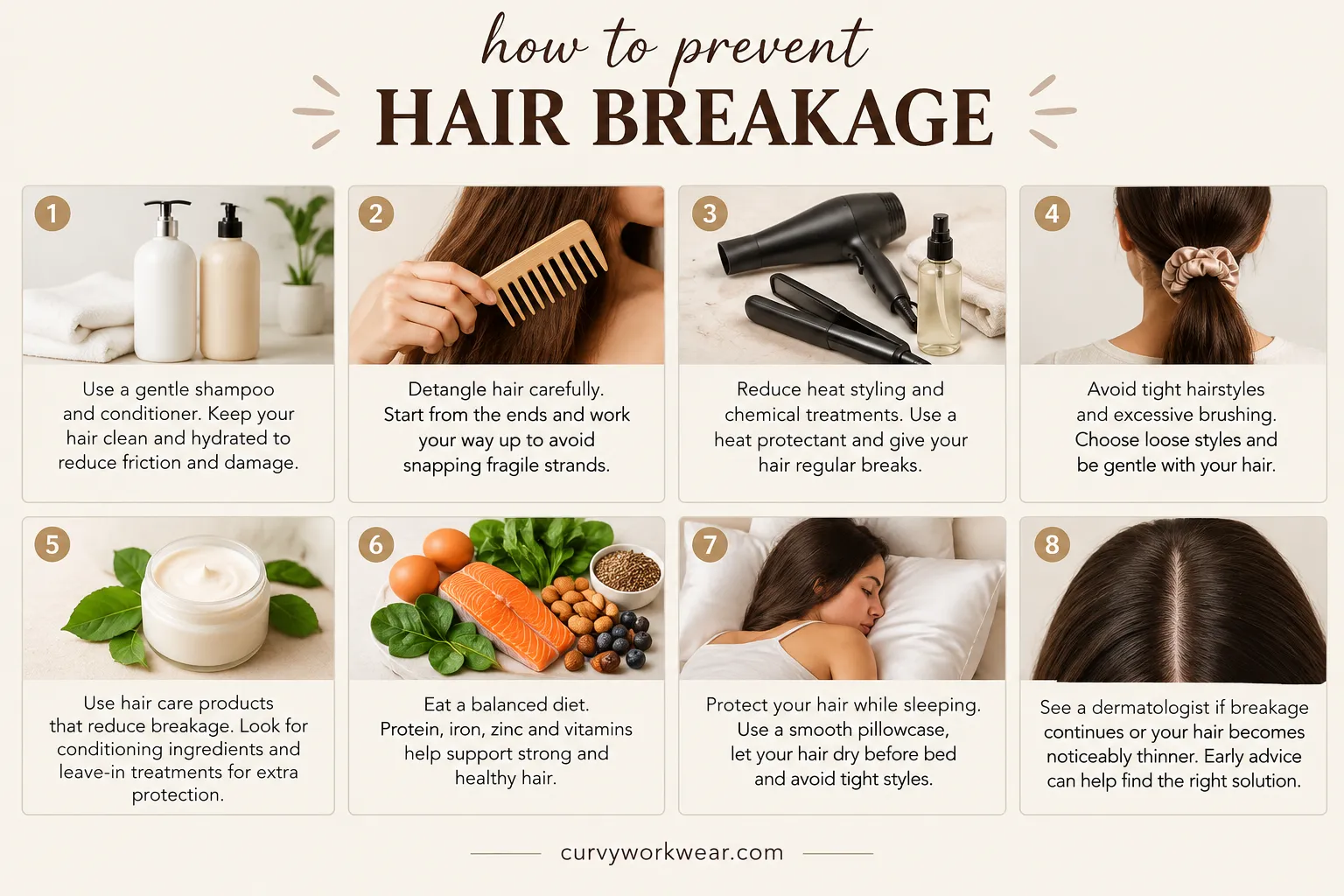
Choose a shampoo that suits your scalp and hair type. Apply shampoo mainly to your scalp, rather than rubbing it through your lengths. Use conditioner after washing to soften strands and reduce friction. Apply it mainly to your mid-lengths and ends.
Detangle Hair Without Pulling
Remove tangles gently to avoid snapping fragile strands. Start at the ends and work towards the roots. Use a wide-tooth comb or a suitable detangling brush. Curly hair often detangles more easily with conditioner and water.
Reduce Heat Styling and Chemical Treatments
Frequent heat styling can weaken hair and increase breakage. Limit flat irons, curling irons, and high-heat blow-drying. Use a heat protectant before applying heat. Space out bleaching, relaxing, and other chemical treatments to reduce damage.
Avoid Tight Hairstyles and Excessive Brushing
Tight ponytails, braids, and extensions can pull on hair. Choose looser styles and avoid hairstyles that cause pain. Brush only when needed, using gentle strokes. Never force a brush through stubborn knots.
Choose Hair Care Products That Reduce Breakage
When to Use Leave-In Conditioner and Hair Masks
Leave-in conditioners help reduce friction and make hair easier to detangle. Apply them to damp hair, focusing on dry lengths and ends. Choose a formula that suits your hair type and texture.
Hair masks provide extra conditioning for dry or damaged hair. Use one according to the product instructions, usually once weekly. They can improve softness and manageability but cannot permanently repair split ends.
Which Ingredients Help Dry, Fragile Hair?
Look for conditioning ingredients that help smooth hair and reduce friction.
- Behentrimonium chloride: Helps condition hair and improve detangling.
- Cetyl alcohol: A fatty alcohol that softens hair and improves texture.
- Dimethicone: Helps smooth strands, reduce friction, and improve manageability.
- Glycerin: Attracts moisture and helps hair retain hydration.
- Hydrolyzed proteins: Some formulas help strengthen hair temporarily and improve its feel.
No single ingredient works best for everyone. Choose products based on your hair’s needs. If you are checking a new brand before buying, read whether Nylah’s Naturals is a beauty brand first. Regular conditioning and gentle handling help prevent further breakage. Regular conditioning and gentle handling help prevent further breakage.
How to Prevent Hair Breakage Based on Your Hair Type
Hair needs different care depending on its texture and thickness. Choose habits that protect your strands and reduce damage.
Fine or Straight Hair
Fine hair can break easily when you handle it roughly. Use lightweight products that condition your hair without weighing it down.
- Use gentle products: Choose a mild shampoo and a lightweight conditioner.
- Limit heat styling: Use lower heat settings and apply heat protectant first.
- Avoid heavy products: Too much oil or cream can leave fine hair flat.
- Be gentle when wet: Wet hair stretches more easily, so avoid pulling or rough brushing.
Curly, Coily, or Textured Hair
Curly and coily hair often needs extra moisture and gentle handling. Its bends and coils can make strands more likely to break during detangling.
- Condition regularly: Use a conditioner that helps soften hair and reduce friction.
- Detangle in sections: Work through small sections to avoid pulling and snapping strands.
- Use a wide-tooth comb: Detangle gently, starting at the ends.
- Try leave-in conditioner: It can improve slip and make detangling easier.
- Protect hair at night: Use a satin or silk bonnet, or a smooth pillowcase.
- Avoid tight styles: Choose comfortable hairstyles that do not pull on your roots.
For every hair type, gentle handling matters most. Regular conditioning, less heat, and fewer tight hairstyles can help reduce breakage.
Does Your Diet Affect Hair Breakage?
Yes, your diet can affect hair strength and growth. Hair needs enough protein, iron, zinc, and other nutrients to grow normally. Not getting enough of these nutrients may weaken hair or increase shedding.
Include a variety of nutrient-rich foods in your daily meals. Eggs, fish, beans, lentils, nuts, and dairy provide useful nutrients. Fruits and vegetables also supply vitamins that support overall health.
However, eating more nutrients will not automatically stop hair breakage. Supplements usually help only when you have a deficiency. Too much of certain nutrients can also cause harm.
If you notice ongoing hair damage or unusual shedding, speak with a healthcare professional. They can check for possible nutritional deficiencies and suggest suitable treatment.
How to Protect Hair While Sleeping
Hair can rub against your pillow while you sleep. This friction may contribute to breakage, especially when hair is fragile. A few simple changes can help reduce damage.
- Let hair dry before bed: Wet hair breaks more easily during handling. Air-dry when possible, or use a blow-dryer on low heat.
- Choose a smooth pillowcase: Satin or silk may reduce friction. However, neither material can guarantee breakage prevention.
When Should You See a Dermatologist?
See a dermatologist if hair breakage continues despite gentle hair care. You should also seek advice if you notice:
- Sudden hair loss: You lose much more hair than usual.
- Bald patches: You notice small or sudden areas of missing hair.
- Scalp problems: Your scalp feels painful, stays itchy, or develops sores.
- Worsening thinning: Your hair becomes noticeably thinner over time.
A dermatologist can examine your hair and scalp to identify the cause. Early assessment can help you get the right treatment.
Frequently Asked Questions
How to Prevent Hair Breakage Naturally at Home?
Use a gentle shampoo, condition regularly, and detangle your hair carefully. Limit heat styling and avoid tight hairstyles that pull on your strands.
What Helps Make Hair Stronger at Home?
Regular conditioning helps reduce friction and makes hair easier to manage. Eat balanced meals with enough protein and nutrients to support healthy hair growth.
Final Thoughts
Preventing hair breakage starts with small changes to your daily routine. Use conditioner, detangle gently, and limit heat styling. Remember, no product can repair split ends permanently. If breakage continues or your hair becomes noticeably thinner, consult a dermatologist. With consistent, gentle care, you can help protect your hair from further damage.
Disclaimer: This article provides general hair care information for educational purposes only. It does not replace professional medical advice or treatment. Hair breakage can have different causes, so consult a dermatologist if symptoms persist or worsen.