Introduction
Nothing stings quite like pulling your favorite wool sweater out of the wash, only to find it now fits a toddler. It’s a common mistake, and it happens more often than you’d think.
Knowing how to wash a wool sweater the right way can save you from this heartbreak. Wool is a delicate fiber, and regular washing machines and hot water are usually not its friend.
In this guide, you’ll learn the safest way to clean wool at home, what to avoid, and how to keep your sweaters soft and in shape for years.
Why Wool Sweaters Shrink So Easily
Before you wash anything, it helps to understand why wool behaves the way it does. This isn’t just a random fabric quirk.
The Science Behind Wool Shrinkage
Wool fibers are covered in tiny scales, similar to how a shingled roof looks up close. When wool gets exposed to heat, agitation, or sudden temperature changes, those scales open up and lock together. This process is called felting, and once it happens, there’s no undoing it.
For example, think of Velcro. Once those tiny hooks grip onto each other, pulling them apart is nearly impossible without damage. Wool fibers act the same way once they felt.
What Causes the Most Shrinking Damage
A few specific actions cause most shrinking accidents:
- Washing wool in hot water
- Using a regular machine cycle with heavy agitation
- Tossing wool in the dryer
- Mixing hot and cold water during rinsing
Avoiding these four things solves most shrinking problems before they start.
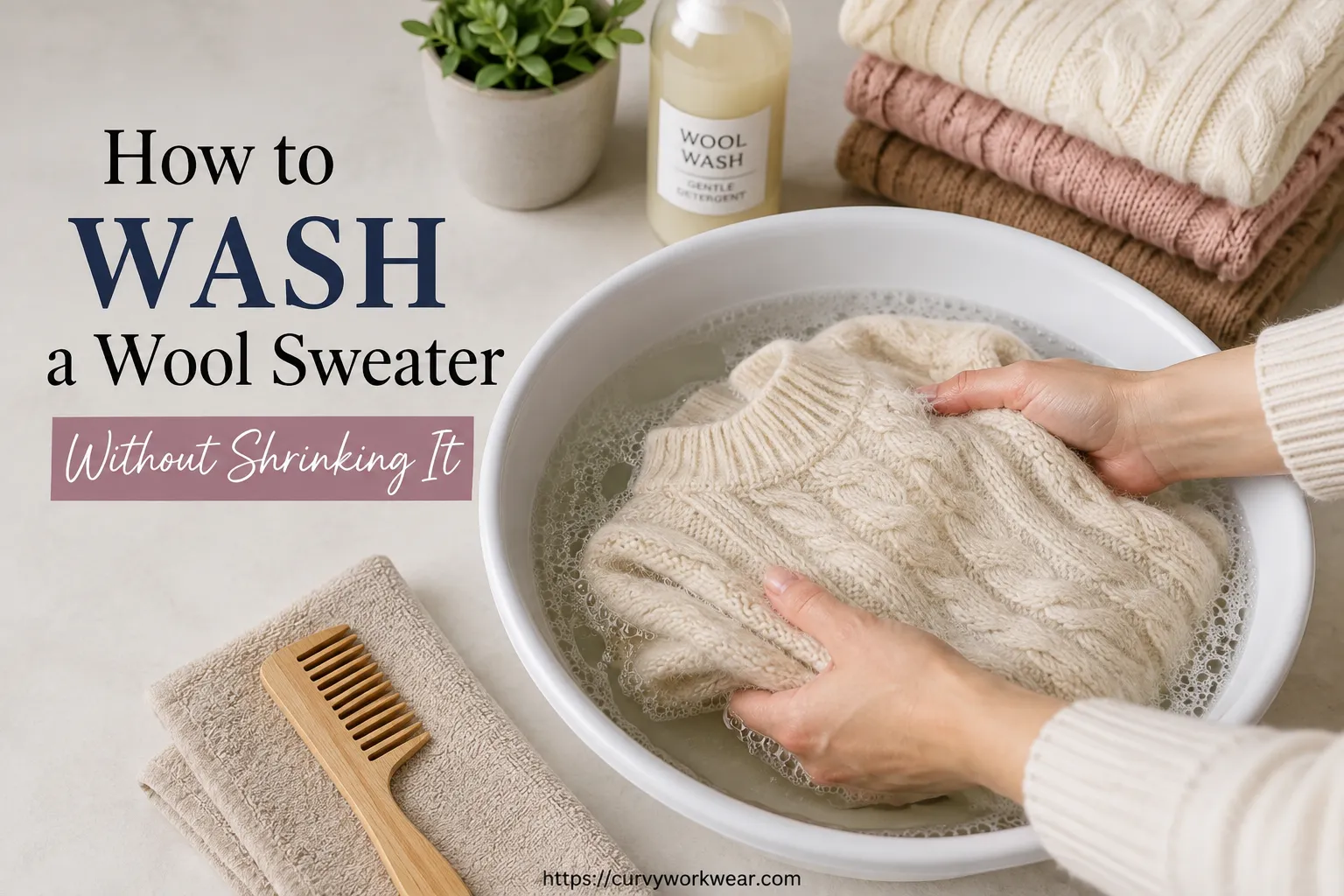
How to Wash a Wool Sweater by Hand
Hand washing is the safest method for most wool sweaters. It takes a little more time, but it protects the fibers far better than a machine ever could. According to Woolmark’s official hand washing guide, lukewarm water around 30°C is the ideal temperature for most wool garments.
What You’ll Need to Wash a Wool Sweater
- A sink or basin
- Cool or lukewarm water
- A wool-safe detergent (avoid regular laundry detergent)
- A clean towel
Step-by-Step Hand Washing Process
- Fill your sink with cool or lukewarm water. Never use hot water.
- Add a small amount of wool-safe detergent and mix it in gently.
- Submerge the sweater and let it soak for about 10 to 15 minutes.
- Gently press the water through the fabric. Don’t rub, twist, or wring it.
- Drain the soapy water and refill with clean water at the same temperature.
- Rinse by gently pressing the sweater again until the soap is gone.
The key word throughout this whole process is gentle. Wool doesn’t respond well to force, so treat it the way you’d handle a delicate piece of fabric you actually care about, because you do.
Washing Wool Sweaters in a Machine (When It’s Safe)
Not every wool sweater needs hand washing. Some are more durable, especially if they’re labeled machine washable or made from a wool blend.
Check the Care Label First
Always check the label before doing anything. Some wool sweaters are treated with a special process, called superwash treatment, that makes them safer for machine washing. Others are 100% untreated wool and should never go near a machine. Woolmark’s dedicated wool sweater washing page confirms that machine-washable wool must carry that specific claim on the label to be safe.
If Your Machine Has a Wool Cycle
Many modern washing machines include a dedicated wool or delicate cycle. This setting uses cold water and minimal agitation, which mimics hand washing fairly closely.
If your machine has this setting, place the sweater inside a mesh laundry bag first. This adds an extra layer of protection against stretching or snagging.
If You’re Unsure About Washing Wool Sweaters, Skip the Machine
When in doubt, hand washing is always the safer choice. Machines, even on gentle settings, still involve more movement than hand washing, so it’s not worth the risk for a sweater you love.
How to Dry a Wool Sweater Properly
Washing correctly is only half the job. Drying wool the wrong way can undo all that careful work in minutes. As laundry experts Zach and Jerry Pozniak explained in a laundry care feature on wool washing, wool items should always be laid flat on an absorbent towel and rolled up to remove excess moisture before air drying.
Never Use a Dryer on Wool
Heat is wool’s biggest enemy. Dryers combine heat and tumbling, which is basically the perfect recipe for shrinkage. Skip this step entirely, no matter how tempting it is to save time.
The Right Way to Dry a Wool Sweater
- Lay a clean, dry towel flat on a surface.
- Place the sweater on top and gently reshape it to its original size.
- Roll the towel up with the sweater inside to press out excess water.
- Unroll it and lay the sweater flat on a fresh, dry towel.
- Let it air dry completely, reshaping it occasionally as it dries.
This flat-drying method usually takes a full day or two, depending on the thickness of the sweater. Patience here pays off, since rushing this step is where a lot of damage happens.
Advantages and Disadvantages of Hand Washing Wool Sweaters
Hand washing is the most recommended method, but it’s worth knowing both sides before deciding on your routine.
Advantages
- Gentler on fibers. Hand washing avoids the friction and heat that cause most shrinkage.
- More control. You can check the water temperature and handle the fabric with care the entire time.
- Works for any wool item. This method is safe for sweaters, scarves, and other delicate wool pieces.
- Extends the life of the garment. Proper care means your sweater stays wearable for years, not just one season.
Disadvantages
- Takes more time. Hand washing and flat drying together can take up a full afternoon or longer.
- Requires more effort. Unlike tossing clothes in a machine, this method needs your active attention.
- Not always practical. If you have several wool items to wash at once, hand washing each one individually can feel tedious.
Common Mistakes to Avoid When Washing a Wool Sweater
A few small errors are responsible for most ruined sweaters. Knowing them ahead of time helps you sidestep the problem entirely.
Using Hot Water
Even lukewarm water that’s slightly too warm can trigger shrinkage. Stick to cool or room-temperature water every time.
Wringing or Twisting the Fabric
Wringing wool the way you would a towel stretches and damages the fibers. Always press water out gently instead.
Hanging Wool to Dry
Hanging a wet wool sweater on a hanger stretches it out of shape, since wet wool is heavier and loses its structure. Always dry wool flat, not hanging.
Skipping the Care Label
Not all wool is the same. Blends, treated wool, and delicate weaves each have slightly different care needs, so always check the label before you start. If you’re building good fabric-care habits across your wardrobe, our guide on how to stretch out jeans covers similar gentle-handling techniques for another delicate fabric situation.
FAQs About Washing Wool Sweaters
How do I wash a wool sweater without shrinking it?
Use cool or lukewarm water, a wool-safe detergent, and gentle hand pressure instead of rubbing or wringing. Always dry it flat instead of using a dryer or hanger.
Can I put a wool sweater in the washing machine?
Only if the care label says it’s machine washable or your machine has a dedicated wool cycle. When unsure, hand washing is the safer option.
What detergent should I use for washing wool sweaters?
Use a detergent specifically labeled for wool or delicates. Regular laundry detergent can be too harsh and may strip the natural oils in the fibers.
How long does it take to dry a wool sweater?
Flat drying typically takes one to two days, depending on the thickness of the sweater and the humidity in your home. Avoid rushing this step with heat.
What if my wool sweater already shrunk?
Some minor shrinkage can sometimes be reversed by soaking the sweater in lukewarm water with a bit of hair conditioner, then gently stretching it back into shape while damp. However, results vary, and severe shrinkage often can’t be fully undone.
Conclusion
Knowing how to wash a wool sweater properly comes down to a few simple habits: cool water, gentle handling, and flat drying. Skip the dryer, skip the hanger, and always check the care label before you start.
These small steps make a big difference in how long your sweaters last. With a little care, you can keep your favorite wool pieces looking and fitting the way they should for years to come. For more fabric care guidance, browse our style guides or explore the full fashion category for related wardrobe care tips.
If you’ve been avoiding wool because you’re afraid of ruining it, hopefully this guide gives you the confidence to wash it right the first time.
Disclaimer: This article is for general informational purposes only and does not replace the specific care instructions on your garment’s label. Wool types, blends, and finishes vary by manufacturer, so always follow the label first, and consult a professional dry cleaner for structured or valuable wool items.