
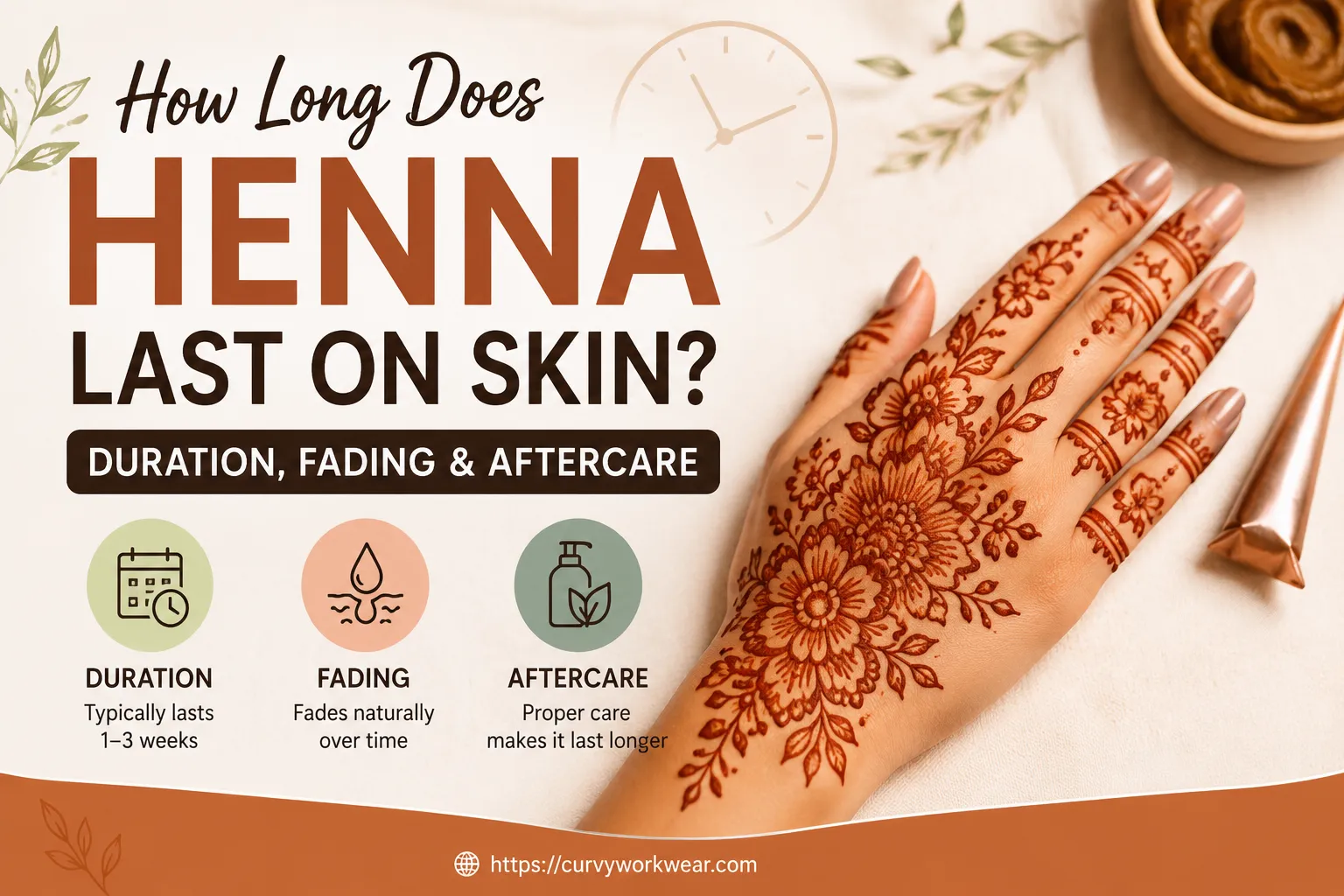
You just got a fresh henna design, and it looks amazing. But now you’re wondering: how long does henna last before it starts to fade away?
It’s one of the most common questions people ask after a henna session, whether it’s for a wedding, a festival, or just for fun. The honest answer is that it depends on a few things — your skin type, where you put the design, and how you take care of it afterward.
In this guide, we’ll walk through exactly how long it lasts on skin, why it fades the way it does, and simple aftercare tricks to help your stain stay dark and rich for as long as possible. We’ll also cover an important safety distinction — natural mehndi versus “black” versions — that’s worth knowing before your next appointment.
How Long Does Henna Last on Skin?
On average, a natural stain lasts 1 to 3 weeks on the skin. Most people see their design fade noticeably within 10 to 14 days, though a well-applied one on the right part of the body can hold on for close to 3 weeks.
It doesn’t wash off in one go. It fades gradually as your skin sheds its outer layer, day by day, until the design lightens and eventually disappears. There’s no fixed number — it’s a range, and your own experience may land a few days earlier or later than average.
Average Duration Breakdown
Here’s a simple timeline of what you can expect:
- Day 1: The paste is removed and the stain looks bright orange — this is not the final color yet.
- Day 2-3: The mark oxidizes and deepens into its darkest reddish-brown shade.
- Day 4-10: The color holds fairly well, with gradual, gentle lightening.
- Day 11-21: Fading speeds up, especially on areas with thinner skin, until the design turns pale orange-tan and blurs at the edges.
These are general ranges, not guarantees — your timeline depends on your skin and habits, which we cover below.
How Long Does Henna Stain Last on Different Body Parts?
Not all parts of your body hold a stain the same way, and this surprises a lot of first-timers.
Palms and Soles
The design lasts longest on palms and the soles of your feet. The skin here is thicker, with more layers of cells for the dye to bond with, so a mark here typically lasts 2 to 3 weeks, sometimes longer.
Arms, Legs, and Back
On thinner-skinned areas like arms, legs, or the back, the color usually fades within 1 to 2 weeks, since these areas shed skin cells faster.
Face and Neck
A design on the face or neck fades the fastest, often within 5 to 10 days, because facial skin renews itself more quickly and is washed more often. Note: applying it near the eyes carries its own safety concerns and isn’t recommended (more on regulatory status below).
Why Does the Stain Fade Over Time?
It doesn’t simply sit on the surface of your skin like paint. The dye — a compound called lawsone — soaks into the outermost layer of skin, known as the stratum corneum.
Your skin constantly renews itself: old cells shed off, and new ones take their place underneath. As the stained cells shed away, the design fades with them.
Think of it like a suntan. A tan fades over weeks as skin cells turn over, and this stain fades for the same underlying reason, just over a shorter window.
Factors That Affect How Long It Lasts
Several things speed up or slow down fading:
- Skin type: Oilier skin tends to hold the color for a shorter time than drier skin.
- Exfoliation: Frequent scrubbing, swimming, or hot showers wear the mark off faster.
- Paste quality: Fresh, well-mixed natural paste generally stains darker and lasts longer than an old or poor-quality mix.
- Application time: Leaving the paste on longer — often several hours or overnight — helps the dye penetrate deeper.
- Climate: Warmth and humidity tend to help the stain develop more fully; dry conditions can lead to a lighter result.
Aftercare Tips to Make It Last Longer
Aftercare genuinely affects how long the color lasts and how dark it turns out. Here’s what actually helps.
1. Keep the Paste On Longer
The longer raw paste stays on your skin, the darker and longer-lasting the eventual stain. Many people leave it on for several hours, or even overnight, before scraping it off.
2. Avoid Water Right After
Try to avoid washing the area for at least 12 to 24 hours after removing the paste. Water too soon can weaken the stain before it fully develops.
3. Apply Natural Oils
A little coconut, olive, or mustard oil after the paste comes off can help seal in the color and keep the surrounding skin from drying out.
4. Limit Exfoliation
Skip scrubs, loofahs, and exfoliating soaps on the area — exfoliating clears away dead skin cells faster, which fades the design sooner.
5. Avoid Chlorine and Hot Water
Pools, hot showers, and harsh soaps strip color quickly. Lukewarm water and a mild soap for the first week or two will help the mark last.
6. Moisturize Daily
Keeping the skin hydrated helps protect the stain and slows the flaking that speeds up fading.
Natural vs. “Black Henna”: An Important Safety Difference
Not all products sold under this name are the same, and this distinction matters for your safety, not just how long the color sticks around.
Natural henna comes from the plant Lawsonia inermis and produces a reddish-brown to brown stain. It’s the traditional form used for mehndi designs.
“Black henna,” on the other hand, is often the natural version mixed with a chemical called PPD (para-phenylenediamine) to create a darker, faster, longer-lasting black stain. According to the U.S. FDA’s fact sheet on temporary tattoos and black henna, PPD is not legally permitted in products applied directly to skin — it’s approved only for hair dye — and mixtures that contain it are considered unauthorized. The FDA has received numerous reports of people developing blistering, chemical burns, permanent scarring, and lasting skin sensitivity from these darker tattoos, with reactions sometimes appearing days after application rather than immediately.
A few practical safety notes:
- There’s also a regulatory wrinkle worth knowing: even the pure, plant-based version is not FDA-approved for direct application to skin (it’s approved as a hair dye only), though it has a long history of traditional use and is generally considered lower-risk than PPD-containing mixtures.
- A patch test on a small area, at least 24–48 hours before a full application, can help catch a reaction early — this matters more for “black” versions or any pre-mixed paste, since you can’t always verify what’s in it.
- If you notice redness, blistering, oozing, or unusual itching afterward, stop and see a doctor or dermatologist rather than waiting it out. Cleveland Clinic’s dermatology team confirms that the real danger comes from added chemicals like PPD, not from the plant dye itself.
If you want the lower-risk option, the natural, plant-based version — even with its shorter-lasting, lighter-brown stain — is the safer choice over anything marketed as “black” or unusually fast-darkening.
This article is for general information and isn’t a substitute for medical advice. If you have a known allergy, sensitive skin, or experience a reaction, consult a dermatologist.
FAQs About Henna Duration
How long does henna last on hands?
On hands, especially the palms, it typically lasts 2 to 3 weeks, since palm skin is thick and holds the dye well. The back of the hand tends to fade a bit faster than the palm itself.
Does henna last longer in summer or winter?
It often develops a darker stain in summer, thanks to warmth and humidity helping the dye bond with skin. In colder, drier weather, the mark may come out lighter and fade a little sooner.
Can I make henna fade faster if I don’t like it?
Yes. More frequent gentle exfoliation, warm water soaks, and oil-based makeup remover can help lighten the stain faster. Avoid harsh scrubbing, which can irritate the skin.
Is it normal for henna to fade unevenly?
Yes, this is completely normal. Areas with thinner skin or more frequent washing fade faster, so it’s common for parts of the same design to look lighter than others.
Does a henna stain last longer than henna hair dye?
On skin it usually lasts a few weeks. Used on hair, it lasts much longer — often for many months — because hair doesn’t shed and renew itself the way skin does.
Conclusion
So, how long does henna last? Most designs last anywhere from 1 to 3 weeks, depending on where it’s applied, your skin type, and how well you care for it afterward.
The stain naturally fades as your skin renews itself, moving from a bright orange right after removal to a deep reddish-brown at its peak, before slowly lightening. A few simple aftercare habits — keeping the paste on longer, avoiding early water contact, and moisturizing regularly — can help it last toward the longer end of that range.
If you’re planning a design for a special occasion, apply it a day or two ahead of time so the color has a chance to reach its darkest shade — and stick with the natural, plant-based version over anything marketed as “black” for a safer experience. And if you’re prepping your hands for the occasion, pairing your mehndi with a nail shape that suits you rounds out the look.
Desclaimer:“This article is intended for general informational purposes only and should not be considered medical advice. Henna reactions can vary from person to person, especially with ‘black henna’ products containing PPD. If you experience redness, itching, blistering, or any unusual skin reaction, please stop use immediately and consult a licensed dermatologist or healthcare provider.”