Standing at the nail salon, staring at a chart of shapes, can feel confusing. Should you go round, square, or almond?
Your nail shape affects more than looks. It affects comfort, strength, and how easy your nails are to care for.
In this guide, we’ll walk through every popular nail shape. We’ll help you figure out which one fits your hands. We’ll also share tips for keeping whatever shape you pick looking great.
By the end, you’ll know exactly which nail shapes work best for you and why.
Why Nail Shape Matters
Your nail shape is more than just a style choice. It changes how your fingers look, how strong your nails are, and how often they chip or break.
For example, square nails resist breaking better than long, pointed ones. Oval nails, on the other hand, can make short fingers appear longer.
Picking the right shape means fewer salon visits for repairs. It also means nails that actually match your lifestyle.
If you type a lot, work with your hands, or play sports, shape matters even more. A shape that looks good in photos might not survive a day of typing or lifting boxes.
Dermatologists also note that shape plays a role in nail health. The American Academy of Dermatology (AAD) recommends filing nails with an emery board and rounding the tips slightly, since this reduces snagging and breakage no matter which shape you choose.
Different Nail Shapes Explained (Pros and Cons)
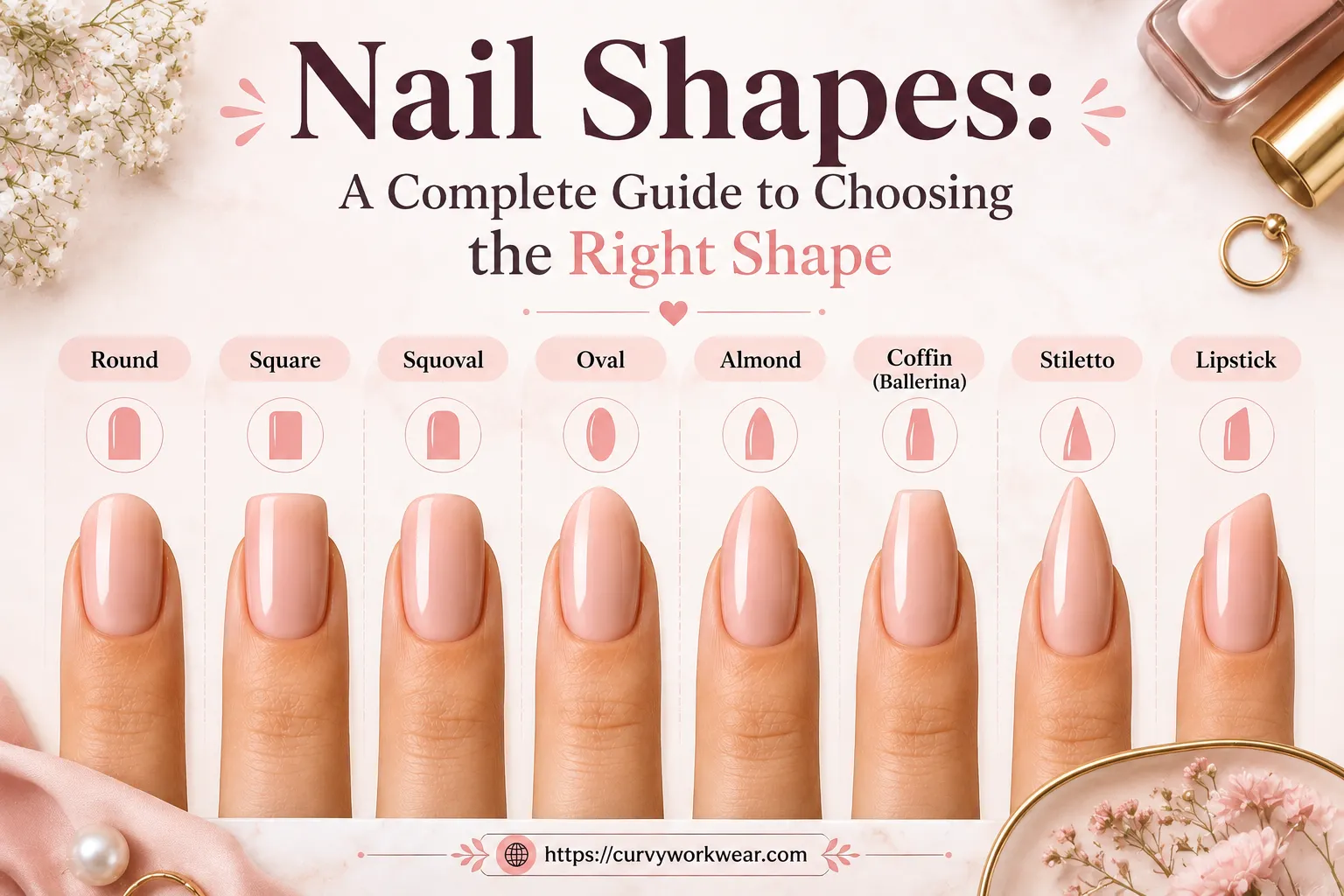
Let’s break down the most common nail shapes you’ll see in salons and nail charts today. Each one comes with its own strengths and trade-offs.
Round Nail Shape
Round nails match the natural curve of your fingertips. The sides are straight, and the tip is gently rounded, almost like a circle at the top.
This shape is one of the lowest-maintenance options. Because it’s short and close to your natural nail line, it doesn’t snag on clothes or hair as easily.
Advantages:
- Very durable and resistant to chipping
- Low maintenance, easy to file at home
- Works well for short or narrow nail beds
Disadvantages:
- Doesn’t elongate fingers as much as longer shapes
- Can look plain if you want a bolder style
Square Nail Shape
Square nails have straight sides and a flat tip. Think of a small rectangle sitting on top of your finger.
This shape is strong because the flat edge distributes pressure evenly. It’s a favorite for people who type often or use their hands a lot during the day.
Advantages:
- Strong, flat tip resists breaking
- Great surface for nail art or a French manicure
- Suits long, slender fingers well
Disadvantages:
- Sharp corners can snag on fabric or hair
- They can make short or wide fingers appear even shorter.
Squoval Nail Shape
Squoval is a mix of square and oval, hence the name. The sides are straight like a square, but the corners are softened into a slight curve.
This shape gives you the strength of square nails with a softer, more forgiving look. According to a nail shape guide from StyleSeat, squoval nails balance out both wide and long nail beds, which is part of why the shape suits so many hand types.
Advantages:
- Combines strength with a softer look
- Suits almost every hand and nail bed shape
- Fewer sharp edges than a full square
Disadvantages:
- Requires more precise filing to get the balance right
- Corners can round out unevenly if filed at home without care
Oval Nail Shape
Oval nails are longer with rounded sides and a curved tip, similar to an egg shape. This shape tends to make fingers look slimmer and longer.
Oval nails work well for people with wider nail beds who want a more elegant, elongated appearance.
Advantages:
- Elongates fingers and slims wider nail beds
- Gentler on the nail than pointier shapes
- Still fairly easy to maintain
Disadvantages:
- Needs some nail length to look its best
- Slightly more prone to snagging than round or square
Almond Nail Shape
Almond nails narrow toward the tip, similar to the shape of an actual almond. The sides taper in, and the top comes to a soft point rather than a sharp one.
This shape is elegant and works especially well for narrow nail beds, since it draws the eye upward.
Advantages:
- Elegant, elongating look for special occasions
- Flattering on narrow nail beds
- Softer tip than stiletto, so it’s a bit sturdier
Disadvantages:
- Needs regular filing to maintain the taper
- Weaker at the tip than round or square shapes
Stiletto Nail Shape
Stiletto nails come to a sharp point, similar to almond nails but far more dramatic. They’re usually worn long and require significant nail length to pull off.
This is a bold, statement-making shape. That said, stiletto nails are more fragile at the tip and need extra care to avoid breaking.
Advantages:
- Bold, eye-catching, great for nail art
- Elongates the whole hand visually
Disadvantages:
- Weakest shape for daily wear and hands-on tasks
- Usually needs acrylic or gel extensions for strength
- Higher maintenance and more frequent salon visits
Coffin (Ballerina) Nail Shape
Coffin nails, also called ballerina nails, are long with straight sides that taper slightly and end in a flat, squared-off tip.
This shape is trendy and gives a modern, edgy look. It works best on longer nails, since the flat tip needs enough length to show its shape clearly.
Advantages:
- Trendy, modern look with a wide art canvas
- Flat tip is sturdier than a pointed stiletto tip
Disadvantages:
- Needs length, so short nails don’t suit this shape well
- Often requires extensions and regular upkeep
Lipstick Nail Shape
Lipstick nails have an angled tip, cut diagonally like the tip of a lipstick bullet. It’s a less common but eye-catching option.
Advantages:
- Unique, trendy look that stands out
- Works on short, medium, or long nails
Disadvantages:
- The angle needs consistent filing to stay sharp
- Harder to do well at home without practice
How to Choose the Right Nail Shape for You
Picking a nail shape isn’t about following trends blindly. It’s about matching the shape to your hands, habits, and lifestyle.
Consider Your Nail Bed Shape
Look at your natural nail bed. Wide nail beds often look great with oval or almond shapes, which create a slimming effect.
Narrow nail beds usually suit square or squoval shapes better, since these add visual width.
Think About Your Lifestyle When Picking a Nail Shape
If you work with your hands, cook often, or type all day, go for a shorter, stronger shape like round or square.
If you mostly want nails for special events or photos, longer shapes like almond, stiletto, or coffin can work well.
Match Nail Shape to Finger Length
Shorter fingers often look more balanced with oval or almond shapes, since the elongating effect helps.
Longer fingers can pull off almost any shape, including square or coffin, without looking overdone.
Factor In Your Nail Strength
Not every nail is naturally strong. If your nails break or peel easily, stick with shorter, sturdier shapes like round or square.
Pointed shapes like stiletto put more stress on the tip. The Mayo Clinic notes that repeated stress, moisture loss, and harsh filing habits are common causes of nail splitting and breakage, which is worth keeping in mind before choosing a longer, pointed shape.
Nail Shape Guide by Hand Type
Here’s a quick nail shape guide to simplify your decision:
- Short, wide fingers: Oval or almond (adds length)
- Long, slim fingers: Square, squoval, or coffin (adds balance)
- Small hands: Round or squoval (keeps proportions natural)
- Active lifestyle: Round or square (more durable)
- Special occasions: Almond, stiletto, or coffin (more dramatic)
This isn’t a strict rulebook. Personal preference always matters more than any chart. Try a shape, see how it feels, and adjust from there.
If you like switching up your look often without touching your natural nails, nail stickers are a low-commitment way to test different shapes and designs first.
Tips for Maintaining Your Nail Shape
Once you pick a shape, keeping it looking sharp takes a little routine care.
File Your Nail Shape in One Direction
Filing back and forth can weaken the nail edge and cause splitting. Instead, file gently in one direction for a cleaner, stronger edge.
Moisturize to Protect Your Nail Shape
Dry nails are more likely to crack, no matter the shape. Use cuticle oil or hand cream regularly to keep nails flexible and less prone to breaking. You can find more grooming tips and routines if you want to build this into a full hand-care habit.
Trim Regularly to Keep Your Nail Shape
Even if you’re growing your nails out, small trims every couple of weeks help maintain the shape. This also prevents uneven growth or snagging.
Protect Longer Nail Shapes
If you choose a longer shape like stiletto or coffin, consider wearing gloves for chores like washing dishes or gardening. This reduces the daily wear that causes breakage.
For more shape ideas, styling tips, and seasonal looks, you can also browse the full nail category for fresh inspiration.
FAQs About Nail Shapes
What is the most popular nail shape?
Squoval and almond shapes are among the most popular choices today because they suit a wide range of hand types. Trends shift, though, so it’s worth checking current styles if you want something in fashion right now.
Which nail shape is best for short nails?
Round and square shapes work best for short nails since they follow the natural nail line. They don’t require much length to look neat and are also easier to maintain day to day.
Can I change my nail shape if I have weak nails?
Yes, but stick with shorter, low-stress shapes like round or square. Building nail strength with moisturizer and a balanced diet also helps before trying more delicate shapes like stiletto.
How often should I reshape my nails?
Most people reshape their nails every one to two weeks as they grow out. This applies especially to shapes like almond or coffin that need a defined taper. Round and square shapes can go a bit longer between filings.
Does nail shape affect nail health?
Yes, somewhat. Pointed shapes like stiletto are more prone to breaking because there’s less surface area at the tip. Rounder, flatter shapes tend to hold up better under daily use.
Conclusion: Finding Your Best Nail Shape
Choosing from the many different nail shapes available doesn’t have to be complicated. Think about your nail bed, your daily habits, and how much upkeep you’re willing to do.
Whether you prefer the low-maintenance round shape or the bold look of stiletto nails, the best nail shape is the one that fits your life and makes you feel confident.
Use this nail shape guide as a starting point. Don’t be afraid to try a few shapes before settling on your favorite.
Disclaimer: This article is for general information only. It is not medical advice. If you have ongoing nail pain, infection, or changes in nail color or texture, talk to a doctor or a board-certified dermatologist.