
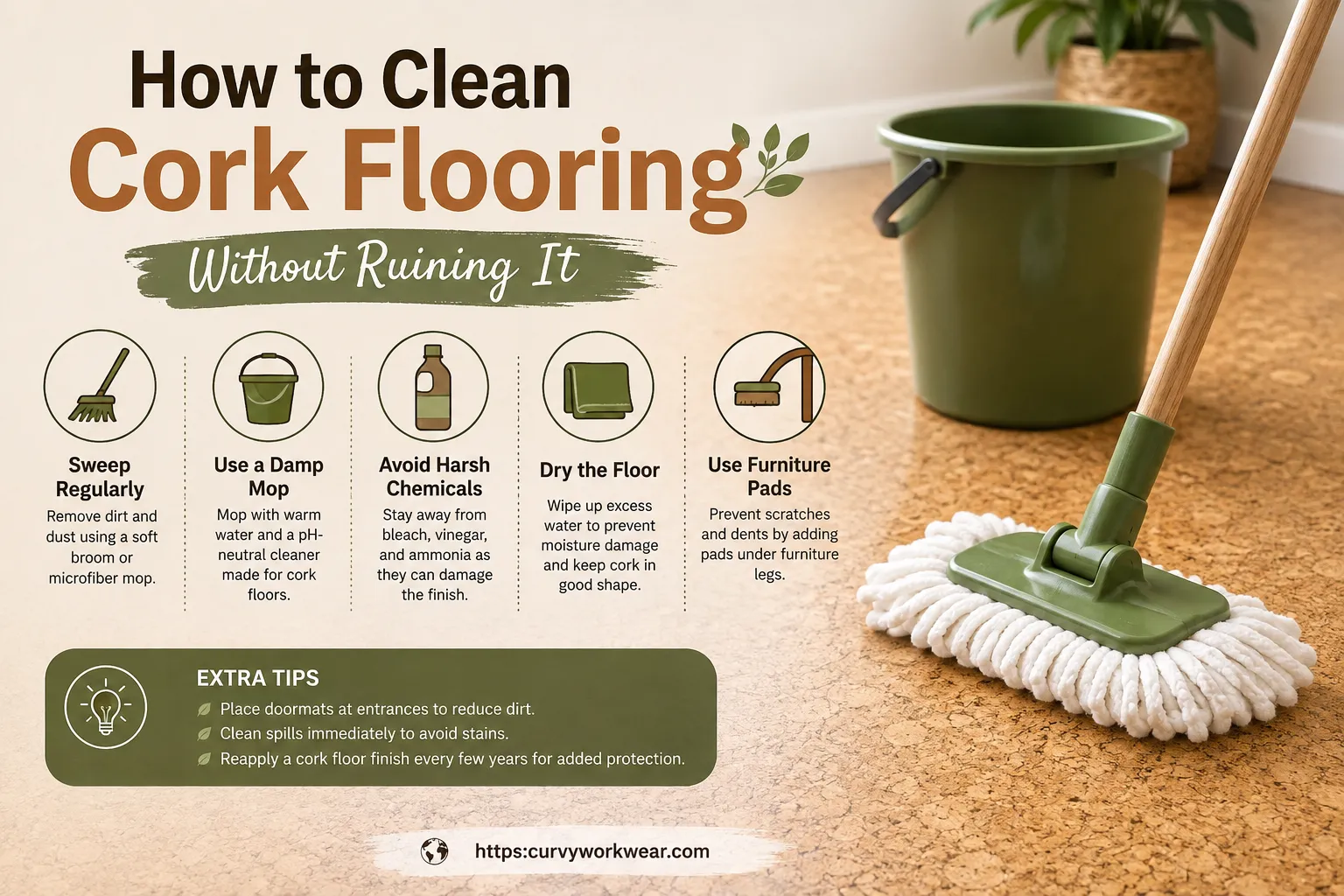
Cork floors feel soft underfoot and look warm in any room. But one wrong cleaning move can leave water stains, dull spots, or a sticky mess that ruins the finish. If you’re wondering how to clean cork flooring the right way, you’re not alone. Cork is different from tile or hardwood, so it needs its own set of rules. This guide walks you through simple, safe steps to keep your floor clean without damaging it. By the end, you’ll know exactly what to use, what to avoid, and how to handle spills, stains, and daily dirt like a pro.
Disclaimer: This article is for general informational purposes only. It is not a substitute for your flooring manufacturer’s official care instructions or warranty terms. Always check the specific guidelines that came with your cork flooring, or contact the manufacturer, before applying any cleaning method or product mentioned here.
Why Cork Flooring Needs Special Care
Cork is not like other flooring materials. It comes from the bark of cork oak trees, and it has a natural, spongy structure full of tiny air pockets. This structure makes cork soft, warm, and great at absorbing sound. However, it also means cork can soak up water and moisture much faster than tile or vinyl. Most cork floors have a protective seal on top, usually polyurethane or wax. According to Wicanders, a leading cork flooring manufacturer, this seal is what actually keeps water out and makes cork simple to maintain when cleaned correctly. If the seal wears down or gets scratched, water can seep into the cork underneath and cause swelling or warping. That’s why cleaning cork the wrong way doesn’t just leave it looking dirty. It can shorten the life of your entire floor.
Advantages and Disadvantages of Cork Flooring
Before you settle into a cleaning routine, it helps to know what you’re working with. Cork has real strengths, but it also has a few trade-offs worth knowing.
Advantages of Cork Flooring
- Comfortable underfoot: Cork’s natural cushioning is easier on your feet, knees, and back than tile or hardwood.
- Sound-absorbing: The air pockets in cork help muffle footsteps and noise between floors.
- Naturally warm: Cork stays warmer to the touch than stone or ceramic tile.
- Eco-friendly: Cork is harvested from tree bark without cutting the tree down, so the material is renewable.
- Easy to maintain: With the right routine, cork flooring care tips are simple to follow, and regular cleaning keeps the floor looking good for years.
Disadvantages of Cork Flooring
- Sensitive to water: Standing water or heavy mopping can damage the seal and cause swelling.
- Prone to fading: Direct sunlight over time can lighten or discolor cork, so rugs or blinds may be needed in sunny rooms.
- Can dent or scratch: Heavy furniture or sharp objects can leave marks if felt pads aren’t used.
- Needs periodic resealing: High-traffic cork floors may need a fresh coat of sealant every few years to stay protected.
Weighing these points against your household’s needs, like foot traffic, pets, or sunlight exposure, will help you decide if cork is the right fit, and how much upkeep to expect.
What You’ll Need Before You Start Cleaning Cork Flooring
Before you clean, gather a few basic supplies. You probably already have most of these at home.
Basic Cleaning Tools
- A soft-bristle broom or dry dust mop
- A vacuum cleaner with a hard-floor setting and no rotating beater bar.
- A microfiber mop, slightly damp
- A soft cloth for spot cleaning
Cleaning Solutions to Use
- A mild pH-neutral cleaner made for sealed floors
- Or a simple mix of water with a few drops of mild dish soap
Floor Factors, a flooring retailer that carries cork products, notes that only damp mops should ever touch cork flooring, and that mops need to be thoroughly wrung out before use. Avoid anything harsh. Strong chemicals can break down the protective seal faster than normal wear and tear.
How to Clean Cork Flooring Step by Step
Here’s the safest routine for regular cleaning. Stick to this order, and your floor will stay in good shape for years.
Step 1: Sweep or Dry Mop First
Always remove loose dirt and dust before using any liquid. Grit and sand can scratch the surface if you skip this step and go straight to mopping. A soft broom or a dry microfiber mop works best. If you use a vacuum, make sure the beater bar is turned off, since it can scuff the finish.
Step 2: Damp Mop, Never Soak
This is the step where most people go wrong. Cork flooring care tips almost always repeat the same rule: use as little water as possible. Dip your mop in the cleaning solution, then wring it out until it’s just barely damp. The mop should feel dry to the touch, not wet. Wipe the floor in small sections. Never pour water directly onto cork, and never let puddles sit, even for a few minutes.
Step 3: Dry the Floor Right Away
After damp mopping, go over the floor with a dry, soft cloth or towel. This step removes any leftover moisture before it has a chance to sink in. In short, the goal is always “damp, then dry,” never “wet, then wait.” This one habit is one of the simplest ways to learn how to clean cork flooring without shortening its life.
How to Handle Spills and Stains on Cork Floors
Spills happen. The key is how fast you respond.
For Everyday Spills
Wipe up any liquid immediately with a dry cloth. Don’t scrub in circles, since that can push liquid into the seams. Instead, blot from the outside of the spill toward the center.
For Tough Stains
For food stains or sticky spots, use a soft cloth with a small amount of mild soap and water. Rub gently, then dry the area completely. Never use bleach, ammonia, or vinegar-based cleaners on cork. These can strip the sealant and discolor the surface over time.
For Scuff Marks
Rubber-soled shoes and furniture legs often leave scuff marks. A pencil eraser or a soft cloth with a bit of baking soda paste can usually lift these without damaging the finish.
Cork Flooring Care Tips for Long-Term Protection
Cleaning is only part of the picture. A few daily habits go a long way in keeping cork flooring healthy. These cork flooring care tips work well alongside your regular cleaning routine, and pair naturally with other fabric and surface care habits around the house, like the steps in our guide on how to wash a wool blanket without shrinking it.
Use Mats and Rugs Wisely
Place mats at entryways to catch dirt and grit before it reaches the cork. In kitchens, a mat near the sink helps prevent water splashes from sitting on the floor.
Add Felt Pads to Furniture
Furniture legs can dent or scratch cork over time. Felt pads under chairs, tables, and sofas reduce pressure points and protect the surface.
Control Humidity Indoors
Cork expands and contracts with changes in humidity. Keeping indoor humidity fairly stable, generally within a moderate range, helps prevent gaps or warping between planks.
Re-seal When Needed
Depending on foot traffic, cork floors may need a fresh coat of sealant every few years. Cancork, a cork flooring manufacturer, advises watching for dullness, small scratches, or spots where water no longer beads on the surface, since these usually signal it’s time to recoat.
What to Avoid When Cleaning Cork Flooring
A few common habits cause more harm than good. Keep these in mind:
- Don’t use steam mops. The heat and moisture can damage the seal and warp the cork underneath.
- Don’t soak the floor with a wet mop or bucket of water.
- Don’t use wax-based polish unless your floor’s finish specifically calls for it.
- Don’t drag heavy furniture across the floor without protective pads.
- Don’t use abrasive scrub brushes or steel wool.
Following these simple rules is often more important than any specific cleaning product you choose. If you’re building out a wider home-care routine, our Daily Routines section has more guides like this one.
FAQ: How to Clean Cork Flooring
Can I use a steam mop on cork flooring?
No. Steam mops release heat and moisture that can seep through the seal and damage the cork underneath. Stick to a slightly damp microfiber mop instead.
How often should I clean cork flooring?
Sweep or dust mop a few times a week to remove grit, and damp mop about once a week or whenever the floor looks dull. High-traffic areas may need more frequent attention.
Is vinegar safe for cleaning cork floors?
Vinegar is too acidic for cork flooring and can wear down the protective sealant over time. A pH-neutral cleaner or mild soap and water is a safer choice.
Can cork flooring get wet?
Cork can handle light moisture on its sealed surface, but standing water is a problem. If water gets into the seams or under the seal, it can cause the cork to swell or warp.
How do I remove scratches from cork flooring?
Light scratches can often be buffed out with a soft cloth, and touch-up sealant can help hide small marks. For deeper scratches, you may need to sand the area lightly and reapply sealant.
Conclusion
Cork flooring adds warmth and comfort to any room, but it does need a gentle touch. Now that you know how to clean cork flooring the right way, along with its advantages and disadvantages, you can avoid the most common mistakes, like using too much water or harsh chemicals. Stick to dry sweeping, damp mopping, quick spill cleanup, and regular resealing. These simple cork flooring care tips will help your floor stay beautiful for many years. Have a specific stain or spot you’re not sure how to handle? Start with the gentlest method first, and work your way up only if needed. For more home and lifestyle care guides, browse our full Lifestyle section.