Standing in a fitting room, staring at a dress that seems to skim over every problem area without even trying? That’s usually an a-line dress doing its job. If you’ve ever wondered why this style shows up in almost every closet, on almost every body type, this guide will explain it in plain terms.
An a-line dress is one of the most popular dress styles in the world, and for good reason. It fits close at the top and flares out gently toward the hem, forming a shape that looks like the letter “A.” This guide covers what the a-line dress meaning actually is, how the a-line dress fit works, the advantages and disadvantages of the style, and how to style one no matter your shape or the occasion.
What Is an A Line Dress? (The Simple Meaning)
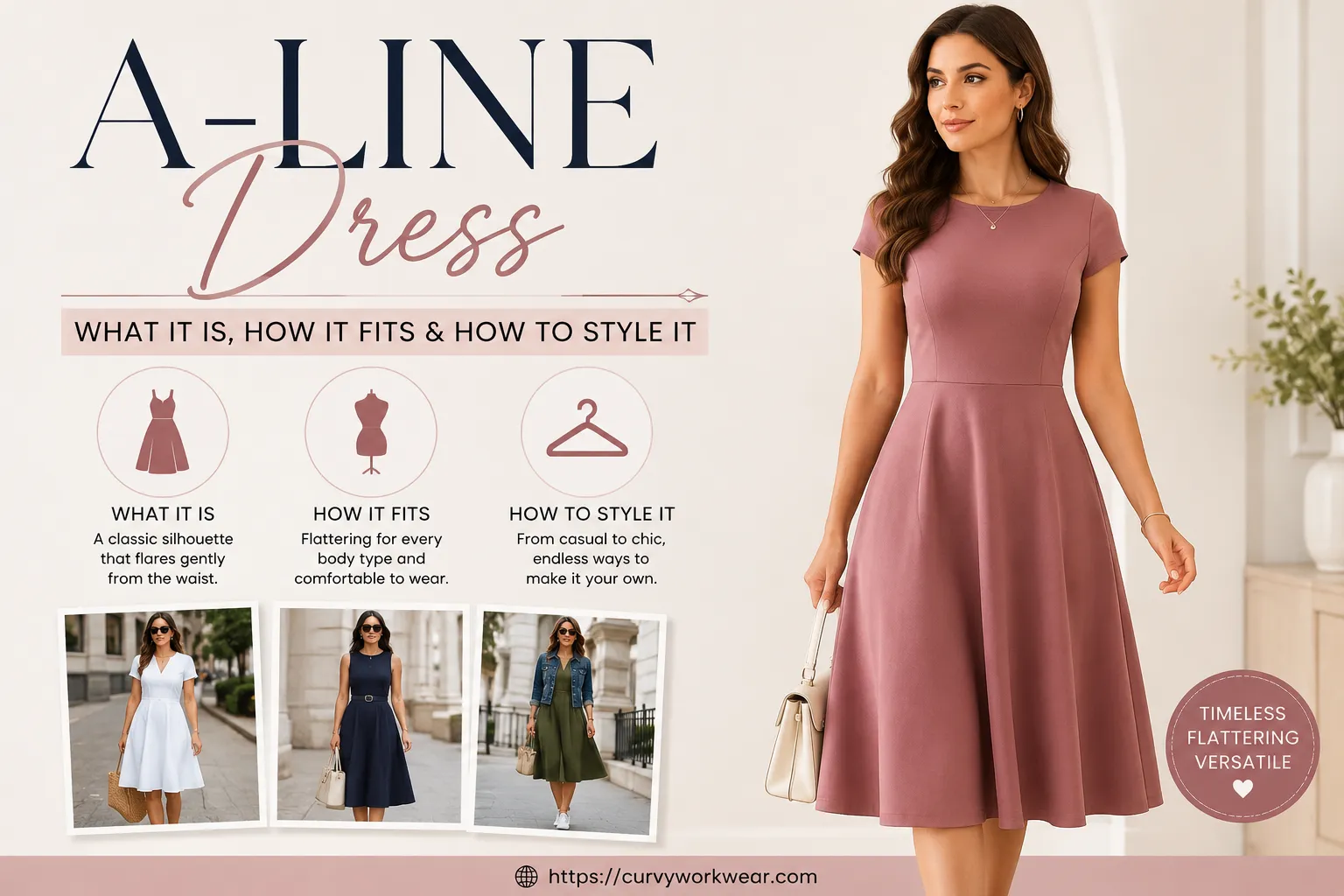
The a-line dress meaning comes straight from its shape. Picture the letter A: narrow at the top, wide at the bottom. That’s exactly how this dress is built.
It fits snugly around the shoulders and bust, then gradually widens from the waist down to the hem. There’s no clinging, no bunching, just a smooth, triangle-like flow. Designers usually create this shape using darts and seams rather than gathers or pleats, which is what keeps the line so clean and simple.
The term “a-line” isn’t limited to dresses either. You’ll also hear it used for skirts and even coats that follow the same fitted-top, wide-hem idea.
Where the A-Line Dress Came From
The style got its name in the spring of 1955, when French designer Christian Dior released what he called the “Ligne A,” or A-line collection. Before this, most flared skirts were paired with tightly cinched waists or heavily structured shoulders, giving a more hourglass shape. Dior’s version was different. It stayed fitted through the shoulders and bodice, then flared out cleanly using darts, without needing a tightly boned waist underneath. The Metropolitan Museum of Art’s history of Christian Dior describes this 1955 silhouette as having an undefined waist that widened smoothly over the hips, resembling a capital “A.”
A few years later, Dior’s successor, Yves Saint Laurent, pushed the idea further with his 1958 “Trapeze” collection, a shift covered in detail by FIT’s Fashion History Timeline. These dresses skipped the waist definition almost entirely, flaring straight out from the shoulders. Trapeze and A-line styles quickly became linked with the freedom and youth culture of the 1960s, since women no longer needed restrictive undergarments to wear them.
The style dipped in popularity for a while but came back strong in the late 1990s and early 2000s, and it has stayed a wardrobe regular ever since. The Victoria and Albert Museum’s Dior retrospective traced this full arc, from the 1947 New Look through the A-line years and beyond. Today’s a-line dress meaning has grown a bit broader than Dior’s original version, but the core idea, fitted top and flared hem, hasn’t changed at all.
How Is an A-Line Dress Different From Other Dress Styles?
It helps to compare the a-line dress silhouette to other common shapes:
- Bodycon dress: Hugs the entire body, no flare at all.
- Fit-and-flare dress: Fitted at the waist, then flares out dramatically and often lower down (closer to the knee), sometimes with extra fabric support underneath. It’s a close cousin of the a-line but with a bigger, more dramatic flare.
- Shift dress: Falls straight down from the shoulders with almost no shaping at the waist, giving a boxier, column-like look.
- Sheath dress: Fits closely to the body all the way from shoulder to hem, with little to no flare. Think of it as the tailored, pencil-skirt version of a dress.
- Empire waist dress: Raises the waistline to just under the bust, so the fabric flows down from there instead of from the natural waist. Many a-line dresses actually borrow this detail.
- Ball gown: Fitted through the bodice with a very full, often floor-length skirt, usually held out with extra layers underneath. Far more dramatic and formal than an a-line.
- A-line dress: Sits in the middle of all these — fitted on top, gently flared below, not too tight or too loose.
In short, the a-line dress gives you shape without squeezing, and movement without looking shapeless.
Advantages and Disadvantages of an A-Line Dress
No single dress style works perfectly for every person or every occasion, so it’s worth weighing the a-line dress honestly before you build your wardrobe around it.
Advantages
- Flatters a wide range of body shapes. The flare skims past the hips and thighs instead of clinging, so it works for pear, apple, hourglass, and rectangle shapes alike.
- Comfortable to move and sit in. Because the skirt isn’t tight, you get more room to walk, sit, and bend without the fabric pulling.
- Easy to dress up or down. The same basic shape can look casual in cotton and sneakers or formal in silk and heels.
- Forgiving through the midsection. It doesn’t press against the stomach the way a bodycon or sheath dress can.
- Works across most seasons. Lightweight fabrics keep it cool in summer, while layering over tights and boots makes it work in winter too.
Disadvantages
- Can add visual volume on petite frames. A very full flare or a low-set waistline may overwhelm a shorter person and shorten the look of the legs.
- Less definition for some hourglass figures. If you want a dress that hugs your waist tightly, a fit-and-flare or sheath cut will show your curves more than a classic a-line.
- Fabric choice matters more than it seems. Stiff or heavy fabric on a small frame can look bulky, while very soft fabric can look shapeless without a belt or seam detail.
- Harder to layer under long coats. A long, heavy coat can hide the flare completely and cancel out the shape you were going for.
- Sizing can be inconsistent between brands. Because the flare starts at different points (natural waist, empire waist, or hip), the same size label can fit very differently from one label to another.
Knowing both sides helps you pick the right cut, fabric, and length for your body and your closet, rather than assuming one a-line dress will behave exactly like the next.
Understanding the A-Line Dress Fit
The a-line dress fit works because it follows the body’s natural lines instead of fighting them. It highlights the waist, then skims past the hips and thighs instead of clinging to them.
This is why so many people call it a “forgiving” cut. It doesn’t pull tight across the stomach or hips, so you don’t have to worry about every meal you ate that day.
Key Fit Points to Check
When trying one on, pay attention to a few spots:
- Shoulders: The seam should sit right at the edge of your shoulder, not sliding down your arm and not pulling in toward your neck.
- Bust: The fabric should lie flat and smooth. If it gapes at the neckline or pulls tightly across the chest, the size or cut isn’t right for you.
- Waistline: This is where the flare usually begins. It can sit at your natural waist or slightly higher (empire style). Some dresses mark this with a seam, waistband, or belt loops.
- Hemline: Can end anywhere from mid-thigh to ankle length, depending on the design.
- Fabric flow: Lighter fabrics create a softer flare; stiffer fabrics hold more structure.
If the top part feels loose or the flare starts too low, the dress probably isn’t cut right for your frame. A quick trip to a tailor can usually fix minor fit issues, especially at the shoulders or waist.
If you’re buying online, measure your bust and waist first and compare them to the size chart. Hips matter less in an a-line cut since the skirt already gives extra room, but it’s still worth checking if the flare is on the smaller side.
A-Line Dress Patterns You’ll Come Across
“A-line” describes the overall shape, but there are several patterns within that shape. Knowing the names makes shopping a lot easier. For a real-world example of how a fitted bodice and flared skirt come together in one piece, see how the Baevely lace trim dress is built and styled.
Classic A-Line
The most basic version: a structured bodice with a clean, gentle flare from the natural waist. Simple, versatile, and easy to dress up or down.
Princess Seam A-Line
This style uses long seams running from the shoulder or armhole down to the hem instead of darts. It creates a smoother, more sculpted fit through the bodice and looks especially polished in satin or crepe.
Empire A-Line
The waistline sits just under the bust instead of at the natural waist, and the skirt flows down from there. This version is popular for maternity wear and for anyone who wants a softer, more flowing look around the middle.
Trapeze A-Line
Flares directly from the shoulders with no defined waist at all. It’s looser and more relaxed than a classic a-line, and it’s the style Yves Saint Laurent made famous in 1958.
Wrap A-Line
Combines a wrap-style bodice (usually with a V-neck) with an a-line skirt. This gives you natural waist definition along with the same comfortable flare.
Pleated or Tiered A-Line
Pleats or layered tiers add extra movement to the skirt. These versions feel a bit more playful and work well for casual or bohemian looks.
A-Line Dress for Different Body Types
One reason this style stays popular is simple: the a-line dress works for different body types better than almost any other cut. However, small style choices can make it work even better for you.
Pear-Shaped Bodies
If your hips are wider than your shoulders, the a-line shape balances things out. The flare skims over the hips instead of clinging to them, while a fitted top adds definition up above.
Apple-Shaped Bodies
For those who carry more weight around the middle, an a-line dress with an empire waist (where the flare starts right under the bust) works well. It skips the natural waistline and flows straight down, which softens the midsection.
Hourglass Bodies
An a-line dress fitted at the natural waist highlights curves without adding bulk. This shape follows your existing waistline instead of hiding it. Adding a slim belt can bring out the waist even more without adding volume at the hips.
Rectangle or Athletic Bodies
If your shoulders, waist, and hips are close in width, look for an a-line dress with a defined waist, maybe with a belt, ruching, or a seam detail. The contrast between the fitted top and the flared hem creates the illusion of curves.
Petite Frames
Shorter hemlines and smaller flares usually work best. A dress with too much fabric, or a waistline that sits too low, can overwhelm a smaller frame and make you look shorter than you are. Mini and knee-length styles tend to keep the proportions cleanest.
Necklines and Sleeves: Small Details That Change the Whole Look
The a-line shape stays the same, but necklines and sleeves change the personality of the dress completely.
Popular Neckline Options
- V-neck: Elongates the neck and upper body.
- Square neck: Feels modern and a little more structured.
- Sweetheart: Adds a soft, romantic touch, often seen on formal a-line dresses.
- Round or crew neck: Simple and comfortable for everyday wear.
- High neck: Gives a more formal, covered-up look.
Popular Sleeve Options
- Sleeveless: Clean and modern, easy to layer for different seasons.
- Cap sleeves: Light coverage without adding bulk to the shoulders.
- Puff sleeves: Adds a soft, statement-making detail up top.
- Three-quarter sleeves: A nice middle ground between casual and formal.
- Full sleeves: Best for cooler weather or more formal, covered looks.
There’s no single “right” combination. Pick necklines and sleeves based on the occasion, the season, and what feels comfortable for you.
How to Style an A-Line Dress
Knowing how to style an a-line dress is where the real fun begins. This cut works across seasons, occasions, and personal styles, so there’s a lot of room to experiment. For more head-to-toe pairing ideas, browse our outfit ideas section for looks you can borrow.
Casual, Everyday Looks
For a relaxed day out, pair a cotton or denim a-line dress with sneakers or flat sandals. Add a denim jacket or a light cardigan if it’s cool outside. A crossbody bag keeps things practical.
Work or Office Outfits
Choose a knee-length a-line dress in a solid color or subtle print. Add a blazer on top, closed-toe heels or loafers, and simple jewelry. This combination looks polished without trying too hard. A structured fabric like tweed or crepe naturally looks a bit more “office-appropriate” than something soft and flowy.
Formal or Evening Events
Longer a-line dresses in silk, satin, or chiffon work well for weddings, parties, or dinners. Pair them with heels, a clutch bag, and statement earrings. Keep the rest of the outfit simple so the dress stands out.
Layering for Cold Weather
An a-line dress isn’t just a warm-weather piece. In colder months, layer it over a turtleneck or long-sleeve top, add tights, and finish with ankle boots or knee-high boots.
Jackets: Cropped vs. Long
Cropped jackets and blazers tend to work best with an a-line dress because they end right where the flare begins, which keeps the waist visible. Long coats can sometimes hide the shape of the dress entirely, so if you do wear one, look for a coat that flares slightly itself, or simply leave it open.
Accessorizing Tips
- A belt at the waist adds definition if the dress feels too loose, and reinforces the A shape.
- Statement necklaces work well with simple, unpatterned a-line dresses, especially ones with an open neckline.
- Structured handbags balance out the soft flare of the skirt.
- Layered jewelry pairs nicely with plain, solid-colored designs.
- Flat shoes (ballet flats, loafers, sandals) suit mini and casual styles; block heels or strappy sandals elongate the leg on midi lengths.
In short, this dress adapts to almost any setting. Change the shoes, the layers, or the accessories, and the same dress can move from a morning coffee run to an evening dinner.
Choosing the Right Fabric, Color, and Length
Fabric changes how the a-line silhouette looks and moves, and each one gives the dress a different mood.
- Cotton and linen: Breathable and relaxed, ideal for summer, everyday wear, and travel. Linen especially softens with every wash, so the dress only gets more comfortable over time.
- Jersey knit: Soft with a bit of stretch, drapes comfortably, and is a favorite for everyday and travel dresses.
- Crepe: Has a subtle texture and holds its shape well, making it a strong pick for both office wear and cocktail occasions.
- Satin and silk: Add shine and movement, best saved for evening wear, weddings, and formal events.
- Tweed and wool: Add structure and warmth, well suited to fall and winter office looks.
- Chiffon and georgette: Light and flowy, often used for romantic, floaty formal dresses.
Color matters too, and it changes the mood of the dress just as much as the fabric. White and ivory feel fresh and timeless. Black and navy feel more formal and evening-ready. Soft pastels (blush pink, lavender, powder blue) lean romantic and work well for spring and summer. Earthy tones like olive, rust, and terracotta feel grounded and versatile across seasons. When in doubt, pick a color you already reach for often. It’s usually the one that suits your skin tone and existing wardrobe best.
Length matters as well. Mini a-line dresses feel youthful and casual. Midi lengths (around the knee to mid-calf) work for both office and semi-formal settings, and tend to be the most versatile option overall. Maxi a-line dresses suit formal events or warm-weather occasions like beach weddings. For more seasonal pairing and cut breakdowns, check out our style guides for related pieces.
There’s no single “correct” choice here. It depends on your comfort, the occasion, and what makes you feel confident.
Common Mistakes to Avoid
Even a forgiving style like the a-line dress can go wrong with the wrong choices. Here are a few things to watch for:
- Wrong hem length for your height: A very full skirt hitting mid-calf can shorten the look of your legs, especially on petite frames.
- Ignoring fabric weight: Heavy fabric on a small frame can overwhelm your shape; light fabric on a tall frame might look too plain.
- Skipping tailoring: A dress that fits well at the shoulders but bunches at the waist usually just needs simple alterations.
- Over-accessorizing: Since the dress shape already does a lot of visual work, too many bold accessories can compete instead of complement.
- Wearing a long, heavy coat over it: This can hide the flare completely and cancel out the shape you’re going for.
FAQs About A-Line Dresses
What does “a-line dress” actually mean?
It refers to the shape of the dress, which looks like the letter “A.” It’s fitted at the top and gradually flares out toward the hem, without clinging to the body.
Does an a-line dress suit every body type?
Yes, in general, it’s considered one of the most universally flattering styles. However, small details like waist placement, neckline, and hem length can be adjusted to better suit different body types.
What’s the difference between an a-line and a fit-and-flare dress?
An a-line dress flares gradually and gently from the waist. A fit-and-flare dress is usually more fitted through the hips first, then flares out more dramatically, often lower down near the knee, sometimes with extra fabric support underneath.
Can I wear an a-line dress to a formal event?
Yes. Choose one in a formal fabric like satin, silk, or chiffon, in a longer length, and pair it with heels and simple jewelry for an elegant look.
How do I know if an a-line dress fits me correctly?
Check that the shoulders and bust sit comfortably without pulling, the waist or flare point sits where it should, and the skirt moves freely without clinging to your hips or thighs.
Who invented the a-line dress?
Christian Dior introduced the style in his 1955 spring collection, calling it the “Ligne A.” Yves Saint Laurent expanded on the idea in 1958 with his Trapeze collection, and the shape became especially popular through the 1960s.
Conclusion
The a-line dress earns its popularity honestly. It flatters different body types, works across seasons, and adapts to almost any occasion, from a casual weekend to a formal evening out. Like any style, it has trade-offs worth knowing before you buy, but for most people the advantages outweigh the disadvantages.
Understanding the a-line dress meaning, checking the right fit, and knowing how to style it makes shopping for one much easier. Next time you’re picking an outfit, consider adding an a-line dress to your wardrobe. It might just become the piece you reach for the most.
Disclaimer: This guide offers general style, fit, and history information about the a-line dress. It is meant for everyday styling inspiration, not as a strict rulebook. Fit and fabric can vary between brands, so always try a piece on or check the size chart before you buy.