You’ve probably come across the baevely lace trim dress while scrolling through dress options and wondered how it actually fits and feels in real life. Photos rarely tell you whether a dress runs small, whether the lace itches, or how to style it beyond one obvious look.
This guide answers all of that. Instead of vague fashion talk, it breaks down the baevely lace trim dress using real, specific details — actual measurements, fabric notes, and styling ideas — so you know exactly what you’re getting before you commit to it.
By the end, you’ll understand its fit, comfort level, design details, pros and cons, and how to style it for at least five different occasions.
What Is the Baevely Lace Trim Dress?
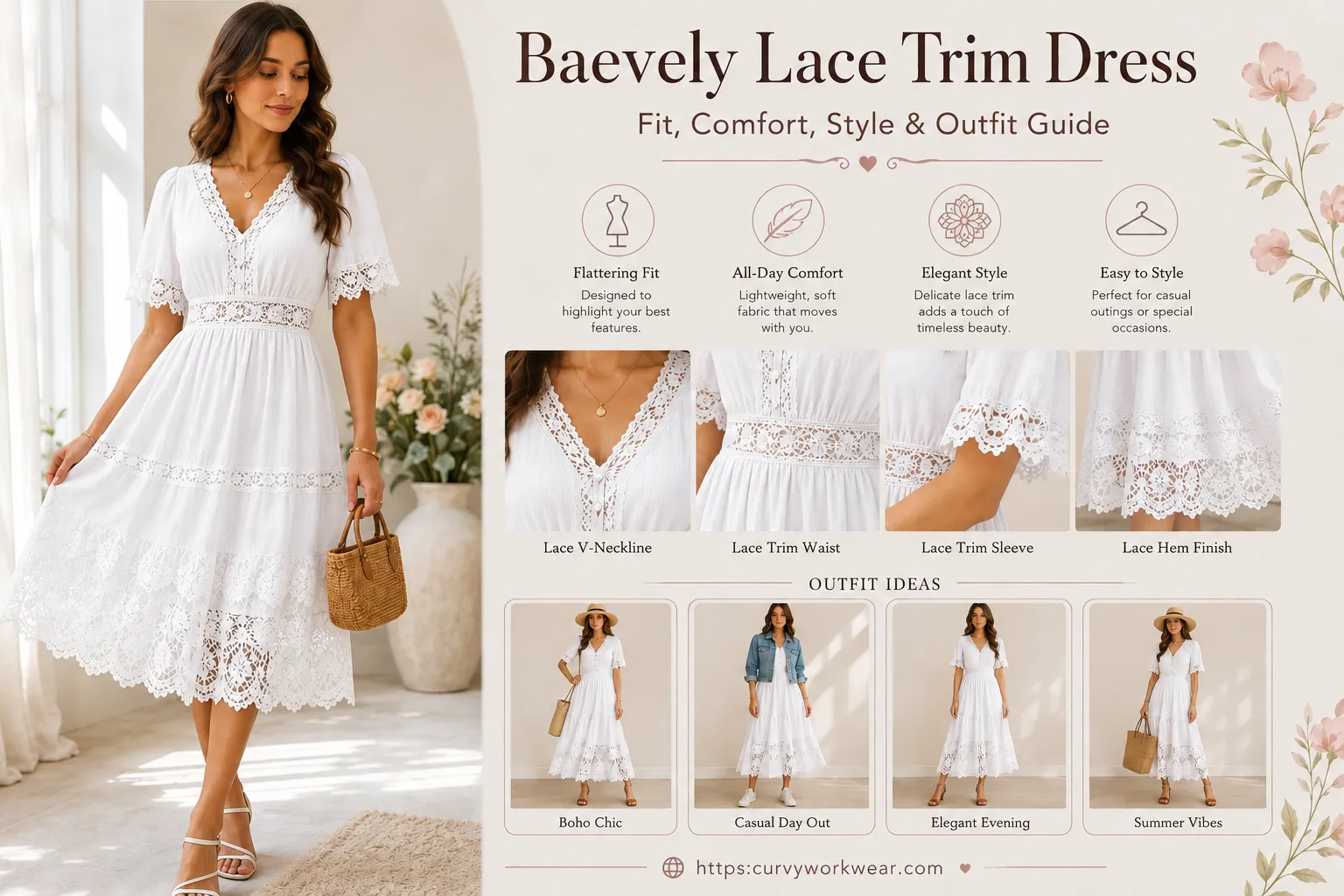
The BaeVely lace trim dress combines decorative lace details with a dress fabric. Depending on the design, lace may appear around the neckline or hem. Some styles also feature tiered skirts, prints, or satin-like finishes.
BaeVely offers different dress designs, so the fabric, fit, and length can vary. For example, its tiered mini dress has a double V-neckline and a lined design. Another version features a plaid pattern, a scoop neckline, and a tiered lace hem.
The important thing to remember is that not every BaeVely dress has the same features. Check the exact product listing before buying. This helps you confirm the material, measurements, lining, and care instructions.
Popular BaeVely Lace Trim Dress Styles
BaeVely lace-trim designs can differ in length, shape, and fabric. These are some details you may find in specific styles:
- Tiered mini dresses: These feature layered skirts and a shorter hemline.
- Plaid designs: Some versions combine a plaid fabric with decorative lace.
- Satin-style dresses: Certain styles use a smooth polyester fabric with lace details.
- Printed dresses: Some designs feature floral prints and decorative trim.
Availability, colors, and sizes can change between product listings. Check the retailer’s current details rather than assuming every style is available.
Fit: How Does the Baevely Lace Trim Dress Actually Fit?
Fit is where most people go wrong with online dress shopping, so let’s get into real numbers instead of guesswork.
What Real Measurements Show
One tiered lace mini style lists a bust measurement of about 35.5 inches and a body length of about 35 inches on a size Small. That’s a helpful data point because it tells you this style isn’t a snug, bodycon-style small. There’s noticeable room built into the tiered cut.
Fitted bodice styles behave differently. A version described as having a fitted bodice with stretch fabric will sit closer to your actual body measurements, especially through the waist and bust.
How to Measure Yourself Before Buying
- Measure around the fullest part of your bust, keeping the tape level.
- Measure your natural waist, just above the belly button.
- Measure around the fullest part of your hips.
- Compare these numbers to the size chart on the exact style you’re buying, since sizing is not identical across every cut.
If you’d rather cross-check your numbers against a general dress-size conversion instead of eyeballing it, this dress size calculator from Omni Calculator walks through the same three measurements and converts them across common sizing systems.
Fit Behavior by Style
| Style Type | How It Fits |
|---|---|
| Tiered mini (scoop neck) | Roomier fit, more movement, less reliant on exact bust size |
| Fitted midi with stretch | Closer to true body measurements, pay attention to waist |
| Maxi with adjustable straps | Strap length can be adjusted, helpful for shorter or longer torsos |
If you’re between two sizes, size up for fitted lace bodice styles. For tiered, flowier cuts, your usual size, or even one size down, usually works fine.
Comfort: Is the Lace Trim Itchy or Wearable All Day?
A dress can look beautiful and still be uncomfortable, so comfort deserves its own honest look.
Why the Lace Placement Matters
Because the lace sits only at the edges — neckline, hem, straps — the fabric that actually touches most of your skin is the soft base material, not the lace itself. This is a big reason the baevely lace trim dress feels more wearable than a full-lace garment.
Fabric Differences You Should Check
Fabric content isn’t identical across every version of this dress, and it directly affects comfort.
- Woven, non-stretch fabrics, like a plaid scoop-neck style, feel more structured and less forgiving after a big meal or long sitting.
- Stretch-fabric styles with a hidden side zipper move more easily with your body, which feels better during long events like weddings or parties.
- Lighter, more lightweight fabrics breathe better in warm weather but may need a slip underneath in bright light.
Quick Comfort Checklist
- Check the fabric content on the tag before buying, not just the photo.
- Do an arm-raise test in the mirror if the lace sits near your underarms.
- Choose stretch fabric over stiff woven fabric if you plan to wear the dress for several hours straight.
- Avoid chunky jewelry that could snag delicate lace trim.
Style: What Makes the Lace Trim Design Work?
Lace trim has stayed popular for years because it adds detail without overwhelming an outfit. It’s the fashion equivalent of a light touch of makeup: enough to enhance, not enough to distract.
Where Lace Placement Changes the Look
- Neckline lace softens the upper body and draws the eye upward, pairing well with simple jewelry.
- Strap lace adds a delicate, vintage-inspired detail, especially on maxi and midi styles.
- Hemline lace creates movement while walking and gives a more polished finish.
- All-over trim, neckline plus hem, gives the most decorated look without becoming a full lace dress.
Silhouette and Who It Suits
A tiered mini works well if you want comfort and movement without much structure. If you want a more polished, put-together silhouette, a fitted midi with a defined waist suits that best. For the most coverage and a softer, romantic shape, a flowing maxi is the pick. If you’re deciding between structured and flowy silhouettes in general, our guide to whether sheath dresses are still in style breaks down how a defined waist reads differently from a looser cut.
None of these silhouettes is objectively better. The right one depends on the occasion and how much structure versus movement you personally prefer.
Outfit Ideas: Styling the Baevely Lace Trim Dress
This is where the dress shows real range. Because it comes in mini, midi, and maxi lengths, your styling approach should shift with the cut you own.
- Casual daytime look. Pair a tiered mini with white sneakers, a denim jacket, and a small crossbody bag. This works for errands, casual lunches, or meeting friends without overdressing.
- Brunch or garden party outfit. A maxi or midi version pairs naturally with strappy sandals, delicate gold jewelry, and a straw or woven bag. This look suits daytime events that call for something a little dressier than jeans.
- Date night styling. A fitted midi with a defined bodice works best here. Add heeled sandals, a slim belt if the waist isn’t already emphasized, and one statement earring instead of a full jewelry set.
- Semi-formal or celebration look. Deeper-colored versions, like a rich berry or purple tone, can be dressed up with block heels, a structured clutch, and simple pearl or gold jewelry for bridal showers, birthday dinners, or family celebrations. Picking the right depth of color matters here, and our deep winter color palette guide can help you match the dress tone to your own coloring.
- Layered fall or winter look. Lace trim dresses aren’t only for warm weather. Layer a cropped cardigan or denim jacket on top, add opaque tights, and finish with ankle boots to make the dress work in cooler months. For more layering ideas beyond a cardigan, see our piece on whether quarter zips still work as a styling layer.
- Smart-casual adaptation. For settings that need a slightly more polished look without going full formal, add a blazer over a midi or maxi version, switch to closed-toe flats or low block heels, and skip anything with a plunging neckline. This lets the same dress adapt to more conservative settings.
Pros and Cons of the Baevely Lace Trim Dress
Before you buy, it helps to weigh the trade-offs honestly rather than only reading the highlights.
| Pros | Cons |
|---|---|
| Multiple lengths (mini, midi, maxi) to fit different occasions | Detailed, brand-specific reviews are still limited |
| Lace placed only as trim, not the whole fabric, so it stays comfortable | Fit varies noticeably between tiered and fitted styles |
| Works across casual, brunch, date night, and semi-formal settings | Fabric weight and stretch differ by style, so comfort isn’t identical across versions |
| Real style variety, including tiered, fitted, and printed options | Requires checking each listing’s size chart individually rather than assuming standard sizing |
| Easy to layer for cooler seasons | Delicate lace needs gentler care than a plain cotton dress |
The short version: the advantages mostly come from versatility and the comfortable trim placement, while the disadvantages come from inconsistency between listings. Reading the specific product page, not just this general guide, is still worth the extra two minutes.
Baevely Lace Trim Dress Review: What to Realistically Expect
Because this is a smaller, newer name rather than an established designer label, there isn’t a large pool of detailed, brand-specific customer reviews yet. That’s worth knowing upfront, rather than pretending otherwise. This is also why we’ve built this guide from measurement data and fabric notes across listings, rather than from a single review, so you’re getting a broader picture instead of one person’s experience.
That said, looking at consistent patterns across similar lace-trim dress styles gives useful, honest context.
- Fit varies by cut, not just size label. Tiered styles tend to run roomier; fitted bodice styles run closer to true measurements.
- Delicate jewelry pairs better than chunky pieces. Textured lace can snag on rings or bracelets with rough edges.
- Lighter fabrics may need a slip. Some lace-trimmed dresses in this category are lightweight enough that a slip prevents see-through issues in strong light.
- Construction quality can vary between individual pieces. Since sizing and stitching details differ across styles, it’s worth checking close-up photos of the lace attachment and seams before buying, rather than judging from a single hero image.
The honest takeaway: the baevely lace trim dress performs well on comfort and versatility, but treat sizing and fabric weight as things to verify per style rather than assuming they’re identical across every color and cut.
Care Tips to Keep the Dress Looking Its Best
- Always check the care label on your specific dress. Some styles are machine washable, while stretch or delicate lace versions may need hand washing in cold water.
- Use a mesh laundry bag if machine washing, to protect the lace edges from snagging.
- Avoid twisting or wringing lace trim; press excess water out gently instead.
- Lay flat to dry for stretch-fabric styles, so the material doesn’t stretch out of shape.
- Store on a padded hanger, or fold with tissue paper between lace layers to prevent snagging against other clothes.
For a more detailed, step-by-step approach to washing lace without damaging it, this lace dress cleaning guide from All Seasons Garment Care covers spot cleaning, mesh bag technique, and what to do if the care tag is missing.
FAQs About the BaeVely Lace Trim Dress
Is the BaeVely Lace Trim Dress Suitable for Everyday Wear?
Yes, depending on its design and fabric. Pair a casual style with flats or sneakers for everyday outings. Check the dress’s length and lining before choosing it for daily wear.
Is the BaeVely Lace Trim Dress See-Through?
It depends on the fabric, color, and lining. Check the product description for lining details before buying. If the dress is unlined, consider whether you need a suitable slip underneath.
What Should You Check Before Buying a BaeVely Lace Trim Dress?
Check the size chart, fabric composition, dress length, and lining details. Review product photos to see where the lace appears. Read recent customer reviews for feedback about fit and fabric quality.
How Can You Style a BaeVely Lace Trim Dress for Different Occasions?
Pair it with flats and a simple bag for casual outings. For dinner or special occasions, add heels and understated jewelry. Choose accessories that complement the dress without competing with its lace details.
How Do You Prevent Lace Trim From Snagging?
Keep the lace away from rough surfaces, sharp jewelry, and hook-and-loop fasteners. Follow the garment’s care label when washing it. Store the dress carefully to reduce snagging and damage.
Conclusion
The baevely lace trim dress works because it keeps things simple: a comfortable base fabric, lace used only where it counts, and enough style variation to fit casual days, dressy brunches, and semi-formal nights out. The fit and fabric do shift between tiered, fitted, and maxi versions, so it pays to check the specific measurements and care label for the style you’re considering.
Once you know your cut and size, styling this dress becomes easy. Swap shoes, layer a jacket, or add different jewelry, and the same baevely lace trim dress can carry you through almost any occasion on your calendar.
Disclaimer: This article is for general style and fit guidance only. Measurements, fabric content, and sizing can vary between sellers and production batches, so always check the specific size chart and care label on the listing before you buy. This post may contain affiliate links, and we may earn a small commission on qualifying purchases at no extra cost to you.