Introduction
If you’re tired of drawing your eyebrows on every single morning, you’ve probably come across powder brows already. This semi-permanent technique fills in your brows with a soft, shaded look that lasts for months, even years, without daily touch-ups from a pencil.
Before you book an appointment, it helps to know the full picture. This guide covers how powder brows work, what they cost, how the healing process unfolds day by day, the real advantages and disadvantages, who should avoid the treatment, and how to care for your brows afterward.
What Are Powder Brows?
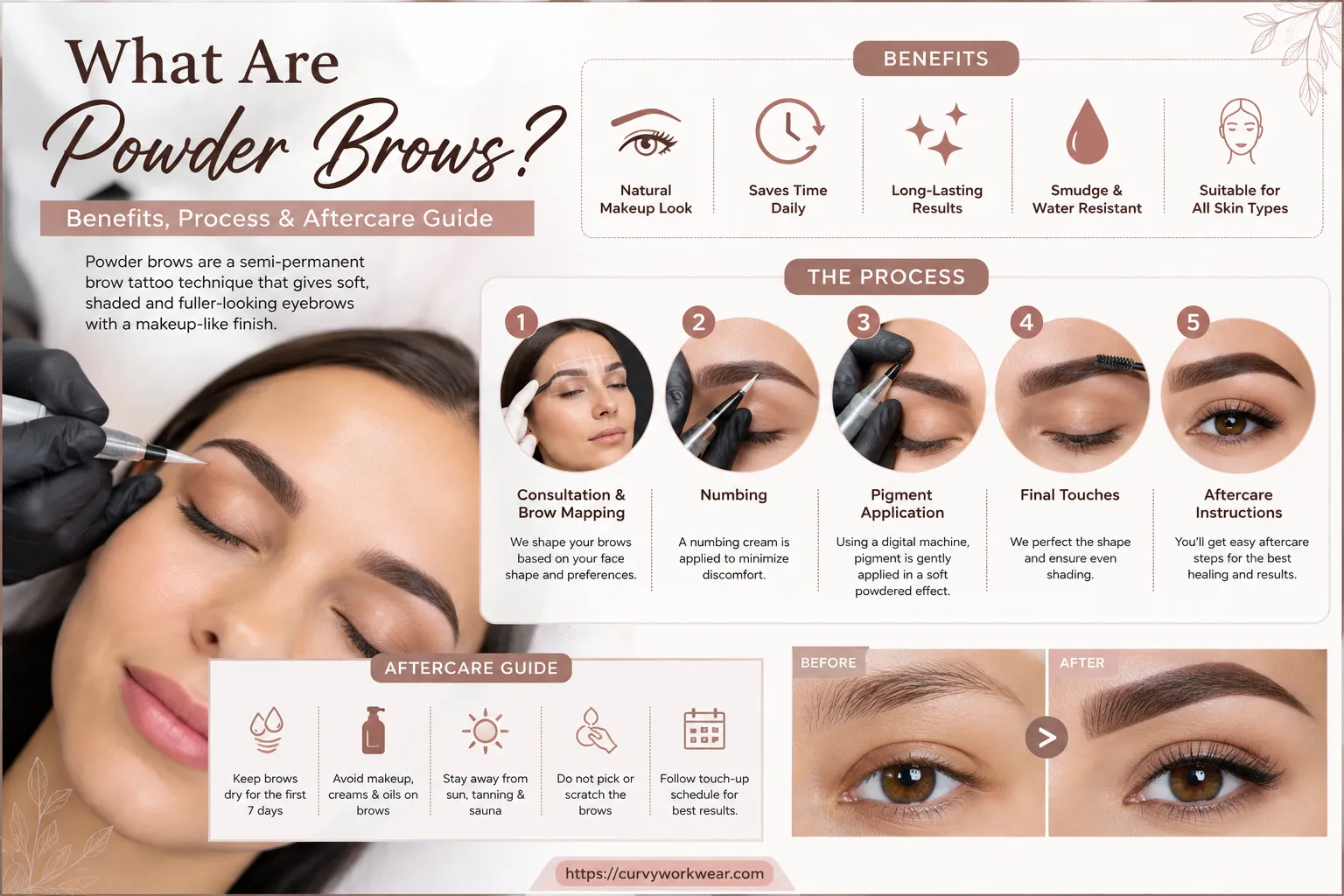
Powder brows are a form of semi-permanent makeup. A technician uses a machine to place tiny dots of pigment into the first, top layer of your skin. As the dots build up and slightly overlap, they create a soft, shaded effect, similar to how brow powder looks when it’s blended in with a brush.
This is different from a regular tattoo. A tattoo needle goes into the third layer of skin, which is why tattoos are permanent. A powder brows machine only reaches the first layer, which is why the color fades naturally over one to three years instead of staying forever.
The Pixel Technique Behind Powder Brows
Some technicians describe powder brows as being built from tiny “pixels” of pigment. The size and spacing of these pixels control how soft or bold the brow looks. Small, tightly placed pixels near the front of the brow create a light, faded start. Slightly larger, closer pixels toward the tail create more depth.
This is also what creates the ombré effect that gives ombré powder brows their name. The brow is light near the front and gradually darker toward the tail, with no hard visible line where the color starts.
Powder Brows vs. Microblading: What’s the Difference?
Powder brows and microblading are often compared, since both are semi-permanent brow treatments. But they work in different ways.
Microblading uses a manual hand tool with tiny blades to create fine cuts in the skin. Pigment settles into these cuts, forming lines that look like individual hairs. Powder brows use a machine, similar to a tattoo machine, to place dots of pigment instead of cuts.
Skin Type and Powder Brows Results
Microblading tends to work best on normal to dry skin. On oily skin, the fine cuts can blur or spread under the surface, making the hair-stroke effect look fuzzy within months. Powder brows hold up well on almost every skin type, including oily and combination skin, since the shading technique doesn’t rely on sharp, thin lines.
Pain Level: Powder Brows vs. Microblading
Because the needle only reaches the very top layer of skin, most people find powder brows less uncomfortable than they expect. Some describe it as a light scratching feeling once numbing cream has taken effect. Microblading, since it involves cutting into skin, is often reported as slightly more uncomfortable, though pain tolerance varies from person to person.
Advantages and Disadvantages of Powder Brows
Knowing both sides helps you decide if powder brows are the right choice for you.
Advantages of Powder Brows
- Saves time daily. No more filling in brows with a pencil or gel every morning.
- Looks soft and natural. The shaded, gradient effect avoids the harsh, solid look of older tattoo techniques.
- Works well on oily skin. Powder brows resist blurring on oilier skin types better than microblading does.
- Fills in sparse or over-plucked brows. Useful for anyone dealing with thin brows from years of over-tweezing.
- Customizable intensity. You can go for a soft, everyday look or a bolder, more defined finish.
- Holds up through daily life. Once healed, powder brows generally don’t smudge from sweat, swimming, or humidity.
Disadvantages of Powder Brows
- Cost. Sessions run several hundred dollars, and a touch-up is usually an added expense.
- Healing takes weeks. Full healing takes four to six weeks, during which brows go through patchy, uneven-looking stages.
- Results depend on the technician. A rushed or unlicensed technician can cause uneven shape, poor pigment placement, or infection.
- Not fully reversible. While powder brows fade over time, correcting or removing them early usually requires saline or laser removal, which takes its own time and cost.
- Color can shift. Pigment can turn slightly warm, cool, or gray as it fades, especially in people who spend a lot of time in the sun.
- Not suitable for everyone. Certain health conditions and medications rule out the treatment, at least temporarily (see the section below).
How Much Do Powder Brows Cost?
Pricing depends heavily on your location, the studio’s reputation, and the technician’s experience level. In the United States, powder brows commonly fall somewhere between $500 and $800 per session, with some studios charging more for highly experienced artists or added extras like a free touch-up.
Prices can be very different outside the US, so it’s worth checking with a few licensed studios in your area rather than relying on a single number. Be cautious of prices that seem far below the local average, since inexperienced technicians are more likely to cause uneven results or skin issues.
How Do Powder Brows Work? The Full Process
A typical powder brows session takes about one to two hours, plus time for consultation and numbing. Here’s what usually happens, step by step.
Step 1: Consultation
Before any pigment touches your skin, you’ll talk with your technician about the shape, thickness, and intensity you want. It helps to bring reference photos and to wear your usual brow makeup to this appointment.
Step 2: Patch Test
Many studios require or recommend a patch test 24 to 48 hours before treatment, especially if you have sensitive skin or no history with the pigment being used. A small amount of pigment or numbing product is applied to a discreet area, like behind the ear, to check for allergic reactions before it’s used on your brows.
Step 3: Cleansing and Skin Prep
The technician cleans the brow area thoroughly to lower the risk of infection or irritation during the procedure.
Step 4: Numbing
A topical numbing cream is applied and left to activate, usually for around 15 to 20 minutes, before any work begins.
Step 5: Mapping the Shape
Using your face structure, natural brow growth, and your stated preferences, the technician measures and draws your new brow shape before applying any pigment.
Step 6: Pigment Selection
The technician picks a pigment shade that matches your hair color and complements your skin’s undertone.
Step 7: Shading
Using the machine, the technician builds up layers of fine dots across the mapped shape. This is the main part of the treatment and is what creates the soft, powdery finish of powder brows.
Step 8: Final Layer and Cleanup
Once the shape is filled in, a final layer of pigment is applied, and the area is gently cleaned before you leave.
Powder Brows Healing Process, Day by Day
The powder brows healing process happens in predictable stages, though timing varies by person. Full healing typically takes four to six weeks, though the surface heals faster than that.
Days 1 to 4
Brows look noticeably darker and more defined than the final result will be, sometimes up to 50% darker. Mild redness and swelling are normal and usually settle within a day or two.
Days 4 to 7
Light scabbing or flaking begins. Do not pick at it. Picking can pull pigment out with the scab and cause uneven, patchy color later on, sometimes called the “zebra effect.”
Days 8 to 14: The Ghosting Phase
Brows often look patchy, faded, or almost gone during this stage, commonly called ghosting. This happens because the skin is still healing underneath, and the true pigment hasn’t fully resurfaced. This is normal and not a sign the treatment failed.
Days 15 to 30
Color gradually becomes more even as the skin finishes healing underneath. The true, final shade usually becomes clear around the one-month mark, which is also roughly when most studios schedule the touch-up.
Why a Powder Brows Touch-Up Is Necessary
During healing, the skin naturally tries to push out some of the pigment. On average, about 50 to 60% of the pigment placed in the first session fades or is rejected by the skin. The touch-up, usually booked six to eight weeks after the first session, fills in gaps and evens out patchy spots.
Powder Brows Aftercare Guide
Good aftercare has a direct effect on how evenly your powder brows heal and how long the color lasts. Most studios say aftercare matters most during the first 10 to 14 days.
What to Do
- Keep the area clean and dry, especially in the first few days.
- Apply a thin layer of the aftercare ointment your technician recommends.
- Sleep on your back if you can, to avoid rubbing your brows against the pillow.
- Once healed, wear sunscreen (SPF 30 or higher) on the brow area to slow fading.
- Keep the surrounding skin hydrated once healing is complete; a gentle, fragrance-free moisturizer such as a hyaluronic acid serum can help support the skin barrier without irritating fresh pigment.
What to Avoid
- Don’t touch, scratch, or rub the brows.
- Skip makeup directly on or near the brow area until healing is complete.
- Avoid saunas, swimming pools, and long hot showers for about a week.
- Don’t pick at scabs or peeling skin, even if it itches.
- Avoid direct sun exposure and tanning beds while healing.
- Hold off on facials, chemical peels, or other treatments near the brow area until fully healed.
According to the American Academy of Dermatology, similar aftercare rules apply broadly to any tattoo or cosmetic ink procedure, since keeping the treated skin clean and protected from the sun is one of the biggest factors in how well it heals. You can read the AAD’s general guidance on tattoos and skin care for more background.
Wet Healing vs. Dry Healing for Powder Brows
Not all studios use the same aftercare method. It’s worth knowing there are two common approaches.
Wet healing involves gently washing the brows with sterile water, patting them dry, then applying a thin layer of aftercare ointment. Dry healing skips the ointment; some technicians still recommend gentle washing and patting dry without product, while others recommend no washing at all during the healing window.
Your technician should walk you through which method they recommend and why, since practices vary between studios.
What Makes Powder Brows Fade Faster?
Pigment fading is normal over time, but certain habits can speed it up:
- Frequent sun exposure or tanning beds
- Over-exfoliating the brow area, including harsh at-home resurfacing tools or treatments like vibradermabrasion used too close to the brow line
- Using strong skincare acids or serums designed to fade pigmentation
- Not moisturizing or protecting the skin properly after healing
- Naturally oily skin, which tends to process pigment out faster than dry skin
Who Should Avoid Powder Brows?
Powder brows aren’t right for everyone. It’s important to disclose your full medical history to your technician before booking, since several conditions and medications can affect safety or results.
Generally Not Recommended For
- People who are pregnant or breastfeeding
- Anyone currently taking Accutane, oral steroids, or blood thinners
- Anyone recently treated with Botox in the brow area
- People with uncontrolled diabetes, hemophilia, or another healing disorder
- People prone to keloid or hypertrophic scarring
- Anyone undergoing chemotherapy or with active skin cancer in the brow area
- People with active eczema, psoriasis, or glaucoma
- Anyone allergic to cosmetic pigments (a patch test helps confirm this)
May Be Eligible With a Doctor’s Written Approval
- Uncontrolled high blood pressure
- Organ transplant recipients
- Pacemaker or other significant cardiac conditions
- Epilepsy
- Anyone currently on treatment that affects the immune system
A responsible, licensed technician should ask about your medical history before starting and should turn away anyone who doesn’t meet safety requirements. According to the U.S. Food and Drug Administration, tattoo and permanent makeup pigments are regulated as cosmetics, but the FDA does not pre-approve pigments for injection into skin, which is one reason choosing a reputable, licensed studio matters. You can read the FDA’s Tattoos & Permanent Makeup fact sheet for more detail on how these products are regulated.
Pre-Appointment Prep Checklist
A few simple steps before your powder brows appointment can improve results and reduce complications.
- Avoid caffeine and alcohol for at least 48 hours beforehand, since both can thin blood and increase bleeding or swelling.
- Stop taking blood thinners about a week before, only with your doctor’s approval.
- Avoid waxing, tweezing, or tinting your brows for at least three days prior. If you tend to over-tweeze between appointments, a guide on how to use tweezers correctly can help you avoid removing hair your technician needs to see.
- Skip chemical peels, facials, or anti-aging treatments for about two weeks before your appointment.
- Avoid facial injectables, such as Botox or filler, for at least a month beforehand.
- Try not to schedule your appointment during your period, since hormonal changes can affect pain sensitivity and swelling.
Touch-Ups and Long-Term Maintenance for Powder Brows
Your first touch-up is typically scheduled six to eight weeks after the initial session, once healing is complete. After that, powder brows generally last one to three years, with many people needing a color refresh around the 18-month mark on average. Oily skin types tend to need touch-ups sooner; drier skin often holds color longer.
Can You Remove Powder Brows Early?
If you decide you want your powder brows gone before they naturally fade, let them heal completely first. After that, some people try to speed up fading through sun exposure or frequent washing, though this is slow and unreliable.
For faster, more controlled removal, saline removal or laser tattoo removal are the two main professional options. The American Academy of Dermatology notes that laser removal, performed by a trained provider, has largely replaced older removal methods because it works more safely and effectively than salt-based or chemical techniques. You can read more in the AAD’s overview of laser tattoo removal.
FAQ
How much do powder brows cost?
In the US, prices commonly range from about $500 to $800 per session, though this varies by location and technician experience. Compare a few licensed studios near you rather than choosing based on price alone.
Do powder brows hurt?
Most people describe mild discomfort rather than real pain, especially since numbing cream is applied before the machine touches the skin. Because the needle only reaches the top layer of skin, it tends to feel less intense than microblading or a traditional tattoo.
How long does it take for powder brows to heal completely?
Surface healing, like scabbing and flaking, usually settles within one to two weeks, but full healing underneath the skin takes about four to six weeks. The true final color only becomes clear around the one-month mark.
Is powder brows better than microblading?
Neither is strictly better, since they suit different skin types and looks. Powder brows tend to hold up better on oily skin and give a soft, filled-in look, while microblading gives a more hair-like texture and suits normal to dry skin best.
Can I get powder brows if I’m pregnant?
No, most technicians will not perform powder brows on pregnant or breastfeeding clients, since the effects of pigment and numbing products haven’t been studied enough in these groups. It’s best to wait until after pregnancy and breastfeeding.
Conclusion
Powder brows offer a low-maintenance way to get soft, defined eyebrows without a daily makeup routine, but the results depend heavily on choosing the right technician and following aftercare properly. Weighing the advantages and disadvantages of powder brows against your skin type, budget, and lifestyle will help you decide if it’s the right treatment for you.
If you’re considering powder brows, take time to research a licensed technician, ask about their patch test policy, and read through their portfolio before booking. A little homework upfront goes a long way toward getting powder brows you’ll actually be happy with for the next few years.
Disclaimer: This article is for general information only and is not medical advice. Powder brows is a cosmetic tattoo procedure. Talk with a licensed technician and, if you have a health condition, your doctor before booking any powder brows treatment.