You picked a black hair dye, went home excited, and the result looked nothing like the box. Sound familiar?
This happens more than you’d think. Not all black hair dye works the same way on every head of hair. Your hair type, texture, and history with chemicals all play a role in how the color turns out.
In this guide, you’ll learn how to pick the best black hair dye for your specific hair type, the difference between permanent and semi-permanent options, and how to avoid common mistakes that lead to patchy or dull color.
Why Hair Type Matters When Choosing Black Hair Dye
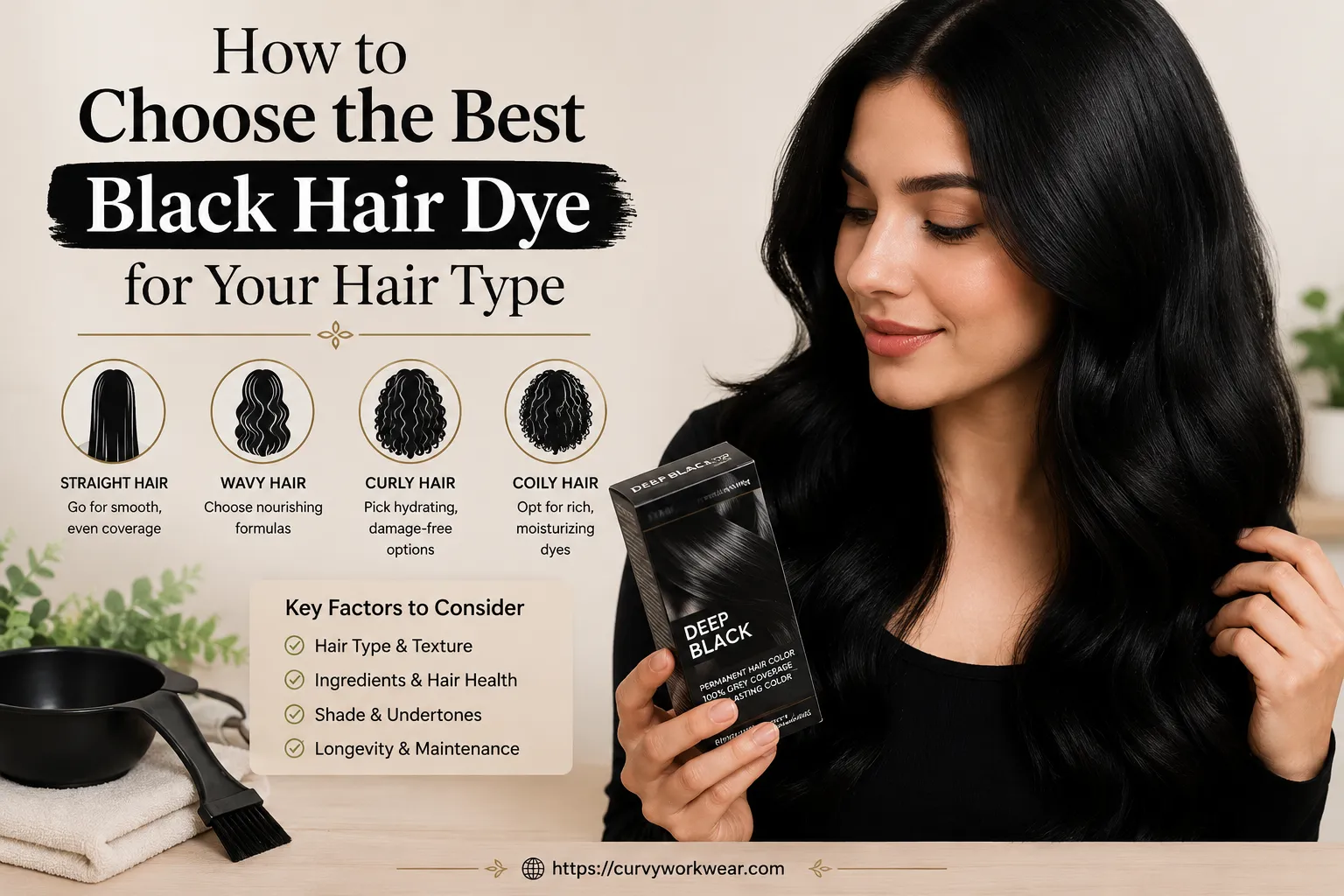
Black hair dye doesn’t behave the same way on fine hair as it does on thick, coarse hair. Fine hair absorbs color faster, so it can turn out darker or more intense than expected. Coarse or thick hair, on the other hand, often needs more processing time to soak up the pigment evenly.
Porosity matters too. This is how well your hair absorbs and holds moisture and color. Hair with high porosity (often damaged or chemically treated hair) grabs color quickly but may fade faster. Low porosity hair resists color and may need extra processing time.
Knowing your hair type before you shop saves you from disappointing results. It also helps you pick a formula that won’t dry out or damage your strands.
Quick Ways to Check Your Hair Type
- Fine hair: Strands feel thin and can be see-through when held up to light.
- Medium hair: The most common type, with normal thickness and body.
- Thick or coarse hair: Strands feel sturdy and hold styles well.
- Curly or textured hair: Naturally dry, needs extra moisture during coloring.
Permanent Black Hair Dye vs. Semi-Permanent: What’s the Difference
This is one of the biggest decisions you’ll make. Permanent black hair dye and semi-permanent dye work in very different ways, and picking the wrong one can mean redoing your hair sooner than you’d like.
Permanent Black Hair Dye
Permanent black hair dye opens the hair cuticle and deposits color deep inside the hair shaft. This is why it lasts until new hair grows out, and it also covers gray hair completely.
The trade-off is that permanent dye usually contains ammonia or similar chemicals. These can dry out hair over time, especially with repeated use. If your hair is already damaged, this option needs extra care and a good deep conditioner afterward.
Semi-Permanent Black Hair Dye
Semi-permanent dye sits on top of the hair strand instead of penetrating it. It fades gradually over several weeks, usually after 6 to 12 washes, depending on the product and your hair type.
This is a gentler option for people who want to try black hair color without a long-term commitment. However, it doesn’t cover gray hair as well as permanent formulas do.
Which One Should You Pick?
If you have gray hair to cover or want color that lasts for months, permanent black hair dye is the better choice. If you’re testing out the shade for the first time or have damaged hair, semi-permanent is the safer starting point.
How to Choose the Best Black Hair Dye Based on Your Hair Texture
Texture changes how dye sits on your hair and how long it takes to process. Here’s a simple breakdown.
For Fine, Thin Hair
Fine hair processes color quickly, so a lightweight formula works best. Look for a dye labeled “gentle” or “moisture-rich” to avoid making thin strands feel brittle. Cream-based formulas tend to spread more evenly on fine hair than gel-based ones.
For Thick or Coarse Hair
Thick hair needs more product and often more processing time. A cream or gel formula with strong pigment works well here since coarse hair can resist color absorption. Sectioning your hair into smaller parts during application helps the dye reach every strand.
For Curly or Textured Hair
Curly hair tends to be drier by nature, so choose a black hair dye with added oils or conditioning agents built in. This helps prevent the frizz and dryness that can follow a coloring session. Look for dyes that mention shea butter, argan oil, or similar ingredients on the label.
For Chemically Treated or Damaged Hair
If your hair has been relaxed, bleached, or heat-styled a lot, it’s more porous and fragile. A demi-permanent dye, which sits between permanent and semi-permanent in strength, is often a safer middle ground. Always perform a strand test to see how your hair responds.
Key Ingredients to Look for in a Black Hair Color Guide
Not all black hair dyes are created equal. Reading the ingredient list can tell you a lot about how a product will treat your hair.
Ingredients That Help
- Argan oil or coconut oil: Add moisture and reduce dryness after coloring.
- Keratin: Helps strengthen hair that may weaken during the dyeing process.
- Low-ammonia or ammonia-free formulas: Gentler on hair and scalp, with less harsh smell.
Ingredients to Watch Out For
- High ammonia content: Can cause excessive dryness and scalp irritation with frequent use.
- PPD (paraphenylenediamine): A common ingredient in many black dyes that can cause allergic reactions in some people. Always patch test first.
If you have a sensitive scalp, look for dyes marketed as “sensitive skin friendly” or ask a dermatologist before applying dye at home.
Step-by-Step: How to Apply Black Hair Dye at Home
Even the best black hair dye won’t give great results if it’s applied incorrectly. Here’s a simple process to follow.
Before You Start
Do a patch test at least 48 hours before applying the dye. Put a small amount of dye behind your ear or on your inner arm and wait to see if any irritation shows up.
During Application
- Section your hair into four parts for even coverage.
- Apply dye starting at the roots, then work through to the ends.
- Use a wide-tooth comb to distribute the color evenly.
- Follow the timing instructions on the box exactly. Leaving dye on longer than recommended won’t make the color darker, but it can damage your hair.
After Coloring
Rinse with cool water, not hot, since hot water opens the cuticle and can cause color to fade faster. Follow up with a color-safe conditioner to lock in moisture and shine.
Common Mistakes to Avoid When Picking Black Hair Dye
Many people run into the same problems when choosing and applying black hair dye. Here are a few to watch for.
Skipping the Strand Test
A strand test shows you exactly how the color will look before you commit your whole head. This small step can save you from a big regret.
Ignoring Hair Porosity
If you don’t know your hair’s porosity, you might leave dye on for too short or too long a time. This leads to uneven color or a shade that looks different from the box.
Choosing Based on the Box Photo Alone
The model on the box has a specific hair type and starting color. Your results may look different depending on your natural hair color and texture. Read the full description, not just the picture.
Not Moisturizing After Dyeing
Black hair dye, especially permanent formulas, can leave hair feeling dry. A deep conditioning treatment once a week after coloring helps keep hair soft and healthy.
FAQ: Common Questions About Black Hair Dye
How long does permanent black hair dye last?
Permanent black hair dye lasts until your hair grows out, since it changes the hair’s pigment at a deeper level. Touch-ups are usually needed every 4 to 6 weeks as new roots grow in.
Can I use black hair dye on colored or bleached hair?
Yes, but bleached or previously colored hair is more porous and absorbs dye faster. It’s best to do a strand test first, since the color may turn out darker or more intense than expected.
Does black hair dye damage your hair?
Permanent black hair dye can dry out hair over time, especially with frequent use, mainly due to ammonia and other chemicals. Semi-permanent and ammonia-free options are gentler alternatives if you’re concerned about damage.
How do I choose the best black hair dye for gray coverage?
For full gray coverage, permanent black hair dye works best since it penetrates the hair shaft completely. Semi-permanent dyes can tone down gray hair but won’t cover it fully.
Is it better to dye black hair at home or go to a salon?
A salon visit is a good option for first-time users, extensive gray coverage, or complex color changes, since a professional can assess your hair’s condition. Home dyeing works well for simple root touch-ups or if you’re experienced with the process.
Conclusion
Choosing the best black hair dye isn’t about grabbing the first box you see. It comes down to knowing your hair type, understanding the difference between permanent and semi-permanent formulas, and reading the ingredient list before you buy.
Take the time to do a strand test, follow the application steps carefully, and moisturize afterward. A little preparation goes a long way toward getting the rich, even black hair color you’re after.
If you’re ready to make the switch, start by identifying your hair type and porosity, then pick a formula that matches your needs. Your hair will thank you for it.