
Introduction
A Helix Piercing is a popular cartilage piercing placed on the upper outer part of the ear. It offers a stylish look and works with different jewelry designs. Before getting one, it is helpful to understand the types, pain level, healing time, and proper aftercare. This guide explains everything you need to know about helix piercings and how to care for them during healing.
What Is a Helix Piercing?
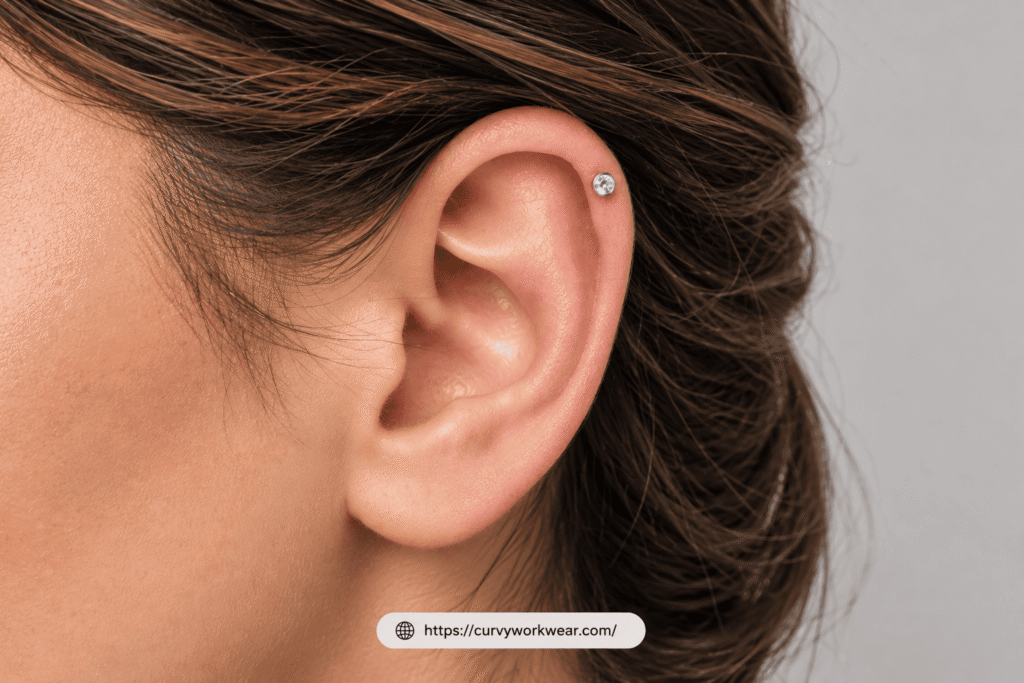
A helix piercing goes through the upper outer cartilage of the ear. It sits along the ear’s curved outer rim. Unlike a lobe piercing, it passes through cartilage tissue.
People often choose helix piercings for their stylish and flexible look. You can wear studs, hoops, or other suitable jewelry. A professional piercer should assess your ear before piercing it.
Because cartilage heals slowly, helix piercings need proper care. They can take six to twelve months to fully heal.
What Are the Different Types of Helix Piercings?
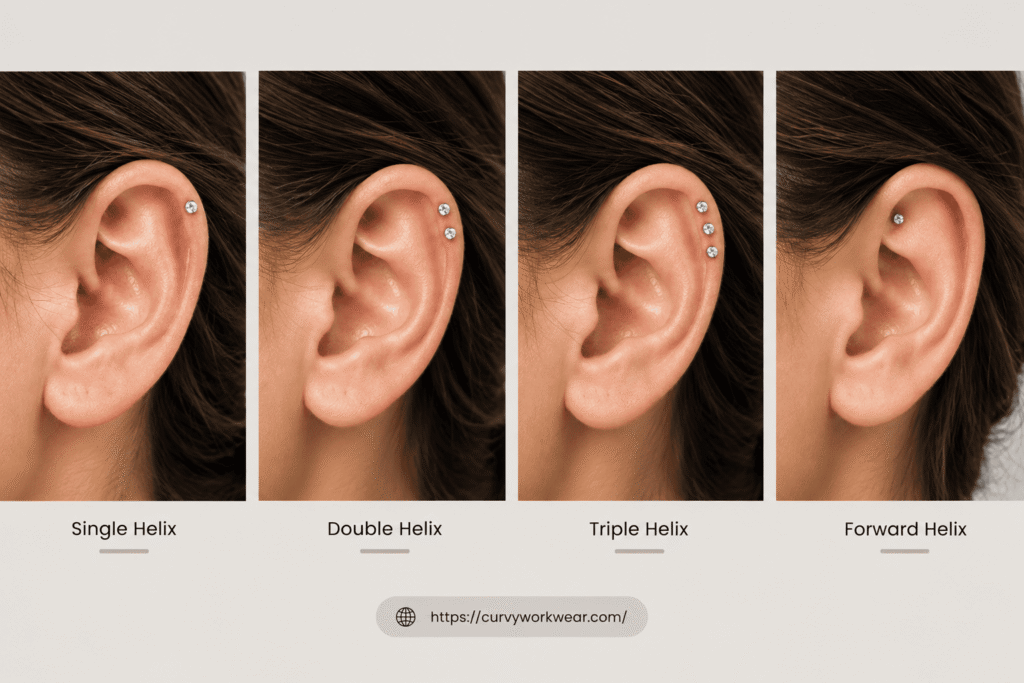
Helix piercings come in several styles based on their ear placement. Some styles use one piercing, while others use multiple piercings. The most common options include single, double, triple, and forward helix piercings.
Single Helix Piercing
A single helix piercing uses one piercing on the upper outer ear cartilage. It creates a simple and clean look. You can usually style it with a small stud or hoop. This option works well if you want a subtle cartilage piercing.
Double Helix Piercing
A double helix piercing has two piercings along the upper outer ear cartilage. They usually sit close together with even spacing. You can wear matching jewelry or different styles in each piercing. Both piercings need proper care during the healing period.
Triple Helix Piercing
A triple helix piercing includes three piercings along the outer ear cartilage. It creates a more noticeable and layered appearance. Small studs often work well with this style. Since you have three fresh piercings, proper aftercare becomes especially important.
Forward Helix Piercing
A forward helix piercing sits on the upper cartilage near the front of your ear. It differs from a traditional helix piercing on the outer ear rim. You can get one, two, or three forward helix piercings. The exact placement depends on your ear shape and available cartilage.
Helix Piercing Types Comparison
| Type | Number of Piercings | Location | Common Jewelry |
|---|---|---|---|
| Single Helix | 1 | Upper outer ear cartilage | Stud or hoop |
| Double Helix | 2 | Upper outer ear cartilage | Small studs or hoops |
| Triple Helix | 3 | Upper outer ear cartilage | Small studs or hoops |
| Forward Helix | 1–3 | Front upper ear cartilage | Small studs or suitable rings |
A professional piercer should check your ear anatomy before choosing placement. This helps determine which helix style suits your ear best.
How Much Does a Helix Piercing Hurt?
A helix piercing usually hurts more than a standard earlobe piercing. Cartilage is thicker and has less blood flow than soft tissue. Pain levels also vary between people and piercing locations.
What Does Helix Piercing Pain Feel Like?
Most people describe the piercing as a quick, sharp pinch. You may also feel pressure as the needle passes through. Some throbbing or warmth can follow the piercing. The area may stay tender when touched afterward.
The actual piercing takes only a short amount of time. Your personal pain tolerance can affect the experience. A trained professional should use a sterile, single-use piercing needle.
How Long Does Helix Piercing Pain Last?
The sharp pain usually ends soon after the piercing is complete. Mild soreness and tenderness can continue for several days. Some sensitivity may return when the piercing gets bumped or pressured.
A helix piercing can remain sensitive during its long healing period. Cartilage piercings commonly take around six to twelve months.
Pain should gradually improve rather than become worse. Increasing pain, warmth, swelling, or unusual discharge may indicate infection. Seek medical care if these symptoms develop or worsen.
How Long Does a Helix Piercing Take to Heal?
A helix piercing usually takes six to twelve months to fully heal. Cartilage heals slowly because it receives less blood flow. Healing time can vary between people and piercing locations.
You may feel better before the piercing fully heals. The inside can still remain fragile during this time. Continue proper aftercare until the piercing completely heals.
Helix Piercing Healing Stages
During the first few days, mild swelling and tenderness are common. You may also notice slight bleeding or bruising. These symptoms should gradually improve as healing continues.
During the following weeks, itching and light crusting can occur. A small amount of whitish-yellow fluid can also appear. This fluid can dry around the jewelry and form crust.
Over the next several months, the piercing slowly becomes stronger. It may still feel sensitive when touched or bumped. Avoid pressure and unnecessary movement during this period.
Signs of Normal Healing
Some redness, swelling, tenderness, and itching can happen during healing. These symptoms should gradually improve instead of getting worse. Light crusting around the jewelry can also occur normally.
Keep cleaning the piercing gently with sterile saline during healing. Avoid twisting or rotating the jewelry unnecessarily.
Signs of a Possible Infection
Increasing redness, swelling, warmth, or pain may signal an infection. Thick yellow, green, or foul-smelling discharge can also indicate infection. Fever or chills require prompt medical attention.
Cartilage infections can sometimes become serious if left untreated. Contact a healthcare professional when symptoms worsen or persist.
Helix Piercing Healing Stages
| Healing Stage | What You May Notice | What to Do |
|---|---|---|
| First Few Days | Mild swelling, tenderness, or slight bleeding | Clean gently with sterile saline |
| First Few Weeks | Itching, sensitivity, and light crusting | Avoid touching and pressure |
| Following Months | Less tenderness but continued sensitivity | Continue regular aftercare |
| Fully Healed | The piercing feels comfortable and stable | Change jewelry carefully |
Important: Healing times vary, so avoid changing jewelry too early. A qualified piercer can check whether your piercing has healed properly.
How to Care for a New Helix Piercing?
A new helix piercing needs gentle care during the healing period. Proper aftercare helps reduce irritation and supports normal healing. Keep the area clean and avoid unnecessary pressure or movement.
How to Clean a Helix Piercing
Wash your hands before touching your helix piercing. Use a sterile saline wound wash for regular cleaning. Choose saline with 0.9% sodium chloride as the only ingredient.
Spray the saline gently around the front and back of the piercing. Let the solution loosen any dried crust naturally. Do not pick or pull crust from the skin.
After cleaning, gently dry the area with clean disposable gauze. Avoid rubbing the piercing with towels. Cloth towels can catch on the jewelry and cause irritation.
Do not twist, spin, or rotate the jewelry while cleaning. Movement can irritate the healing tissue. Avoid cleaning the piercing too often because this can also cause irritation.
What to Avoid During Healing
Avoid touching your helix piercing unless you are cleaning it. Keep hair products, makeup, lotions, and sprays away from the piercing. These products can irritate healing skin.
Avoid alcohol, hydrogen peroxide, and other harsh cleaning products. These products can damage healing tissue. Do not use antibiotic creams unless a healthcare professional recommends them.
Avoid swimming pools, hot tubs, lakes, and other bodies of water. Submerging the piercing can increase exposure to harmful bacteria.
Avoid pulling, bumping, or putting pressure on the jewelry. Be careful when brushing your hair or using headphones. Keep your bedding and pillowcase clean during healing.
How to Sleep With a Helix Piercing
Avoid sleeping directly on your new helix piercing. Pressure can irritate the area and affect the piercing angle.
Try sleeping on the opposite side during early healing. You can also use a travel pillow with an opening. Place your ear inside the opening to reduce direct pressure.
Keep your pillowcase clean and change it regularly. You can also use a clean T-shirt over your pillow. This method provides several clean surfaces for sleeping.
If your piercing becomes painful after sleeping, reduce pressure immediately. Continued pressure can slow healing and cause irritation.
What Jewelry Is Best for a Helix Piercing?
The best helix jewelry should fit your ear and support safe healing. Choose high-quality jewelry made for body piercings. Your piercer should select the correct size and style for your anatomy.
Best Jewelry Materials for Helix Piercings
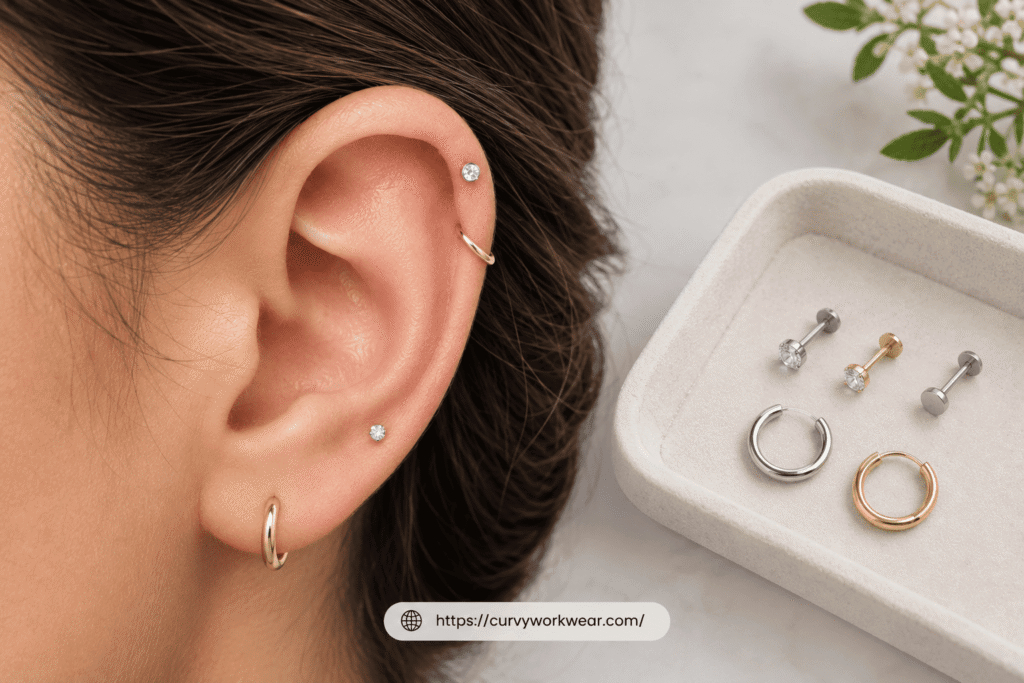
Implant-grade titanium is a popular choice for new helix piercings. It is lightweight and suitable for people with nickel sensitivity. Look for titanium meeting recognized ASTM or ISO implant standards.
Implant-grade steel can also work for some people. Choose steel that meets recognized implant-grade standards. People with nickel sensitivity may prefer titanium instead.
Solid 14K to 18K gold can also suit fresh piercings. The gold should be nickel-free and suitable for body jewelry. Sterling silver jewelry can be considered for fully healed piercings when the material and fit are suitable. Avoid gold-plated, gold-filled, and vermeil jewelry for fresh piercings.
Niobium is another suitable material for body piercing jewelry. It has a long history of use in professional piercing. Your piercer can help you choose a suitable piece.
Popular Helix Piercing Jewelry Styles
Flat-back labret studs are a common choice for helix piercings. They provide a simple look and work well with many ear shapes. A professional piercer should choose the correct post length.
Small hoops can also create a stylish helix piercing look. However, rings may not suit every fresh piercing. Your piercer should decide if the style fits your placement and anatomy.
Simple studs work well for people who prefer a subtle appearance. Diamond stud earrings can add more detail without changing the basic style. Choose jewelry with smooth surfaces and secure settings.
Threadless and internally threaded jewelry are suitable professional options. Their designs help prevent rough threading from passing through healing tissue. Jewelry should also have smooth, polished surfaces.
Helix Piercing Jewelry Comparison
| Jewelry Type | Best Use | Main Benefit | Healing Suitability |
|---|---|---|---|
| Flat-Back Stud | Fresh or healing piercing | Simple and comfortable design | Often suitable |
| Small Hoop | Healed or suitable placements | Stylish and flexible look | Depends on placement |
| Gemstone Stud | Everyday styling | Adds color and detail | Suitable with quality materials |
| Threadless Jewelry | Fresh or healing piercing | Smooth and secure design | Often suitable |
| Internally Threaded Jewelry | Fresh or healing piercing | Reduces tissue contact with threads | Often suitable |
Choose jewelry based on quality, fit, material, and your ear anatomy. A professional piercer can recommend the safest option for you.
How Much Does a Helix Piercing Cost?
The cost of a helix piercing varies by location and piercing studio. Jewelry quality can also change the final price. In the United States, professional studios commonly charge around $30 to $80. Jewelry may cost extra at some studios.
Premium jewelry can increase the total cost significantly. Implant-grade titanium usually costs less than solid gold jewelry. Ask your piercer whether jewelry is included in the quoted price.
Choose a professional studio instead of choosing only by price. The studio should use a sterile, single-use needle. It should also provide suitable jewelry and clear aftercare instructions.
What Are the Risks of a Helix Piercing?
Helix piercings can cause irritation during the healing period. Common problems include swelling, tenderness, redness, and crusting. These symptoms can happen during normal healing.
Infection is another possible risk with cartilage piercings. Cartilage infections can become more serious than lobe infections. Increasing pain, swelling, warmth, or discharge needs medical attention.
Poor jewelry fit can also cause problems during healing. Jewelry that fits too tightly can become embedded. Jewelry that moves too much can cause irritation.
A helix piercing can also develop irritation bumps or excessive scar tissue. Poor placement may cause migration or other healing problems. Proper jewelry and professional placement can reduce these risks.
Seek medical care if symptoms become severe or continue getting worse. Do not remove suspected infection jewelry without medical guidance.
When Can You Change Helix Piercing Jewelry?
You should not change helix jewelry too early. A helix piercing can take six to twelve months to heal fully. The outside may look healed before the inside finishes healing.
During healing, let a qualified piercer handle necessary jewelry changes. Some piercings need a shorter post after swelling decreases. This process is called downsizing.
Wait until the piercing is fully healed before changing jewelry yourself. The area should no longer feel tender or produce crusting. These signs help show that healing has finished.
Never force new jewelry through the piercing. Forcing jewelry can tear the healing tissue. Ask a professional piercer for help if jewelry does not insert easily.
Helix Piercing Aftercare: Dos and Don’ts
Dos
Wash your hands before touching your helix piercing. Clean it with sterile saline during healing. Keep the jewelry still and avoid unnecessary movement.
Keep your bedding and pillowcases clean during healing. Protect the piercing from pressure while sleeping. Follow your professional piercer’s aftercare instructions.
Don’ts
Do not twist, spin, or rotate the jewelry during healing. Avoid alcohol, hydrogen peroxide, and harsh cleaning products. Do not over-clean the piercing because this can cause irritation.
Avoid swimming in pools, lakes, oceans, and hot tubs. Keep cosmetics, lotions, and sprays away from the piercing. Avoid pressure, friction, and unnecessary contact with the jewelry.
Do not change the jewelry yourself during early healing. Let a qualified piercer handle necessary jewelry changes. This helps reduce unnecessary irritation and tissue damage.
Frequently Asked Questions About Helix Piercing
Can You Sleep on a Helix Piercing?
Avoid sleeping directly on a new helix piercing. Pressure can irritate the healing cartilage and cause swelling. It can also affect the piercing angle during healing.
Try sleeping on the opposite side instead. A travel pillow can also reduce pressure on your ear. Keep your pillowcase clean and change it regularly.
Can You Shower With a Helix Piercing?
Yes, you can shower with a new helix piercing. Showers are generally safer than baths during healing.
Let clean water rinse the area without rubbing it. Avoid getting shampoo or other products around the piercing. Rinse the piercing well if these products touch it.
Do not soak the piercing in pools, hot tubs, or lakes. These waters can expose your healing piercing to harmful bacteria.
How Long Should You Wait Before Changing Helix Jewelry?
Wait until your helix piercing has fully healed before changing jewelry yourself. Helix piercings usually take six to twelve months to heal.
Do not change jewelry simply because the outside looks healed. Piercings heal from the outside toward the inside. The inner tissue can remain fragile for longer.
If your jewelry needs changing during healing, see a qualified piercer. They can safely check the piercing and change the jewelry.
Why Is My Helix Piercing Still Swollen?
Some swelling is normal during the early healing period. Mild swelling should gradually improve as healing continues.
Pressure, friction, or frequent touching can keep the piercing swollen. Sleeping on the piercing can also cause irritation and swelling.
Persistent or worsening swelling needs more attention. Severe redness, warmth, increasing pain, or discharge can signal infection.
Because helix piercings pass through cartilage, infections can become serious. Contact a healthcare professional if these symptoms develop or worsen.
Final Thoughts
A helix piercing can add a stylish detail to your ear. However, cartilage piercings need patience during healing. A helix piercing can take six to twelve months to heal fully.
Good aftercare helps protect the piercing during this period. Clean it gently and avoid unnecessary touching or pressure. Do not rotate the jewelry while the piercing heals.
Choose quality jewelry that fits your ear properly. Avoid changing the jewelry before the piercing fully heals. A professional piercer can help with safe jewelry changes.
If you notice worsening pain, swelling, warmth, or unusual discharge, seek medical care. Proper care can help your helix piercing heal smoothly and safely.
Disclaimer: This article is for general information only. It is not medical advice. For concerns about your piercing, healing, or possible infection, consult a qualified healthcare professional or professional piercer.