Ever looked at someone’s nails and wondered how they stay so strong without looking fake? Chances are, they’re wearing builder gel nails.
If your natural nails break, peel, or bend at the slightest bump, you’re not alone. Builder gel nails have become one of the most popular nail treatments because they add strength without adding a lot of bulk. In this guide, you’ll learn what builder gel is, why people love it, its pros and cons, the different types available, and how to use it step by step.
What Is Builder Gel? A Simple Definition
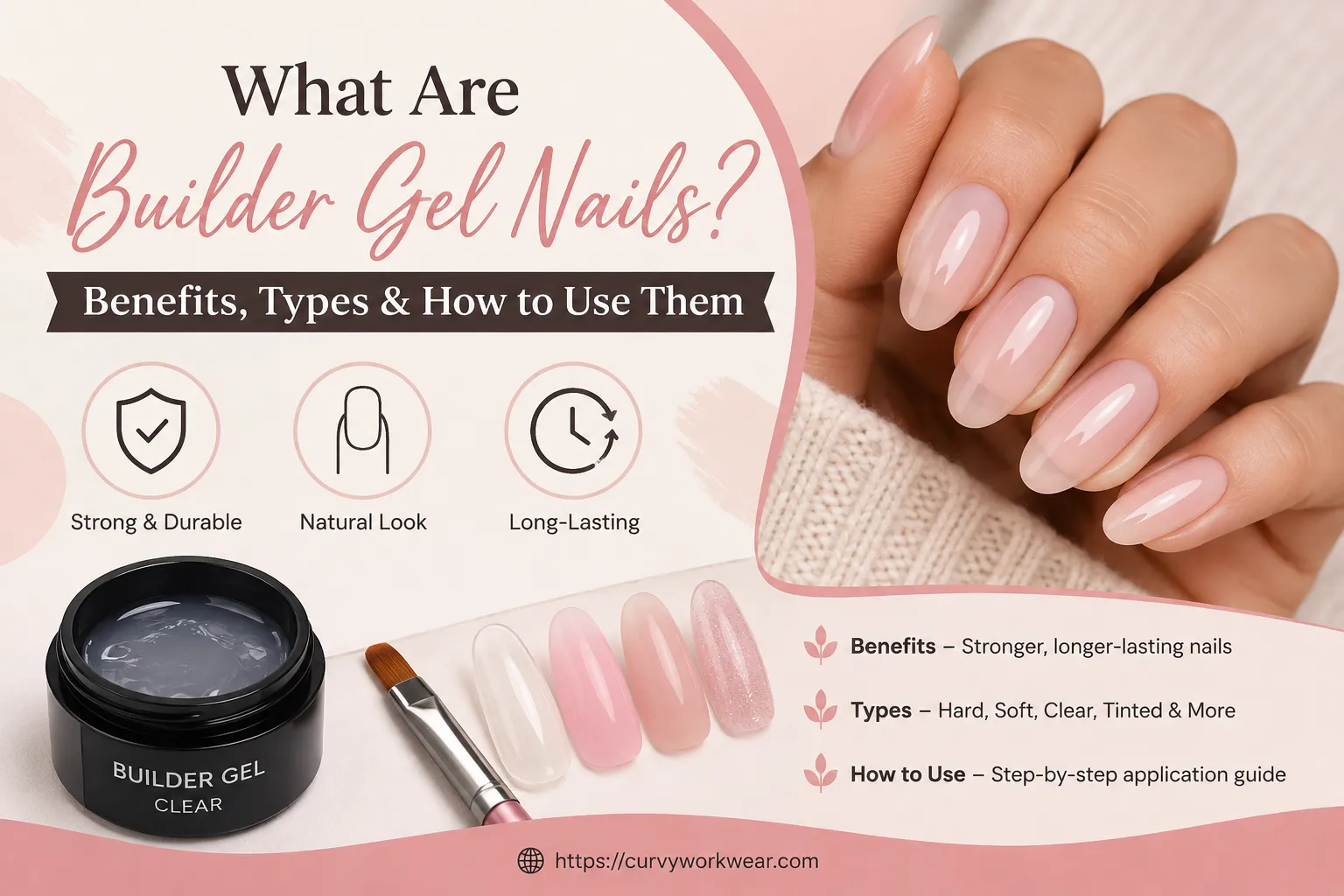
Builder gel is a thick, flexible gel used to strengthen and extend natural nails. Unlike regular gel polish, which just adds color, builder gel actually builds structure on top of or around your natural nail.
Think of it like a protective shell. It sits on your nail bed and hardens under a UV or LED lamp, creating a layer that resists cracking and chipping.
Builder gel is often confused with acrylic, but the two are not the same. Acrylic is made by mixing a liquid monomer with a powder, and it hardens in the air. Builder gel, on the other hand, only hardens under lamp light. According to beauty writers at Who What Wear, builder gel is close to hard gel, just a bit stronger, which is why it holds up so well for everyday nail extensions.
Builder Gel vs. Regular Gel Polish
Regular gel polish is thin and mainly used for color. It doesn’t add strength or length to the nail.
Builder gel is thicker and self-leveling, meaning it can be shaped and built up. It’s designed to reinforce weak nails or extend nail length, not just add shine.
Benefits of Builder Gel Nails
Builder gel isn’t just a trend. It solves real problems that many people deal with every day.
Stronger, More Durable Nails
The biggest benefit is strength. Builder gel forms a hard, flexible layer that helps protect your natural nail from everyday wear and tear, like typing, washing dishes, or opening cans.
Looks Natural
Unlike thick acrylics, builder gel can be applied in thin, sheer layers. This means your nails can look natural and healthy, not stiff or bulky.
Gentler on Natural Nails
Because builder gel is more flexible than acrylic, it moves with your nail instead of fighting against it. This flexibility can reduce the risk of lifting and nail damage over time.
Long-Lasting Wear
With proper application and care, builder gel manicures typically last several weeks longer than regular polish. However, exact wear time depends on your nail growth, lifestyle, and how well the gel was applied.
Versatile for Many Nail Goals
Whether you want to strengthen your natural nails, add a little length, or create a sculpted extension, builder gel can be adjusted to fit different needs. If you like switching up your nail look often, you might also enjoy browsing nail stickers and nail art ideas for extra design inspiration on top of your builder gel base.
Advantages and Disadvantages of Builder Gel Nails
Builder gel nails offer extra support, a smooth finish, and long-lasting wear. However, the results depend on the gel formula, application technique, and aftercare. Here’s a quick comparison to help you decide whether builder gel is right for you.
| Feature | Advantages | Disadvantages |
|---|---|---|
| Nail Strength | Adds support to natural nails and helps reduce bending. | Poor application or forceful removal can leave nails thin or damaged. |
| Appearance | Creates a smooth, glossy finish with natural-looking color options. | Lifting or uneven application can affect the finish. |
| Durability | Can last several weeks with proper application and maintenance. | Nail growth means regular maintenance or removal is needed. |
| Versatility | Works on natural nails and can create extensions with suitable products. | Longer extensions may need more upkeep and careful handling. |
| Application | Allows different shapes, lengths, and finishes. | Requires proper preparation and complete curing with a compatible lamp. |
| Removal | Some formulas can be soaked off according to the manufacturer’s instructions. | Hard gel generally needs careful filing rather than soaking. |
| Cost | Offers a durable manicure that may reduce frequent full applications. | Professional application and maintenance can add up over time. |
| Nail Health | Can protect the nail surface from some everyday wear while intact. | Skin contact with uncured gel can trigger an acrylate allergy in some people. |
Expert tip: Choose a builder gel suited to your nail type, follow the manufacturer’s curing instructions, and never peel or force off the product. If you notice lifting, pain, redness, or itching, stop using the product and seek professional advice when needed.
Types of Builder Gel
Not all builder gels are the same. Knowing the different types helps you (or your nail tech) pick the right one for your goals.
Hard Gel Builder
Hard gel is the most common type used for extensions. It’s strong enough to hold added length using nail tips or forms. It doesn’t soak off in acetone, so it must be filed off.
Soft Gel Builder
Soft gel is thinner and more flexible. It’s often used for strengthening natural nails rather than adding length. Most soft gels can be soaked off in acetone, making removal easier.
Builder Gel for Natural Nails
This type is made specifically for people who don’t want extensions but still want extra strength. It’s usually applied in a thin layer directly on the natural nail to prevent bending and breaking. This is a great starting point for beginners or anyone new to gel treatments. If you’re curious about other low-damage nail strengthening options, the Russian manicure technique is another method worth comparing.
Colored and Camouflage Builder Gels
Some builder gels come in sheer pink, nude, or milky white shades. These add a soft, polished look while still building strength, so you get color and durability in one step.
How to Use Builder Gel Nails: Step-by-Step
Applying builder gel takes patience, but the process isn’t complicated once you know the steps.
1. Prep the Natural Nail
Push back cuticles, gently buff the nail surface, and clean off any oils or dust. This step helps the gel stick properly and last longer.
2. Apply a Base Coat
A thin base coat helps the builder gel bond to the nail. Cure it under a UV or LED lamp for the time listed on the product.
3. Apply the Builder Gel
Using a brush, apply a small amount of builder gel to the center of the nail. Gently push it toward the edges, leaving a tiny gap near the cuticle to avoid flooding the skin.
4. Shape the Nail
While the gel is still wet, use the brush to smooth and shape it. If you’re extending length, place the gel over a nail form or tip first.
5. Cure Under the Lamp
Place your hand under a UV or LED lamp for the recommended time, usually found on the product label. This hardens the gel completely.
6. File and Shape
Once cured, gently file the nail into your desired shape. Smooth out any bumps or uneven areas.
7. Add Top Coat and Finish
Apply a top coat for shine and protection, then cure again. Finish by applying cuticle oil to keep the skin around your nails hydrated.
How Long Do Builder Gel Nails Last?
Most builder gel manicures last around three to four weeks with proper care, though this can vary based on how fast your nails grow and how well you take care of them. As your natural nail grows out, you may notice a small gap near the cuticle, which is normal.
For best results, avoid picking at the gel or removing it yourself. Improper removal can peel off layers of your natural nail, which weakens it over time.
Builder Gel Nails: Important Safety Tips
Builder gel can provide a durable manicure, but proper application, curing, and removal are essential for protecting your natural nails and skin.
- Use the correct curing lamp: Follow the product manufacturer’s instructions for lamp compatibility and curing time. An incompatible lamp or incomplete curing can increase the risk of allergic reactions.
- Keep gel off your skin: Avoid contact with the cuticles and surrounding skin. If uncured gel touches your skin, remove it promptly according to the product instructions before curing.
- Protect your hands from UV exposure: Both UV and LED nail lamps can emit UVA radiation. Consider fingerless UV-protective gloves or broad-spectrum, water-resistant SPF 30+ sunscreen on exposed skin before a manicure.
- Never peel off builder gel: Picking or forcing off the product can strip layers of your natural nails. Check whether your gel is soak-off or hard gel before choosing a removal method.
- Watch for signs of an allergy: Itching, redness, swelling, or blistering around the nails can indicate a reaction. Stop using the product and seek medical advice if symptoms develop.
- Choose products carefully: Buy clearly labelled products from reputable suppliers and follow their safety instructions. Avoid products with unclear ingredients or curing requirements.
Remember: Builder gel is not automatically safe just because it looks dry or feels hard. Correct curing and avoiding skin contact with uncured gel are key precautions. If your nails become painful, unusually thin, or start lifting, give them a break and seek advice from a qualified nail professional.
FAQ: Builder Gel Nails
How long do builder gel nails last?
Builder gel manicures typically last around two to three weeks before maintenance may be needed. Actual wear time depends on nail growth, application quality, product type, and daily activities.
Does builder gel damage your natural nails?
Builder gel does not automatically damage natural nails. However, over-filing, picking, and forceful removal can thin or weaken them. Proper application and removal help minimize damage.
Can you apply builder gel to short, natural nails?
Yes. Builder gel can add support to short natural nails without extensions. It’s a useful option if you want to maintain your natural length while reducing everyday bending and breakage.
What is the difference between builder gel and acrylic nails?
Builder gel cures under a compatible UV or LED lamp, while acrylic hardens through a chemical reaction after its liquid and powder are mixed. Builder gel may feel more flexible, depending on its formula, while acrylic is often more rigid.
Can you remove builder gel at home?
It depends on the formula. Some builder gels are designed to soak off with acetone, while hard gels generally require filing. Check the manufacturer’s instructions and avoid peeling or forcing the product off, as this can damage your natural nails.
Is builder gel safe for beginners to use at home?
Beginners can use builder gel, but correct application and curing require care. Choose a product with clear instructions, use a compatible lamp, and keep uncured gel off your skin. Improper curing or skin contact can increase the risk of an acrylate allergy.
When should you get builder gel nails refilled or removed?
Consider maintenance when visible nail growth affects the balance of the manicure or when the product begins lifting. Do not apply fresh gel over lifted areas, as moisture and debris can become trapped underneath.
Conclusion
Builder gel nails offer a simple way to get stronger, longer-lasting nails without sacrificing a natural look. Whether you choose a soft gel to protect your natural nails or a hard gel for added length, understanding the pros, cons, and basics helps you get better results and avoid common mistakes.
If you’re new to builder gel nails, start slow. Try a thin layer on your natural nails first, see how your nails respond, and build from there. For more nail care ideas and treatment comparisons, check out our full nail care and beauty section. With a little practice, you’ll see why so many people have made builder gel part of their regular nail routine.
Disclaimer: This article is for general information only. It is not medical or dermatological advice. If you have a nail infection, skin condition, or any concern about UV exposure, please talk to a dermatologist or licensed nail professional before trying a new product.