
You just bought jeans that looked perfect in the store. Now they feel like a second skin, and you’re already searching for how to stretch out jeans that fit too tight. Sound familiar?
This is one of the most common clothing problems out there. New jeans, especially denim with little to no stretch, often feel snug at first. The good news is you don’t need to return them or live with the discomfort.
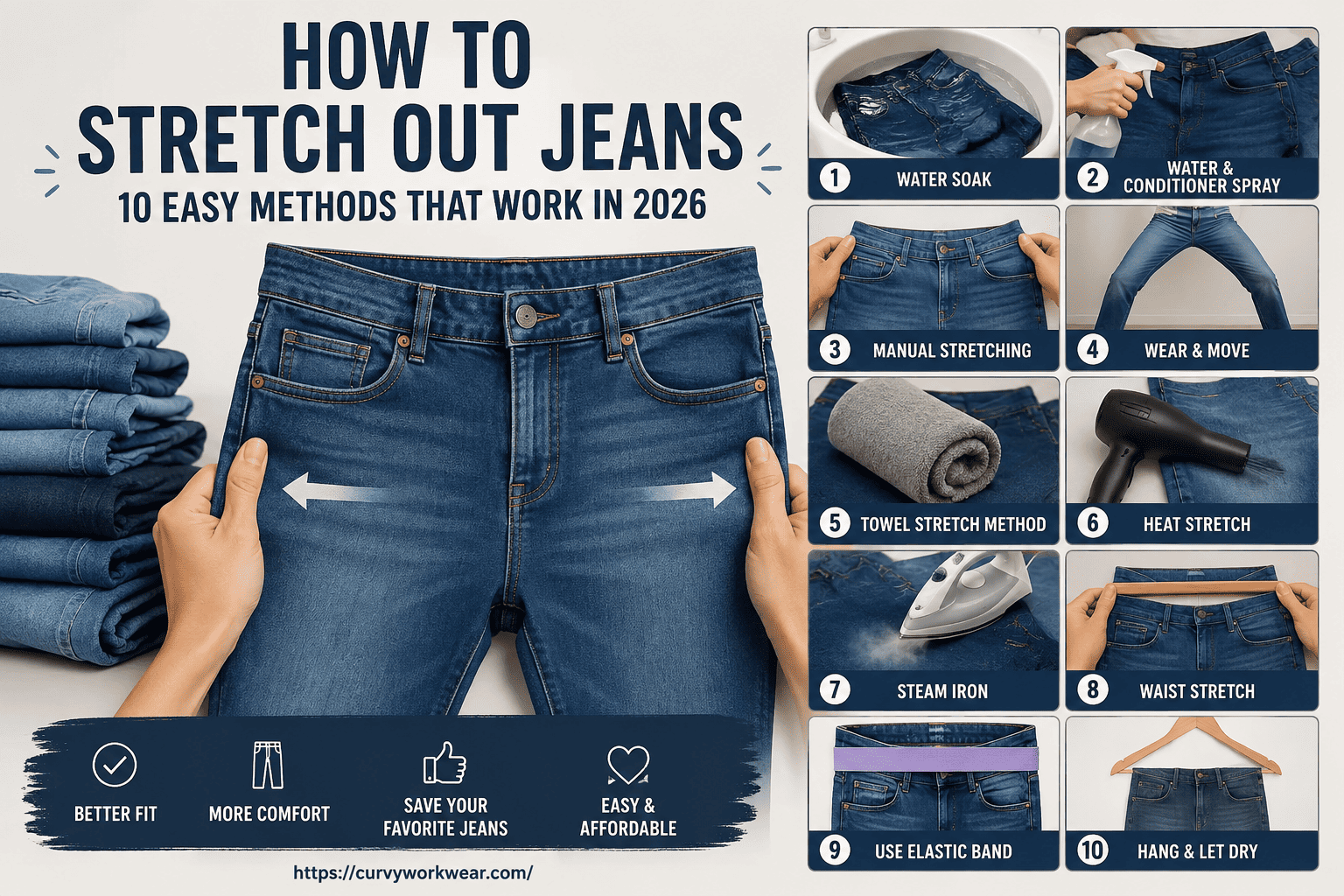
Knowing how to stretch out jeans can save you money and save your favorite pair from sitting unused in your closet. Below are 10 easy, tested methods that actually work, whether you’re dealing with a stiff new pair or an old favorite that shrank in the wash.
Disclaimer: This article is for information only. Results vary by fabric blend, and stretching methods should be tested carefully to avoid damaging your denim. When in doubt, check the care label or consult a professional tailor.
Why You Need to Stretch Out Jeans in the First Place
Before jumping into the methods, it helps to know why this happens.
New Denim Is Stiff by Design
Raw or unwashed denim has very little give. The fibers are tightly woven, so the fabric hasn’t had a chance to loosen up yet.
Fabric Blend Matters
Jeans made with cotton and elastane (spandex) stretch more easily than jeans made from 100% cotton. Checking the fabric tag before buying can help you avoid overly tight pairs in the future — this matters whether you’re shopping for straight jeans or a more fitted cut.
Washing and Drying Habits
Hot water and high heat in the dryer can shrink denim fibers. According to Levi’s official denim care guide, cold water and air drying are the safest way to prevent this kind of shrinkage. This is one of the most overlooked causes of jeans feeling smaller over time.
Easy Ways to Stretch Out Jeans at Home
These are simple, no-cost methods you can try right now using things you likely already have.
1. Wear Them to Stretch Out Jeans Naturally
The easiest way to stretch jeans is simply to wear them. Body heat and movement naturally loosen denim fibers over a few hours.
Sit down, walk around, squat, and bend your knees while wearing them. This targets the tightest areas, like the thighs and waist.
Pros: Free, zero risk of damage, works on almost any denim blend. Cons: Slow — results build up over days, not hours, and won’t fix jeans that are more than a size too small.
2. Do Lunges or Squats in Your Jeans
Since stretching is really about repeated movement, exercises like lunges and squats speed up the process. Put your jeans on and do a few sets while watching TV.
This method works especially well for how to stretch skinny jeans, since the tightness is usually concentrated around the thighs and calves.
Pros: Faster than passive wearing, targets specific tight spots, no tools needed. Cons: Can feel uncomfortable in very tight jeans, and overdoing it may stress seams on cheaper denim.
3. Use the Spray Bottle and Stretch Method
Fill a spray bottle with water and lightly dampen the tight areas, such as the waistband or thighs. Then put the jeans on and move around until they dry.
The moisture softens the fibers, making them easier to stretch when you move. This is one of the most popular DIY jeans stretching methods because it’s quick and doesn’t require soaking the whole garment.
Pros: Quick, cheap, works well on specific tight spots. Cons: It may leave temporary water marks on dark jeans if they do not dry evenly.
How to Stretch Out Jeans With DIY Household Items
If wearing and moving isn’t cutting it, these hands-on methods can help.
4. The Hanger Stretch
Wet the waistband slightly and hang the jeans using two hangers, one hooked through each side of the waist. Let gravity do the work overnight.
This method is especially useful for stretching the waist without affecting the length or thigh fit.
Pros: Hands-off, works overnight while you sleep, gentle on the fabric. Cons: Only stretches the waist, and drying time depends on humidity in your home.
5. The Water Bottle Trick
Fill two plastic bottles with hot water and insert them into the legs of damp jeans. Leave them for about 20-30 minutes as the bottles push against the fabric.
This is a good option for stretching specific tight spots, like the knees or calves, without stretching the entire leg.
Pros: Targets exact trouble spots, uses items most people already own. Cons: Hot water can affect elastane blends over time, so avoid this on stretch-heavy denim.
6. Freezer Stretch Method (For Specific Tight Spots)
Wet the tight area, place the jeans in a sealed plastic bag, and leave them in the freezer overnight. As water freezes, it expands and gently stretches the fibers around it.
This method works best on small, targeted spots rather than the whole jean.
Pros: Very gentle, good for one stubborn tight spot, low effort. Cons: Takes a full day or more, and results are usually subtle rather than dramatic.
7. Iron and Stretch (With Caution)
Dampen the tight area slightly, then iron it on a low or medium setting while gently pulling the fabric in different directions. Keep the iron moving so you don’t scorch the denim.
Always check the care label first, since not all denim blends handle heat well.
Pros: Fast results, works well on stiff, unwashed denim. Cons: Risk of scorching or melting elastane if the iron is too hot or held in one spot too long.
How to Stretch Tight Jeans Using Products
Sometimes household tricks aren’t enough, especially with stiff, non-stretch denim.
8. Denim Stretch Spray
These sprays are made to loosen fibers without soaking the entire garment. Spray the tight area, then wear the jeans and move around as they dry.
They’re widely available at clothing and shoe stores and work well for small adjustments.
Pros: Purpose-built for this exact job, easy to find, no guesswork. Cons: Costs more than a DIY method and may need reapplying after washing.
9. Jean Stretcher Tool
A jean stretcher (or waist stretcher) is a plastic or metal device that clips onto tight areas and slowly widens them over several hours. It’s especially helpful for how to stretch tight jeans around the waist or hips.
This method takes longer, but it’s gentle and controlled, which reduces the risk of damaging the fabric.
Pros: Precise, reusable, safer than aggressive hand-pulling. Cons: One-time purchase cost, and it’s slower than heat-based methods.
10. Professional Tailoring
If none of the DIY methods work, a tailor can add small fabric panels called gussets to permanently increase room in tight spots. This costs more but is the most reliable long-term fix.
This option makes sense for jeans that are expensive, well-fitted everywhere else, or hard to replace.
Pros: Permanent, precise, best option for jeans that are truly too small. Cons: Costs the most, and altered jeans can’t easily be returned to their original fit later.
Tips to Keep Your Stretched Out Jeans From Shrinking Back
Stretching jeans is only half the battle. Keeping that fit is just as important.
- Wash jeans in cold water instead of hot.
- Air dry instead of using a hot dryer whenever possible.
- Turn jeans inside out before washing to reduce friction on the fibers.
- Avoid washing after every single wear, since frequent washing speeds up fiber tightening.
These small habits help maintain the stretch you worked hard to achieve. For more on this, Levi’s own care guide recommends washing denim roughly every 10 wears to protect both fit and color.
FAQs About How to Stretch Out Jeans
Does wearing tight jeans actually stretch them over time?
Yes. Body heat and movement gradually loosen the fibers, especially in blends with a bit of elastane. It usually takes a few wears before you notice a real difference.
How long does it take to stretch jeans at home?
Simple methods like wearing them or using a spray bottle can show results within a few hours. Methods like the hanger stretch or jean stretcher tool may take overnight or longer for noticeable change.
Can you stretch 100% cotton jeans?
Yes, but they respond more slowly than stretch-blend denim since there’s no elastane to help. Water-based methods and gentle stretching tend to work best on pure cotton.
Will stretching jeans damage the fabric?
If done carefully, no. However, excessive heat, aggressive pulling, or over-stretching one spot can weaken fibers or cause thinning over time.
Is it better to size up instead of stretching jeans?
Not always. Sizing up can leave other areas, like the waist or length, too loose. Stretching lets you keep the overall fit while fixing just the tight spots.
Final Thoughts
Tight jeans don’t have to mean wasted money or a pair you never wear again. From simple tricks like wearing them around the house to tools like a jean stretcher, there’s a solution for almost every situation.
Start with the easiest, low-risk methods first, like wearing them or using a spray bottle. If those don’t give you the fit you want, move on to more targeted options like the water bottle trick or a jean stretcher.
With a little patience, you can turn an uncomfortably tight pair into your most comfortable go-to jeans, without spending a single extra dollar. And once your fit is sorted, browse more jeans styling guides on Curvey Workwear for outfit ideas to match.