Ever bought the perfect pair of jeans, only to find they pool around your ankles like fabric puddles? You’re not alone. Too-long jeans are one of the most common clothing problems out there, and learning how to hem jeans by hand means you don’t need a sewing machine to fix them.
Learning how to hem jeans by hand is easier than most people think. All you need is a needle, some thread, and about 30 to 45 minutes of your time. Whether you’re a student without access to a machine, or you just prefer doing things the old-fashioned way, this guide walks you through the whole process, plus a few tricks most guides leave out.
By the end, you’ll know exactly how to hem jeans by hand, how to shorten jeans without cutting them, and how to get a clean, professional-looking finish. No sewing machine required.
How to Hem Jeans by Hand vs. Using a Machine
Not everyone owns a sewing machine, and that’s completely fine. Hand hemming works just as well for denim, especially if you’re only taking off an inch or two.
Hand sewing also gives you more control. You can go slow, check your stitches as you go, and fix mistakes right away. For beginners, this makes the whole process feel far less intimidating than wrestling with a machine you’ve never used before.
There’s also a practical bonus: hand hemming is portable. You can do it on your couch while watching TV, which is more than you can say for a sewing machine.
When Hand Hemming Makes the Most Sense
Hand hemming works best for small alterations, like shortening jeans by one to three inches. If you need to remove a lot of length, a machine will save you time, but hand sewing still gets the job done. It just takes a bit longer, usually 45 to 60 minutes for both legs.
It’s also a great option if you’re new to sewing and want to practice a simple, low-risk project before moving on to bigger ones. If you’ve never picked up a needle before, our guide on how to sew a button in 5 minutes is an even smaller project to warm up on first.
Advantages and Disadvantages of Hemming Jeans by Hand
Before you commit to hemming jeans by hand, it helps to weigh the trade-offs honestly. Hand sewing is a great skill, but it isn’t always the fastest or the strongest option, so here’s a balanced look at both sides.
Advantages
- No machine needed, so it works anywhere, including dorm rooms, apartments, or while traveling
- More control over every stitch, which is easier for correcting mistakes as you go
- Quieter and more portable than machine sewing
- Gentler learning curve for total beginners
- Cheaper to start, since a needle and thread cost far less than a sewing machine
Disadvantages
- Slower than machine hemming, especially for both legs or larger alterations
- Hand stitches are generally less durable than machine stitches for high-stress areas like the ankle hem
- Thick side seams on denim are genuinely hard to push a needle through by hand
- Results can look less uniform than a machine-stitched hem if your tension varies
- Not ideal if you need to hem several pairs of jeans quickly
For most people shortening one or two pairs by a few inches, the advantages outweigh the downsides. If you’re altering a whole wardrobe, though, a machine or a professional tailor will save you time and give you a more consistent finish.
Before You Start: One Step Most People Skip
Here’s something a lot of guides forget to mention: wash and dry your jeans before you hem them, especially if they’re brand new. Denim can shrink slightly in the wash, sometimes by an inch or more depending on the fabric blend. Levi’s own denim care guide recommends washing in cold water and air-drying to protect fit and color, which also happens to be the safest way to pre-shrink jeans before you measure them. If you hem first and wash later, you might end up with jeans that are suddenly too short.
If your jeans have already been washed a few times, you can skip this step and go straight to measuring.
What You’ll Need Before You Start
Gathering your supplies first will save you from stopping halfway through. Here’s a simple list:
- A needle (a heavy-duty “sharps” needle or denim needle works best, since regular needles can bend or snap on thick fabric)
- Strong thread, ideally polyester or a denim-specific thread. Doubling it up gives extra strength
- A thimble (optional, but your fingertip will thank you when pushing through thick layers)
- Straight pins or sewing clips
- Fabric scissors
- A measuring tape or ruler
- An iron (very helpful, not strictly required)
- Tailor’s chalk or a fabric pencil
You likely already have most of these items at home. If not, they’re inexpensive and available at any craft or fabric store.
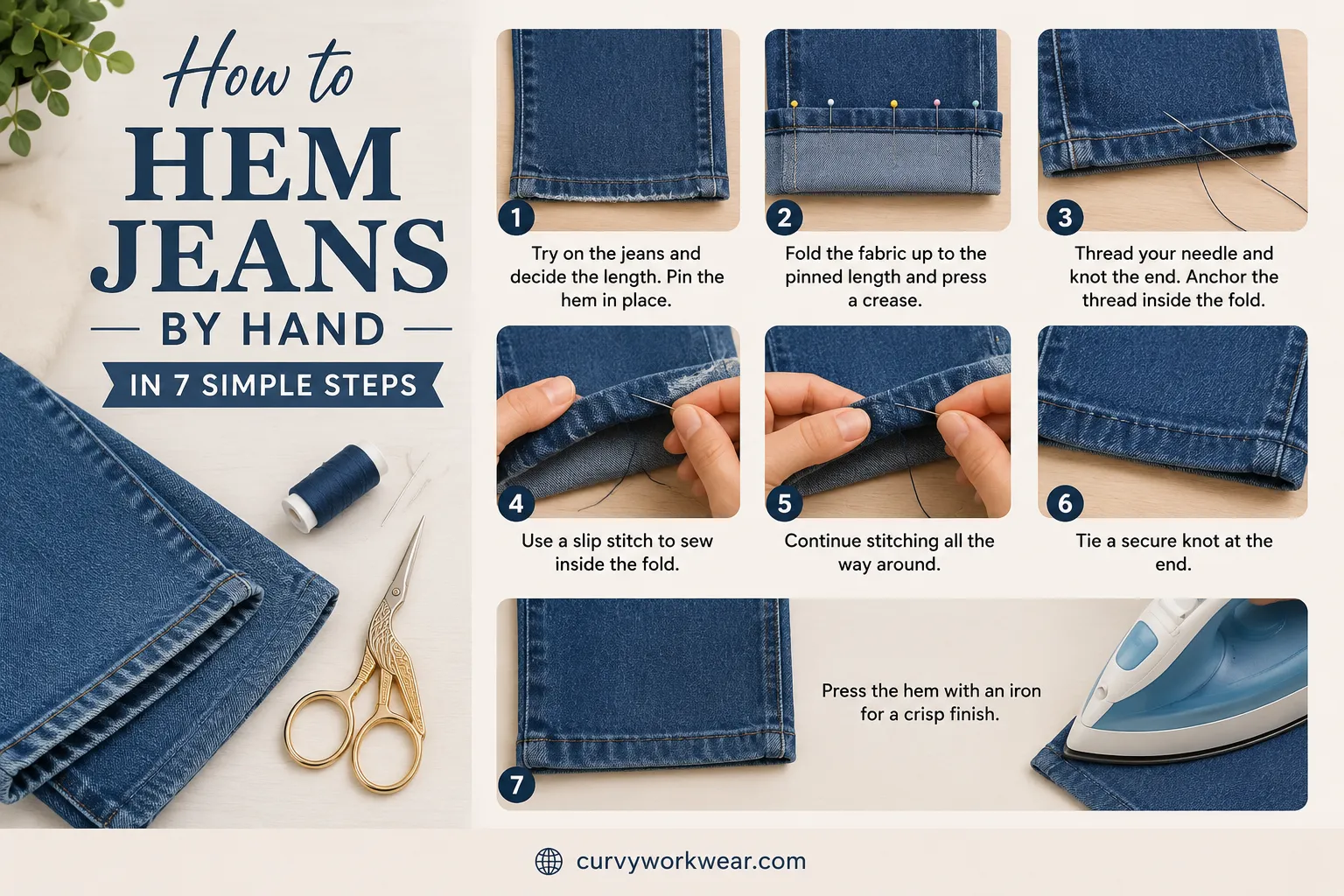
How to Hem Jeans by Hand: The 7-Step Process
Here’s the complete step-by-step method. Follow these in order, and don’t rush the pinning and measuring stage, since that’s where most mistakes happen.
Step 1: Try On the Jeans and Mark the New Length
Put on the jeans with the shoes you’ll usually wear with them. Shoe height changes how long your jeans should be, so this step matters more than people realize.
Fold the extra fabric under to where you want the new hem to sit. Use pins to hold it in place, then mark the fold line with tailor’s chalk. Do this on both legs separately, since one leg is sometimes slightly longer than the other.
Step 2: Take the Jeans Off and Measure Both Legs
Lay the jeans flat on a table, lining up the front and back seams so the fabric isn’t twisted. Measure from the current hem to your chalk mark on each leg, and make sure both measurements match.
If they don’t, adjust the pins until they’re even. A small difference here can make the final result look lopsided, so it’s worth double-checking.
Step 3: Decide If You’re Cutting or Not
This is where many people search for how to shorten jeans without cutting. The truth is, you have two solid options, and each one is genuinely good for different situations.
Option A: The No-Cut Fold Method. Simply fold the extra fabric up on the inside of the jeans and stitch it in place. This preserves the original hem, including the frayed edge or factory stitching, and it’s fully reversible if you change your mind later or if you’re hemming jeans for a growing kid.
Option B: The Cut-and-Sew Method. If there’s a lot of extra fabric, you can trim it down before hemming. This creates a flatter, less bulky finish, but it’s permanent, so only go this route once you’re sure of the length.
For beginners, the fold method is often easier and less stressful, since there’s no risk of cutting too much off. A trick worth knowing: if you want to keep the original factory hem exactly as it looks now, your inside fold only needs to be half the total length you want to remove. For example, if you want the jeans two inches shorter, fold up just one inch. That’s because both sides of the fold get “used up” in the length change.
Step 4: Prepare the Fabric
If you’re using the fold method, fold the excess fabric to the inside along your marked line. Press it flat with an iron if you have one, since this makes sewing much easier and gives you a crisper edge. Denim is thick, so don’t be afraid to use a hotter setting with a bit of steam.
If you’re cutting, add about 1 to 1.5 inches below your chalk mark before trimming. This extra fabric becomes your new hem allowance, so don’t cut exactly on the line.
Step 5: Pin the Hem in Place
Fold the raw or trimmed edge under by about half an inch, then fold it again to hide the raw edge completely. This is called a double fold, and it stops the denim from fraying over time.
Pin all the way around the leg, spacing pins about one to two inches apart, angling them slightly so they’re easy to pull out as you sew. Pay close attention at the side seams, where the fabric gets thick. This is usually where hand-sewn hems start to look uneven if you rush.
Step 6: Sew the Hem by Hand
Now for the main event. Thread your needle with a length of thread about arm’s length long, double it for extra strength, and knot the end.
You have two good stitch choices here, and it’s worth knowing both. MasterClass’s guide to hand sewing stitches is a solid reference if you want to see how these compare to other stitches beyond hemming.
The slip stitch is nearly invisible from the outside. Slide the needle through the folded edge for about a quarter inch, then catch just one or two threads of the outer denim layer before going back into the fold. This keeps your stitching hidden.
The catch stitch trades a little visibility for extra durability. Working left to right, catch a few threads from the folded edge, then a few threads from the jean layer just ahead, forming small X-shapes as you go. This is a good pick for jeans that get a lot of wear.
Whichever stitch you choose, keep your stitches small, even, and not too tight. Overly tight stitches will pucker the fabric. Work your way around the entire leg, and if the seams give you trouble, slow right down and push the needle through by hand rather than forcing it.
For extra durability, some people go around the hem twice, since the ankle area takes a lot of abuse from shoes and pavement.
Step 7: Tie Off, Check, and Repeat on the Other Leg
Once you’ve stitched all the way around, sew back over your first few stitches, then tie a secure double knot and trim any extra thread. Turn the jeans right-side out and check how the hem looks.
Before you consider this leg finished, try the jeans on one more time. This step is worth the extra minute, because if the length is off, you can still unpick a single line of hand stitching fairly easily. Once you’re happy with it, repeat steps 5 and 6 on the second leg, then give both hems a final press with the iron for a crisp, professional finish.
How to Hem Jeans Without a Sewing Machine: Extra Tips
If you’re wondering how to hem jeans without a sewing machine and want the best possible result, a few small habits make a big difference.
Flatten Thick Seams Before You Sew
The side seams on jeans can be four or five layers of denim thick, and pushing a needle through them by hand is the hardest part of the whole project. Gently tapping the seam area with a hammer or mallet beforehand flattens the fibers and makes stitching noticeably easier.
Match Your Original Hem for a Clean Look
If your jeans have that classic double-topstitch look, you can recreate it by sewing two rows of stitches close together, ideally in a gold or orange tone if you want it to blend with the original factory thread. It’s a small detail, but it makes a hand-sewn hem look far more professional. It’s the same attention to finish we cover in our jeans fashion guides, where small styling details often make the biggest difference.
Let a New Hem Develop Its Own Character
If you used the cut method and lost the original faded, worn look, don’t worry. Regular washing and wearing will naturally distress the new hem over time. If you want to speed things up, gently rubbing sandpaper along the fold line can mimic that broken-in look faster.
Common Mistakes to Avoid When You Hem Jeans by Hand
Even simple projects can go wrong if you rush. Here are a few things to watch out for.
Skipping the “try them on with shoes” step is a big one, since jeans can look completely different in length once you add footwear. Another common mistake is cutting off too much fabric before you’re sure of the final length. Always measure twice, and consider the fold method first if you’re unsure.
Puckered stitching usually means your stitches were pulled too tight, so aim for a relaxed, even tension. Finally, if your thread keeps snapping, switch to a heavier-duty thread and make sure you’re not tugging too hard at the seams.
How Much Does It Cost to Hem Jeans Yourself vs. a Tailor?
Hemming jeans at home costs very little, since a needle and thread are often things you already own. A professional tailor charges more: alteration-cost research from Fash puts a simple jeans hem at roughly $10 to $100, depending on the shop, your location, and whether you want the original factory hem preserved. Learning to hem your own jeans pays off fast if you plan on altering more than one pair, and it’s a useful skill to pair with other quick fixes, like the ones in our style guides section.
FAQ: Hemming Jeans by Hand
How long does it take to hem jeans by hand?
Most people can hem one pair of jeans in 30 to 60 minutes once they’re comfortable with the steps. It may take longer the first time while you’re still learning, especially around the thick side seams.
Can I hem jeans by hand without cutting them?
Yes, the fold method lets you shorten jeans without cutting. Simply fold the extra fabric to the inside and stitch it in place, which also keeps the option to let the hem back out later. That’s a handy trick for kids’ jeans they’ll eventually grow into.
What thread is best for hemming denim?
A heavy-duty or polyester thread works best because denim is a thick, tough fabric. Doubling your thread adds even more strength, since regular all-purpose thread can wear out or snap faster with everyday movement.
Will my hand-sewn hem look store-bought?
It can, especially if you use a double-topstitch, match your thread color, and keep your stitches small and even. It may not be flawless the first time, but practice makes the results look increasingly professional with each pair you try.
Should I wash my jeans before hemming them?
Yes, if they’re new. Denim can shrink after the first wash, so hemming before washing may leave you with jeans that end up too short. If your jeans have already been washed several times, you can measure and hem right away.
Conclusion:
Hemming jeans doesn’t require a sewing machine, a tailoring course, or hours of your time. Once you know how to hem jeans by hand, you can fix that one pair with the too-long legs, and every future pair after that too.
Start with the fold method if you’re nervous about cutting, take your time with your stitches, and don’t skip the “try them on with shoes” step. Grab a needle and thread today, and give your jeans the fit they deserve.
Disclaimer: This guide is provided for general informational purposes only and reflects common hand-sewing practices for denim. Results can vary based on your fabric, tools, and experience level. Curvy Workwear is not responsible for any damage to your garments from following these instructions, and if you’re altering an expensive or sentimental pair of jeans, consider a test run on an old pair first or consulting a professional tailor.