Picking an emerald in a ring feels exciting, until you start comparing stones and prices online and everything starts to blur together. One ring looks deep green and glassy, another looks pale and included, and the price tags don’t seem to follow any pattern you can figure out.
That confusion is normal. Emeralds are one of the most beautiful gemstones you can buy, but they’re also one of the trickiest to judge with the naked eye.
This guide breaks it all down in plain language. We’ll cover what emeralds mean, the different types you’ll come across, how to judge quality, what affects price, and how to actually pick a ring you’ll be happy with for years. If you’re building a jewelry collection to match your everyday outfits, you might also like our guide to accessorizing workwear with statement jewelry on Curvy Workwear.
What Does an Emerald Symbolize?
Emeralds have been treasured for thousands of years, long before diamonds became the go-to gemstone for rings.
A Stone With History
Ancient Egyptians mined emeralds as early as 1500 BCE, and Cleopatra was famously fond of them. According to the Gemological Institute of America (GIA), the first known emerald mines were worked in Egypt as early as 3500 BCE, and some of the oldest emeralds ever found, from South Africa, are nearly 2.97 billion years old. Later, emeralds became prized in Indian royal jewelry and South American cultures after large deposits were found in Colombia.
Modern Meaning
Today, an emerald in a ring is often linked to renewal, growth, and loyalty. Many people also choose it as a birthstone gift, since emerald is the traditional birthstone for May and also marks the 20th and 35th wedding anniversaries. Others simply love the color and pick it because nothing else looks quite like it.
Emerald Ring Types You’ll Come Across
Not all emerald rings are built the same way. The “type” usually refers to either the cut of the stone or the treatment it’s had.
Cut-Based Types
- Emerald cut – A rectangular, step-cut style that’s actually named after this gemstone. It’s the only gemstone with a cut named after it, and it shows off clarity and color in long, clean lines.
- Oval and round cuts – Softer, more classic shapes that work well for everyday wear.
- Cushion cut – A rounded-square shape that adds a vintage feel.
Treatment-Based Types
- Untreated emeralds – Rare and expensive, since almost no emerald is perfectly clean.
- Oiled emeralds – The industry standard. Natural oils fill tiny surface cracks and improve clarity. This is normal and accepted, as long as it’s disclosed.
- Resin-treated emeralds – A stronger filler used on lower-quality stones. These are more durable but generally less valuable.
- Lab-grown emeralds – Chemically identical to natural emeralds but grown in a lab. They cost significantly less and offer excellent clarity.
How to Judge Emerald Ring Quality
This is where most first-time buyers get stuck. Emerald ring quality doesn’t follow the exact same rules as diamonds, so it helps to know what actually matters.
Color Comes First
For emeralds, color is the biggest factor in value, more than clarity. Look for a rich, vivid green that isn’t too dark (which can look almost black) or too light (which can look washed out). The GIA notes that the most desirable emerald colors range from bluish green to pure green, with strong, even color saturation.
Clarity Is Expected to Vary
Almost every natural emerald has visible inclusions, sometimes called a “jardin” (French for garden) because the internal patterns look like moss or leaves. This is normal, so don’t expect a flawless stone unless you’re buying lab-grown.
Cut and Carat Weight
A good cut controls how much the color pops. Carat weight matters too, but a smaller emerald with excellent color often looks better than a bigger, paler one. Since emerald is less dense than diamond, a one-carat emerald will actually look larger than a one-carat diamond.
Ask for a Grading Report
For anything above a basic budget, ask for a report from a recognized gem lab, such as GIA. This confirms whether the stone is natural, treated, or lab-grown, and it protects you from overpaying.
Emerald Ring Price: What Affects the Cost
Emerald ring price can range from very affordable to genuinely expensive, and the gap comes down to a few clear factors.
Origin
Colombian emeralds are historically the most sought-after due to their color, though fine stones also come from Zambia, Brazil, Afghanistan, and other regions, according to Jewelers of America. Origin alone can shift the price noticeably, even between two stones that look similar.
Treatment Level
Untreated or lightly oiled emeralds cost more than heavily resin-filled ones. Lab-grown emeralds sit at the lower end of the price range, making them a practical choice for a bigger-looking stone on a smaller budget.
Metal and Setting
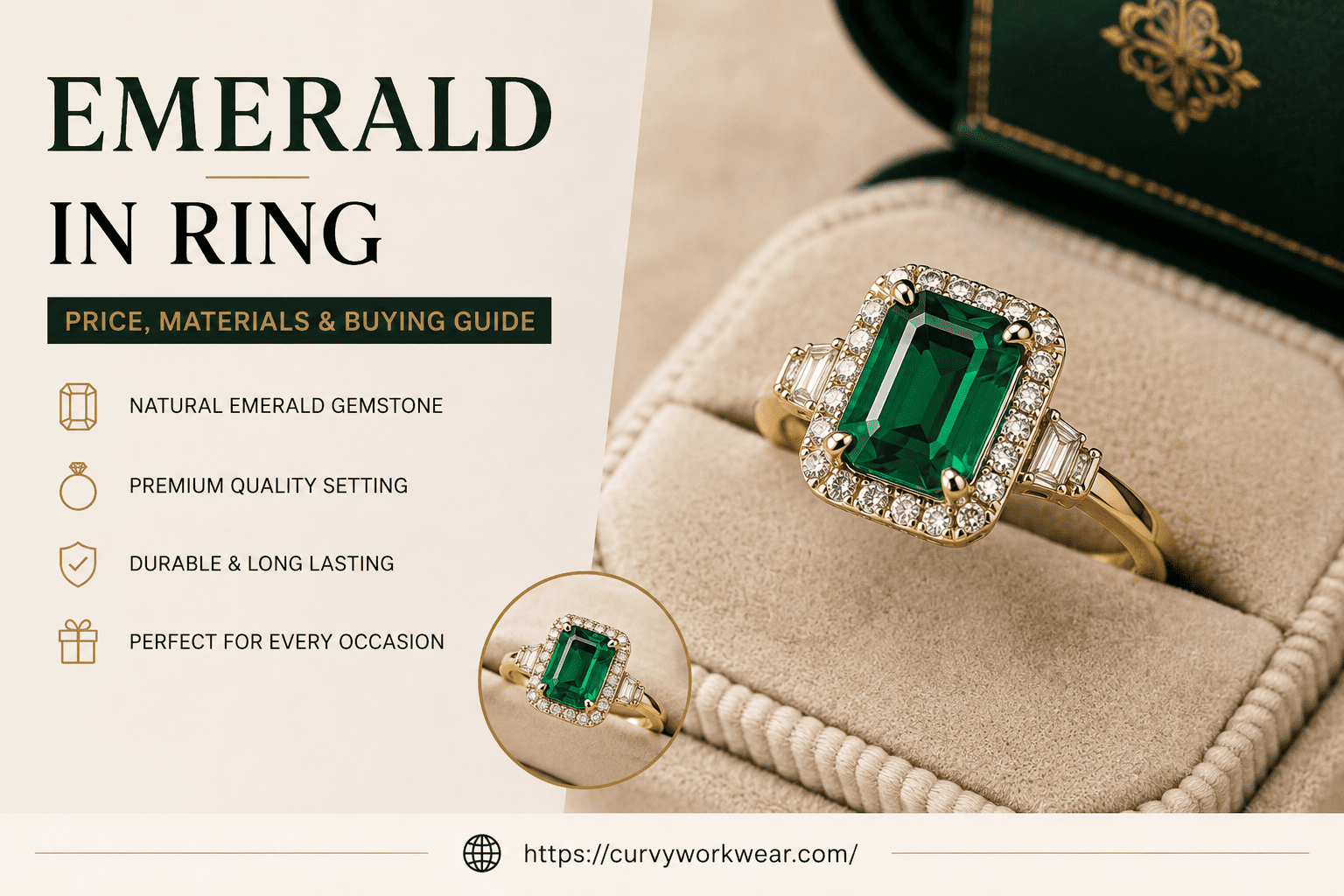
The band matters too. Platinum and 18k gold cost more than sterling silver or gold-plated options. A halo setting with small diamonds around the emerald also raises the price compared to a simple solitaire.
Because prices shift with the market and with each individual stone, it’s worth getting a current quote from a jeweler rather than relying on a fixed number.
Emerald Ring Styles for Every Taste
Once you understand quality and price, style becomes the fun part.
Classic Solitaire
A single emerald in a simple band. This style lets the stone speak for itself and works well for people who prefer understated jewelry.
Halo Setting
Small diamonds circle the emerald, making it look larger and adding extra sparkle. This is a popular choice for those who want more shine without a bigger emerald budget.
Three-Stone Ring
An emerald in the center with two side stones, often diamonds. This style is sometimes chosen to represent past, present, and future.
Vintage and Art Deco Styles
These often feature emerald-cut stones with geometric details, borrowed from 1920s design. They suit people who like jewelry with a story behind it. Pairing a vintage-style emerald ring with structured, tailored outfits is a growing look. Our Curvy Workwear style guides cover how to mix statement jewelry with professional dressing if you want ideas.
Emerald Engagement Ring: Advantages and Disadvantages
An emerald engagement ring is a bold alternative to the traditional diamond, and more couples are choosing it for exactly that reason. However, like any gemstone, it comes with real trade-offs worth knowing before you buy.
Advantages
- Unique look. Emeralds stand out from typical white-diamond engagement rings and pair beautifully with both white and yellow gold.
- Larger appearance for the carat weight. Because emerald is less dense than diamond, it can look bigger than a diamond of the same carat size.
- Rich symbolism. It’s tied to renewal, loyalty, and growth, which many couples find meaningful for a marriage symbol.
- Often more budget-friendly at large sizes compared to a diamond of similar visual size, especially with lab-grown options.
Disadvantages
- Softer stone. Emeralds rate 7.5 to 8 on the Mohs hardness scale, compared to a diamond’s 10, according to GIA. This means they chip and scratch more easily during daily wear.
- Fewer flawless options. Most natural emeralds have visible inclusions, so a “clean-looking” stone is either rare and pricier, or treated.
- Treatment sensitivity. Oiled or resin-filled emeralds can be damaged by heat, ultrasonic cleaners, or harsh chemicals, so they need gentler care than a diamond.
- Resale value can vary more than diamonds, since pricing depends heavily on origin, treatment, and color judgment rather than a standardized grading scale.
Given these trade-offs, a protective setting like a bezel or halo is often recommended if the ring will be worn daily.
Emerald Jewelry Trends 2026
Emerald jewelry trends 2026 lean toward personalization and sustainability.
- Lab-grown emeralds are gaining popularity as buyers look for eco-conscious, budget-friendly options without sacrificing size or color.
- Mixed-stone designs pairing emeralds with diamonds or sapphires in asymmetrical layouts are showing up more in modern collections.
- Colored gemstone engagement rings, including emerald in a ring, continue to grow as an alternative to traditional white diamonds.
Trends shift quickly in jewelry, so treat this as a general direction rather than a fixed rulebook.
How to Choose an Emerald Ring: A Simple Checklist
If you’re wondering how to choose an emerald ring without getting overwhelmed, keep it simple with this checklist.
Step-by-Step Buying Tips
- Set a budget first. This narrows your options and prevents overspending on impulse.
- Decide between natural and lab-grown. Both are legitimate choices depending on your priorities.
- Check the treatment disclosure. A reputable seller will tell you if the stone is oiled, resin-filled, or untreated.
- Pick a protective setting if you plan to wear the ring daily, especially for an emerald engagement ring.
- Buy from a seller who provides a certificate or grading report for anything beyond a small budget purchase.
- Compare in natural light. Emerald color can look different under store lighting versus daylight.
This emerald ring buying guide approach applies whether you’re shopping in person or online.
Frequently Asked Questions
Is an emerald a good stone for an engagement ring?
Yes, but it requires a bit more care than a diamond. A protective setting like a bezel helps prevent chipping during daily wear.
How can I tell if an emerald is real?
Look for natural inclusions, since a completely flawless emerald is likely lab-grown or a fake. A grading report from a certified gem lab like GIA is the most reliable way to confirm authenticity.
Why are some emeralds so much cheaper than others?
Price depends on color, clarity, origin, and treatment level. Heavily treated or lab-grown emeralds cost far less than untreated natural stones with vivid color.
Do emeralds need special care?
Yes. Avoid ultrasonic cleaners, heat, and harsh chemicals, since emeralds are more fragile than diamonds. Clean them gently with warm, soapy water and a soft cloth instead.
What size emerald is considered good for a ring?
There’s no fixed “good” size, since it depends on budget and personal taste. A well-cut, richly colored one-carat emerald often looks more impressive than a larger, pale stone.
Conclusion
Choosing an emerald in a ring comes down to understanding a few key basics: color quality, treatment type, origin, and setting. Once you know what to look for, the price differences and style choices actually start to make sense instead of feeling random.
Whether you’re drawn to a classic solitaire or a modern emerald engagement ring, take your time comparing stones and always ask for documentation before you buy. That way, you end up with a ring you’ll genuinely love wearing, not just one that looked good in a photo.
If you’re ready to start shopping, visit a trusted local jeweler or a certified online retailer to compare real stones before making your final decision. And if you’re curating pieces that work with your wardrobe too, check out Curvy Workwear for styling ideas.
Disclaimer: This article is for general information only, not professional gemological or financial advice. Prices, trends, and treatments vary by seller and over time, so confirm details with a certified jeweler before buying.