Your 4C curls shrink up the moment they touch water, and by evening your ends feel like straw. Sound familiar? You’re not alone, and you’re not doing anything wrong.
4C hair has the tightest curl pattern of all hair types. It’s also the most fragile, which is why it needs a different approach than looser curl patterns. If you’ve been copying a wash routine made for 3C or 4A hair, that might be exactly why your natural black hair 4C isn’t thriving yet.
This guide walks you through everything: washing, moisturizing, breakage prevention, and the products that actually work. No fluff, just what your curls need.
What Makes 4C Hair Different
4C hair coils tightly, often in a zigzag pattern with no clear curl definition. Because of this shape, natural oils from your scalp struggle to travel down the hair shaft. The result? Hair that dries out faster than other curl types.
The Shrinkage Factor
4C hair shrinkage is normal, not a flaw. Your hair can shrink up to 75% of its actual length when it dries. This happens because of the tight coil pattern, and it’s actually a sign of healthy elasticity.
Many women wrongly believe shrinkage means damage. In reality, hair that doesn’t shrink at all might be a warning sign of over-processing or heat damage.
Why 4C Hair Breaks More Easily
The bends in each strand are weak points. Every twist in the hair shaft is a spot where breakage can start. Add friction from towels, rough combing, or dry air, and those weak points give way fast.
This is why 4C hair breakage prevention should be step one in any routine, not an afterthought.
Building a 4C Hair Care Routine That Works
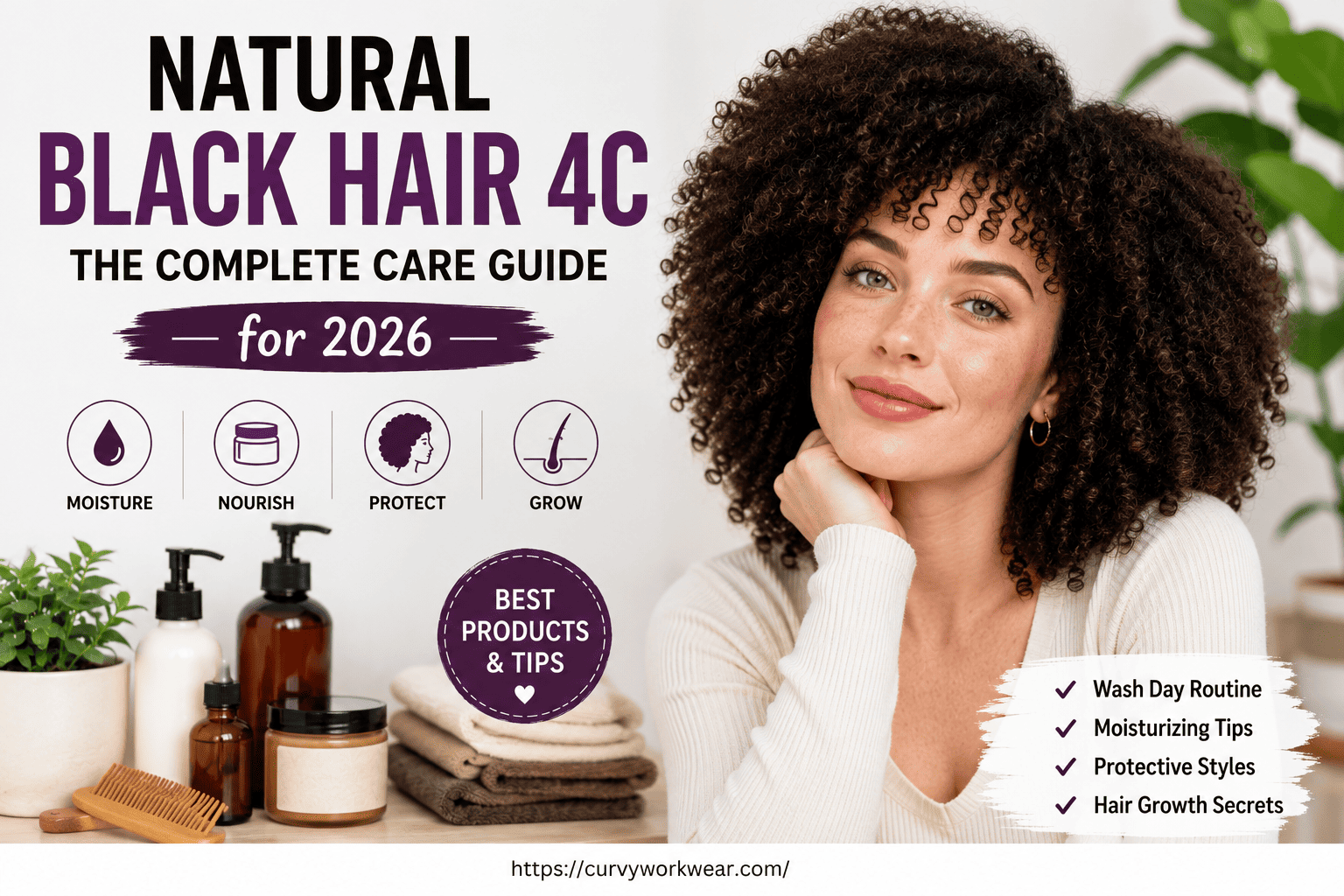
A good 4C hair care routine follows a simple order: cleanse, condition, moisturize, seal, and protect. Skipping any step usually shows up as dryness or breakage within a week or two.
Step 1: Cleanse Without Stripping
Wash your hair every one to two weeks, not daily. Daily washing removes the natural oils your coily hair care routine depends on.
Choose a sulfate-free shampoo. Sulfates clean well, but they strip moisture that 4C hair can’t afford to lose. Look for labels that say “moisturizing” or “sulfate-free.”
Step 2: Condition Deeply, Not Just Lightly
A regular rinse-out conditioner isn’t enough for natural 4C hair care. Use a deep conditioner with heat (a shower cap plus a warm towel works fine) for 20 to 30 minutes at least once a week.
Deep conditioning replaces protein and moisture lost between washes. Think of it as a weekly refill for your hair’s tank.
Step 3: Detangle Gently
Always detangle on wet, conditioned hair. Dry detangling is one of the biggest causes of breakage in 4C hair.
Use a wide-tooth comb or your fingers, and start from the ends, working upward. Rushing this step is a common mistake that costs weeks of growth.
The LOC or LCO Method for Moisture
If you only remember one thing from this article, remember this method. It’s the backbone of any 4C hair moisturizer routine.
What LOC and LCO Mean
- L – Liquid (water-based leave-in or plain water)
- O – Oil (seals in the moisture)
- C – Cream (a thicker moisturizer or butter)
LOC layers liquid, then oil, then cream. LCO swaps the last two steps. Try both and see which keeps your hair moisturized longer, since every head of hair reacts a bit differently.
Why Water Comes First
Oil alone cannot moisturize hair. It can only seal in moisture that’s already there. This is why water or a water-based leave-in always goes first, no matter which method you pick.
4C Hair Breakage Prevention Tips
Breakage prevention isn’t one trick. It’s a handful of small habits repeated consistently.
Protective Styles
Braids, twists, and bantu knots reduce daily manipulation. However, keep styles loose. Tight braids pull at the roots and can cause a receding hairline over time, known as traction alopecia.
Satin or Silk at Night
Cotton pillowcases and cotton bonnets soak up moisture from your hair while you sleep. Switch to a satin or silk bonnet or pillowcase instead. It’s a small change that makes a noticeable difference within weeks.
Trim Regularly
Split ends travel up the hair shaft if left alone. Trimming every 8 to 12 weeks stops damage before it spreads further up the strand.
Best Products for 4C Hair
There’s no single “best” product for everyone, since hair porosity and texture vary. That said, here’s what to look for in each category.
Shampoo
Pick a sulfate-free, moisturizing shampoo. Ingredients like glycerin, aloe vera, and natural oils are good signs. Avoid anything with alcohol high on the ingredient list, as it can dry hair out.
Conditioner
A good rinse-out conditioner should feel slippery, not gritty, when you apply it. This slip helps with detangling and cuts down on breakage.
Leave-In and Moisturizer
Water-based leave-ins work best as the first LOC step. Look for ones with humectants like glycerin or honey, which pull moisture into the hair.
Sealing Oils
Castor oil, jojoba oil, and grapeseed oil are common choices for sealing in moisture. Heavier oils like castor oil work well in drier climates, while lighter oils suit humid areas better.
Since new products enter the market often, check recent reviews before buying, as formulas and prices can change.
4C Hair Growth Tips
Hair growth happens at the scalp. What you see as “growth” is really about retaining the length your hair already grows, since breakage often outpaces growth for 4C hair.
Scalp Care Matters
Massage your scalp for a few minutes during wash day. This can improve blood flow, which may support healthier growth over time.
Protein and Moisture Balance
Too much protein makes hair stiff and prone to snapping. Too much moisture without protein makes it limp and weak. Balance both with a protein treatment every 4 to 6 weeks, adjusted based on how your hair feels.
Diet and Hydration
Hair growth reflects overall health. A balanced diet with enough protein, iron, and water supports stronger strands from the inside out.
FAQ: Natural Black Hair 4C
How often should I wash 4C hair?
Once every one to two weeks works for most people. Washing too often can strip natural oils and lead to dryness, so watch how your scalp and hair respond and adjust from there.
Why does my 4C hair shrink so much?
Shrinkage happens because of the tight coil pattern in 4C hair, and it’s a normal sign of elasticity. In fact, hair that never shrinks may point to damage rather than health.
What is the best 4C hair wash routine?
A simple routine is: pre-poop with oil, shampoo with a sulfate-free cleanser, deep condition with heat, then detangle on wet hair. Follow up with the LOC or LCO method to lock in moisture.
Can 4C hair grow long?
Yes, 4C hair can grow long with consistent care. The key is reducing breakage through gentle detangling, protective styles, and regular moisture, since retained length matters more than growth speed.
What causes the most breakage in 4C hair?
Dry detangling, harsh combing, cotton fabrics, and skipping moisture are the biggest culprits. Fixing even two or three of these habits often leads to noticeable improvement within a month or two.
Final Thoughts
Caring for natural black hair 4C comes down to consistency, not perfection. Cleanse gently, condition deeply, moisturize with the LOC or LCO method, and protect your ends at night.
Breakage and shrinkage are common, but they’re manageable once you understand your hair’s needs. Start with one or two changes from this guide, give it a few weeks, and adjust based on how your hair responds.
Your curls have their own rhythm. Once you learn it, healthy 4C hair becomes a routine, not a struggle.