Ever put on a color that made you look tired, even after a full night’s sleep? If you have soft autumn coloring, the wrong shades can make you look dull, while the right soft autumn color palette can bring out your natural glow.
If you have soft, muted coloring, bright or harsh shades can wash you out fast. The soft autumn color palette is one of the twelve seasonal color categories, and it might just explain why some outfits make you glow while others make you look flat.
In this guide, you’ll learn what soft autumn really means, how to spot it on yourself, and which colors, outfits, and makeup shades work best for you. No fluff, just practical answers.
What Is the Soft Autumn Color Palette?
Soft autumn is one of the four autumn sub-seasons in the seasonal color analysis system. The other three are Warm Autumn, Deep Autumn, and, in some color analysis systems, Muted Autumn, which is very similar to Soft Autumn.
People with this coloring have low to medium contrast between their skin, hair, and eyes. Their natural coloring is gentle, blended, and never harsh. Think of a faded photograph with warm undertones rather than a bold, saturated one.
The Three Key Traits of Soft Autumn
Soft autumn coloring usually shows up as a mix of three things:
- Muted – colors are softened, not bright or neon
- Warm-neutral – undertones lean warm, but not fiery
- Low to medium contrast – hair, skin, and eyes blend rather than sharply contrast
If your natural coloring feels “soft” rather than “sharp,” this season is likely a good fit.
Soft Autumn Skin Tone: How to Identify It
Your skin tone is the first clue in figuring out your season. Soft autumn skin tone usually falls into a warm-neutral category, meaning it has golden or peachy undertones, but they’re never intense.
People with this skin tone often tan easily but don’t burn quickly. The skin may look slightly dusty or muted rather than glowing or rosy. Freckles, if present, tend to be soft brown rather than dark or reddish.
A simple way to check: hold a piece of gold jewelry and a piece of silver jewelry next to your face. If gold looks more flattering, but a soft, antique gold rather than shiny bright gold, that’s a hint you might be a soft autumn.
Hair and Eye Colors Common in Soft Autumn
Soft autumns often have:
- Hair in shades like ash brown, soft chestnut, or dirty blonde
- Eyes in muted colors such as hazel, soft green, or warm brown
- Overall coloring that feels blended, not high-contrast
If your hair and eyes seem to melt into each other rather than stand apart sharply, that’s a classic soft autumn sign.
Soft Autumn Color Palette Chart: The Best Shades
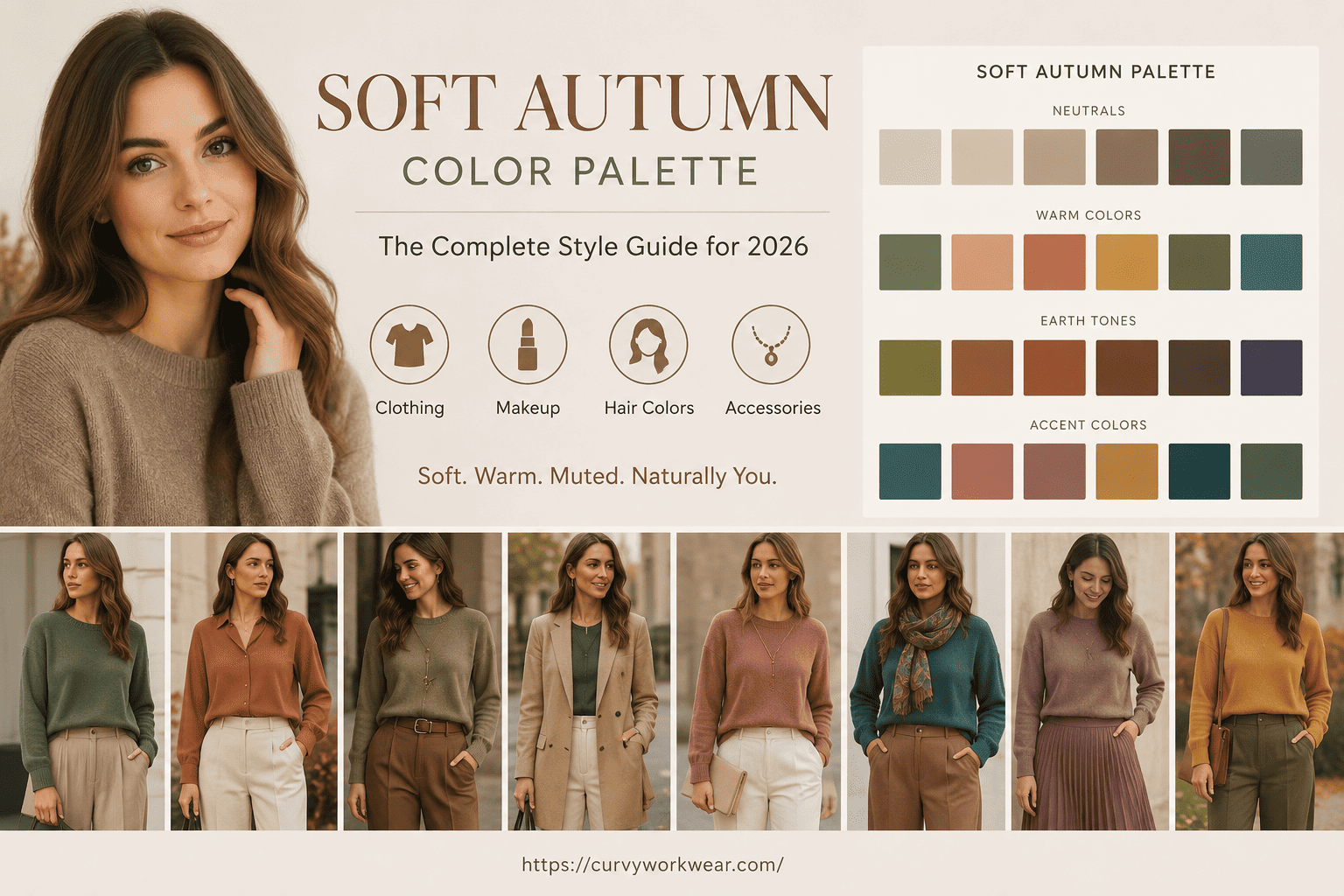
The soft autumn seasonal color palette is built around muted, warm, earthy tones. Nothing here is bright or icy. Everything looks like it’s been dusted with a bit of gray or brown.
Best Colors for Soft Autumn
- Neutrals: camel, soft taupe, warm gray, oatmeal, mushroom brown
- Greens: sage green, moss green, muted olive
- Blues: dusty teal, soft denim blue
- Reds and pinks: dusty rose, muted terracotta, soft brick red
- Yellows and oranges: soft mustard, muted peach, warm camel
For example, instead of a bright fire-engine red, a soft autumn should reach for a brick red with a bit of brown mixed in. Instead of icy white, choose a warm oatmeal or cream.
Colors to Avoid
Not every color is a good match, and that’s okay. Soft autumns generally look best avoiding:
- Bright neon shades (hot pink, neon green)
- Pure black or stark white
- Icy pastels (baby blue, icy lilac)
These colors are too sharp or too cool for soft autumn’s gentle, warm coloring. They tend to overpower the face instead of complementing it.
Building a Soft Autumn Wardrobe
A soft autumn wardrobe works best when it’s built around layering muted, earthy tones. Think of a walk through a forest in late October: warm browns, soft greens, muted oranges, all blending together naturally.
Everyday Soft Autumn Outfits
For casual wear, try pairing:
- A camel sweater with olive green trousers
- A dusty rose blouse with warm gray denim
- A soft mustard cardigan over an oatmeal tee
These combinations feel put-together without trying too hard. That’s the beauty of soft autumn fashion: it looks effortless because the colors naturally blend.
Soft Autumn Style Guide for Work and Formal Wear
For office or formal settings, lean into muted tailoring:
- A warm taupe blazer over a soft cream top
- Deep moss green dresses for evening events
- Muted terracotta or brick-toned accessories to add warmth without brightness
Fabrics with a slight texture, like tweed, suede, or brushed cotton, also suit this season well. They echo the “soft” quality of the palette itself.
Soft Autumn Makeup Colors
Makeup should follow the same rule as clothing: keep it muted and warm. Soft autumn makeup colors avoid anything too shiny, too dark, or too cool-toned.
Foundation and Base
Look for foundations with warm-neutral or golden undertones. Avoid pink-based or ashy formulas, since they can clash with your natural warmth.
Eyeshadow and Eyeliner
Soft, earthy eyeshadow shades work best:
- Warm taupe
- Soft bronze
- Muted olive or moss
- Soft brown eyeliner instead of harsh black
Blush and Lips
For cheeks and lips, go for muted peach, soft terracotta, or dusty rose. Avoid bright fuchsia or blue-based reds, which can look jarring against soft autumn’s gentle coloring.
Soft Autumn vs Warm Autumn vs Muted Autumn
This is where a lot of people get confused, so let’s break it down simply.
Soft Autumn vs Warm Autumn
Warm autumn leans more strongly into warmth and saturation. Their colors are rich, spicy, and deep, like pumpkin orange or deep rust. Soft autumn shares the warmth but turns down the intensity. Everything looks a shade quieter and more blended.
Soft Autumn vs Muted Autumn
In some color systems, “muted autumn” and “soft autumn” refer to the same season. In others, muted autumn sits closer to summer, with slightly cooler undertones than soft autumn. If you’ve seen both terms used interchangeably, that’s common and not a mistake.
The easiest way to tell them apart, if your system separates them, is contrast and undertone. Soft autumn stays warm-neutral. A more summer-leaning muted palette shifts slightly cooler.
How to Confirm Your Season
Reading about color theory only goes so far. The most reliable way to confirm your season is:
- Try fabric drapes in person, if you have access to a color analyst
- Take clear, natural-light photos wearing different color tops
- Compare how your skin looks in warm-muted tones versus bright or cool tones
Seasonal color analysis is a helpful guide, not a strict rulebook. If a color outside your palette makes you happy and confident, that matters too.
FAQs About Soft Autumn Color Palette
What is the soft autumn color palette?
The soft autumn color palette is a group of muted, warm-neutral colors that suit people with low to medium contrast, warm-toned coloring. It includes shades like sage green, camel, dusty rose, and warm taupe.
How do I know if I’m a soft autumn?
You’re likely a soft autumn if your skin has warm-neutral undertones, your hair and eyes blend rather than contrast sharply, and bright or icy colors tend to wash you out. Comparing yourself to warm autumn and muted autumn descriptions can help confirm it.
What colors should soft autumns avoid?
Soft autumns should generally avoid neon brights, pure black, stark white, and icy pastels. These colors are too sharp or cool for soft autumn’s gentle, warm coloring.
Is soft autumn the same as muted autumn?
In many color analysis systems, yes, soft autumn and muted autumn refer to the same palette. In others, muted autumn leans slightly cooler and closer to summer. It depends on which system you’re using.
What is the best makeup for soft autumn skin tones?
Soft autumn makeup colors include warm taupe or bronze eyeshadow, soft brown eyeliner, and muted peach or terracotta blush and lipstick. Avoid overly shiny, cool-toned, or high-contrast makeup shades.
Final Thoughts
The soft autumn color palette is all about balance. It’s warm, but never loud. It’s muted, but never dull. Once you know your best shades, from camel and sage to dusty rose and soft mustard, getting dressed becomes a lot easier.
You don’t need to overhaul your entire closet overnight. Start small. Swap one bright piece for a muted, warm-toned one, and notice the difference in how you look and feel. Your best colors are already out there waiting for you.