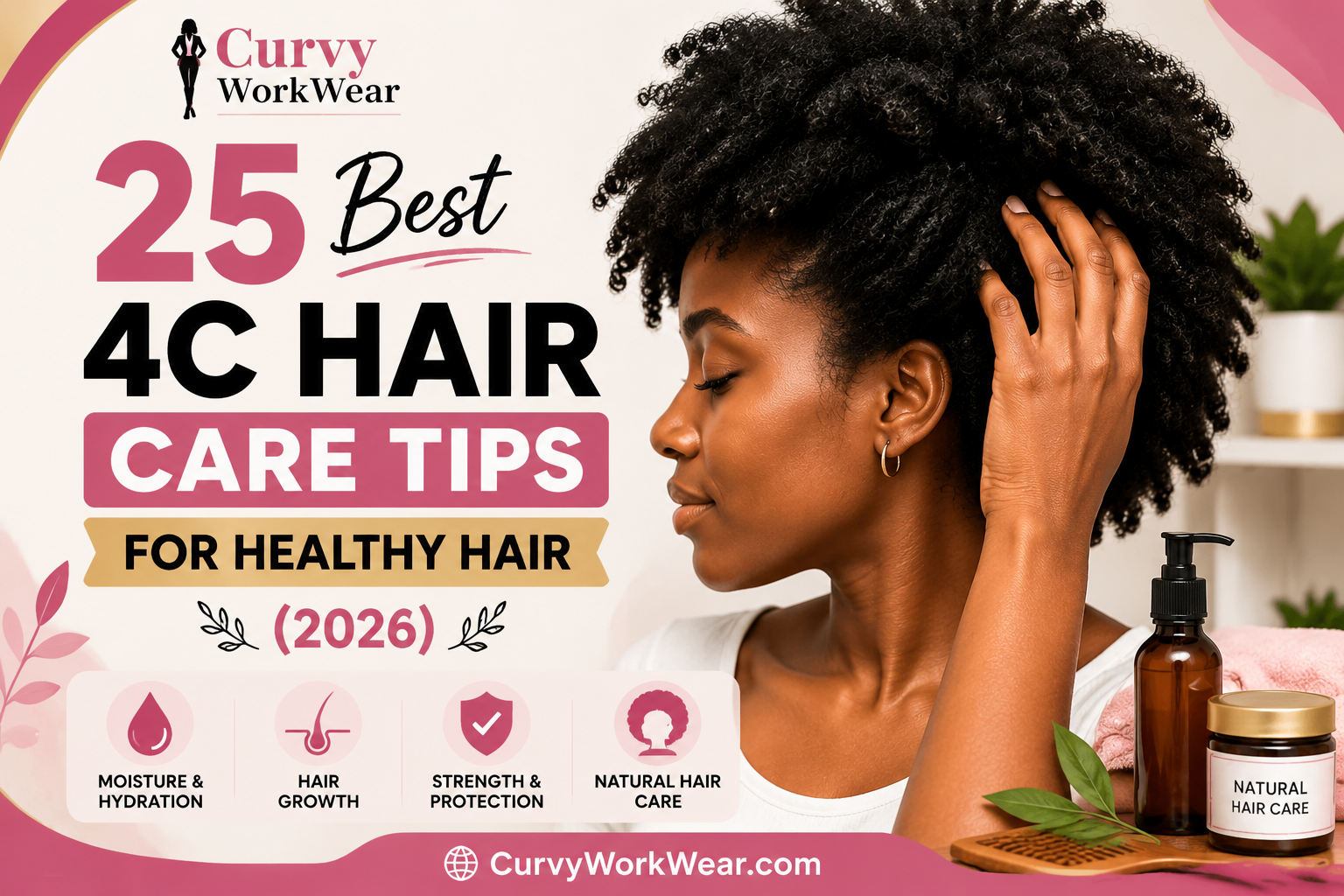
4C hair is beautiful, but it can also feel like a full-time job. One day your curls look perfect, and the next day your hair feels dry no matter what you do.
If that sounds familiar, you are not alone. 4C hair has a tighter curl pattern than other hair types, and it needs a different kind of care to stay healthy.
This guide breaks down 25 simple, practical tips for taking care of 4C hair. Whether you are new to natural hair or you have been on this journey for years, these tips will help you build a routine that actually works.
What Makes 4C Hair Different?
4C hair has the tightest curl or coil pattern on the natural hair type chart. The strands often form a “Z” shape instead of a smooth curl.
This tight pattern makes it harder for natural oils from your scalp to travel down the hair shaft. As a result, 4C hair tends to be drier than looser curl types.
Moreover, 4C hair often shrinks a lot. Your hair might measure much shorter when dry than when it is stretched out, even though the actual strand length has not changed.
Understanding this is the first step to caring for it properly. Once you know why 4C hair behaves this way, the rest of your routine starts to make more sense.
Daily and Weekly 4C Hair Care Routine Tips
A good 4C hair routine should focus on moisture, gentle handling, scalp care, and protecting the hair from unnecessary breakage. You do not need to follow every step daily. Adjust the routine based on how dry, tangled, or fragile your hair feels.
1. Moisturize When Your Hair Needs It
4C hair can lose moisture quickly because of its tightly coiled structure. Use a water-based leave-in conditioner or moisturizing product when your hair feels dry rather than automatically applying products every day. Too much product can also cause buildup.
2. Try the LOC or LCO Method
LOC means Liquid, Oil, Cream, while LCO means Liquid, Cream, Oil. These layering methods can help some people retain moisture for longer. Neither method is required, so use the order that leaves your hair soft without making it heavy or greasy.
3. Detangle in Small Sections
Divide your hair into manageable sections before detangling. Start at the ends and gradually work toward the roots. Use your fingers first if your hair is heavily tangled, then use a wide-tooth comb or another tool that moves through the hair without excessive pulling.
4. Detangle With Enough Slip
Conditioner or a suitable detangling product can reduce friction between strands. Many people find damp, well-conditioned hair easier to detangle, but the best method depends on your hair and the product you use. Avoid forcing a comb through stubborn knots.
5. Cleanse the Scalp Regularly
Shampoo is important even when your main goal is moisture. Regular cleansing removes sweat, oils, styling products, and buildup from the scalp. Choose a gentle shampoo and adjust your washing frequency according to your scalp and styling routine.
6. Deep Condition as Needed
Deep conditioning can help improve softness and manageability, especially when hair feels dry or rough. Weekly treatments may work for some people, while others may need them less often. Follow the product instructions rather than assuming more conditioning is always better.
7. Protect Your Hair From Excessive Tension
Tight braids, ponytails, extensions, and repeated pulling can contribute to breakage and hair loss around the edges. Choose low-tension styles and give your scalp and hairline regular breaks from styles that feel tight or painful.
8. Protect Your Hair While Sleeping
A satin or silk bonnet, scarf, or pillowcase can reduce friction while you sleep. Keeping the hair in a loose, protected style can also help reduce tangling and moisture loss overnight.
How to Care for 4C Hair Without Overloading It
Knowing how to care for 4C hair also means knowing what not to do. Overloading your hair with product or heat can cause more harm than good.
9. Avoid Sulfate Shampoos Too Often
Sulfates can strip natural oils from your hair. Use a sulfate-free shampoo most of the time, and save clarifying shampoo for occasional deep cleaning.
10. Limit Heat Styling
Frequent blow-drying or flat-ironing can weaken 4C strands over time. If you use heat, always apply a heat protectant first.
11. Do Not Over-Manipulate Your Hair
Constant brushing, re-styling, or touching your hair can lead to breakage. Protective styles help reduce daily manipulation.
12. Trim Regularly
Split ends travel up the hair shaft if left untreated. A trim every 8 to 12 weeks helps keep your ends healthy.
13. Sleep on Satin or Silk
Cotton pillowcases absorb moisture from your hair. Switching to a satin or silk pillowcase, or wearing a satin bonnet, helps your hair stay moisturized overnight.
14. Do Not Wash Too Often
Washing every day can dry out 4C hair. Many naturals find that washing once a week or every two weeks works better.
Best Products for 4C Hair: What to Look For
There is no single “best” product that works for everyone. However, there are ingredient types that tend to work well for 4C hair.
15. Choose Water-Based Moisturizers
Look for products where water is listed as the first ingredient. Water hydrates hair in a way that oil alone cannot.
16. Use Natural Oils to Seal Moisture
Oils like jojoba, castor, and coconut oil are popular for sealing in moisture after applying a water-based product. Oils work best as a sealant, not as the main moisturizer.
17. Try Shea Butter for Extra Dry Ends
Shea butter is thick and rich, which makes it great for very dry ends. A small amount goes a long way.
18. Avoid Products With Heavy Alcohol Content
Some alcohols can dry out your hair. Check ingredient labels and avoid products where drying alcohols are listed near the top.
19. Patch Test New Products
Everyone’s hair reacts differently. Before using a new product all over your head, test it on a small section first.
Protective Styling Tips for 4C Hair
Protective styles tuck your ends away and reduce daily handling, which helps hair grow longer over time.
20. Try Braids or Twists
Braids and twists are popular protective styles for 4C hair. They can last several weeks with proper care.
21. Do Not Install Styles Too Tightly
Tight braids or twists can cause tension at the edges, which may lead to hair loss over time. Comfort should always come first.
22. Moisturize Even While in a Protective Style
Just because your hair is braided or twisted does not mean it needs less moisture. Use a light spray or oil to keep your scalp and hair hydrated.
23. Give Your Hair a Break Between Styles
Wearing the same protective style back-to-back without rest can stress your hair and scalp. Allow a short break in between styles when possible.
Scalp Care Tips for Healthy 4C Hair
Healthy hair starts at the scalp. Skipping scalp care is one of the most common mistakes with 4C hair.
24. Massage Your Scalp Regularly
Scalp massages can help improve blood flow, which may support healthier hair growth. It also feels great and helps you relax.
25. Keep Your Scalp Clean and Balanced
Buildup from products can clog the scalp over time. Clarify occasionally to remove residue and keep your scalp healthy.
FAQ: 4C Hair Care Questions Answered
How often should I wash 4C hair?
There is no single washing schedule that works for everyone with 4C hair. Many people wash weekly or every two weeks, but your scalp, styling routine, activity level, and product buildup should guide the schedule.
Does 4C hair need to be moisturized every day?
Not necessarily. Some 4C hair needs frequent moisture, while other hair stays hydrated longer. Instead of following a daily rule, moisturize when your hair feels dry or becomes difficult to manage. Using too much product can also cause buildup.
What is the biggest mistake people make with 4C hair?
One common mistake is handling the hair too roughly. Frequent pulling, tight hairstyles, aggressive detangling, and excessive heat can contribute to breakage. Gentle handling and protective styling can help reduce unnecessary damage.
Can 4C hair grow long?
Yes. 4C hair can grow long, but shrinkage can make its actual length difficult to see. Breakage can also make it seem like the hair is not growing. Gentle handling, scalp care, and protecting the ends can help retain the length you grow.
Is the LOC method necessary for 4C hair?
No. LOC is one moisture-retention method, but it is not required for healthy 4C hair. Some people prefer LOC, while others get better results with LCO or a simpler leave-in conditioner.
Does 4C hair need special products?
4C hair does not require expensive or highly specialized products. Look for products that meet your hair’s needs, such as moisture, detangling, or hold. A simple routine with a gentle cleanser, conditioner, moisturizing product, and suitable styling products can be enough.
Is protective styling always good for 4C hair?
Protective styles can reduce daily manipulation, but they are not automatically healthy. Braids, twists, wigs, or extensions that are too tight can cause breakage and stress around the hairline.
How can I reduce breakage when detangling 4C hair?
Work in small sections and remove tangles gradually from the ends toward the roots. Using conditioner or a product with good slip can make the process easier. Avoid forcing a comb through knots or detangling aggressively when the hair is dry and difficult to manage.
Conclusion
Caring for 4C hair is not about finding one perfect product. It is about building small, consistent habits, like moisturizing daily, detangling gently, and protecting your ends.
Start with a few tips from this list rather than trying all 25 at once. Pay attention to how your hair responds, and adjust your 4C hair care routine as you learn what it truly needs.
Disclaimer
Everyone’s hair is different, so what works well for one person may need small adjustments for another. Give new routines a few weeks before judging the results.