Ever wash your hair and it still feels heavy, dull, or coated in something? That’s a sign your regular shampoo isn’t doing its full job. This is where clarifying shampoo comes in.
Clarifying shampoo is a deep-cleaning shampoo made to strip away buildup that normal shampoo leaves behind. Think product residue, hard water minerals, chlorine, and excess oil. Unlike your everyday shampoo, it’s not meant for daily use. Instead, it works more like a reset button for your scalp and hair.
In this article, you’ll learn what it actually does, who needs it, its real benefits, and exactly how to use it without drying out your hair. By the end, you’ll know if it belongs in your hair care routine.
What Is Clarifying Shampoo?
Clarifying shampoo is a stronger type of shampoo. It contains cleansing agents that cut through oil, dirt, and product buildup more effectively than regular shampoo.
Regular shampoo cleans your hair, but it’s gentle by design. It’s made for frequent use, so it doesn’t fully remove everything that sits on your scalp and strands over time. That’s fine for daily washing, but buildup still adds up.
This deep-cleaning formula, on the other hand, is made to remove that buildup completely. It’s not something you’d use every wash day. Most people use it once every one to two weeks, or whenever their hair starts feeling weighed down.
How It’s Different From Regular Shampoo
Regular shampoo is mild. It’s designed to clean without stripping your hair’s natural oils too much, since you use it often.
It’s more like a deep clean. It has stronger surfactants (the ingredients that create lather and lift away dirt) that remove tougher residue. That’s why it isn’t recommended for daily use. Too much clarifying can leave hair feeling dry or rough.
Why Does Hair Need Clarifying?
Your hair picks up more than you’d think during the week. Here’s what tends to build up over time.
Product Buildup
Dry shampoo, hairspray, gel, and styling creams don’t always rinse out completely. Layer after layer, this residue coats your strands and makes hair look flat or greasy, even right after washing.
Hard Water Minerals
If you live in an area with hard water, minerals like calcium and magnesium can stick to your hair. Over time, this can make hair feel rough, look dull, and even affect how color-treated hair holds its shade.
Chlorine and Sweat
Swimmers know this one well. Pool water often carries trace copper (from algaecides or old pipes), and the greenish tint on light or blonde hair actually comes from copper deposits, not from chlorine itself, according to university health researchers at UAB. Chlorine still plays a role, since it makes hair more porous and lets those metals soak in more easily. Regular sweat from workouts also leaves residue that basic shampoo may not fully wash out.
Excess Oil and Scalp Buildup
Natural oils from your scalp are good for your hair, but too much oil combined with dead skin cells and product can clog hair follicles. This may lead to a scalp that feels itchy or looks flaky.
Clarifying Shampoo Benefits
Now that you know what causes buildup, let’s look at what it actually does for your hair and scalp.
Removes Product and Mineral Buildup
This is the main benefit people notice first. It clears away layers of styling products, oils, and minerals that regular shampoo leaves behind, giving you a truly clean scalp and strands.
Restores Shine and Volume
Product buildup can weigh the hair down, leaving it looking dull and lifeless. Once it’s removed, hair often looks shinier and feels lighter almost immediately.
Improves Scalp Health
A clean scalp is a healthier scalp. Removing excess oil and residue can reduce itchiness and flakiness caused by clogged follicles.
Helps Other Products Work Better
Here’s something many people don’t realize. When your hair is coated in buildup, treatments like deep conditioners, masks, and even color don’t absorb as well. Clarifying first means these products can actually do their job.
Prepares Hair for Chemical Treatments
Hairstylists often recommend a clarifying wash before coloring, perming, or chemical straightening. A clean canvas helps these treatments process more evenly.
Possible Side Effects of Clarifying Shampoo
It does a lot of good, but it’s not without downsides. Knowing these helps you use it the right way instead of overdoing it.
Dryness and Frizz
The same strong cleansing agents that remove buildup can also strip away natural oils. If used too often, hair can start to feel dry, rough, or frizzy.
Color Fading
Since clarifying shampoo cleans deeply, it can also strip away hair dye faster than a regular shampoo would. This is a bigger concern for freshly colored or vibrant shades like red or purple.
Scalp Irritation
Some formulas contain stronger surfactants that may irritate a sensitive or already dry scalp, leading to itchiness or flaking. According to NBC News’ beauty coverage, dermatologists recommend looking for sulfate-free formulas with gentle cleansers and hydrating ingredients like glycerin or argan oil to counteract this. If irritation continues, cut back on frequency or switch formulas altogether.
Not a Fix for Everything
It removes buildup, but doesn’t treat underlying scalp conditions like dandruff, psoriasis, or seborrheic dermatitis. If you have ongoing scalp issues, it’s worth talking to a dermatologist rather than relying on clarifying shampoo alone.
How to Use Clarifying Shampoo the Right Way
Using clarifying shampoo the right way makes a big difference. Here’s a simple step-by-step approach.
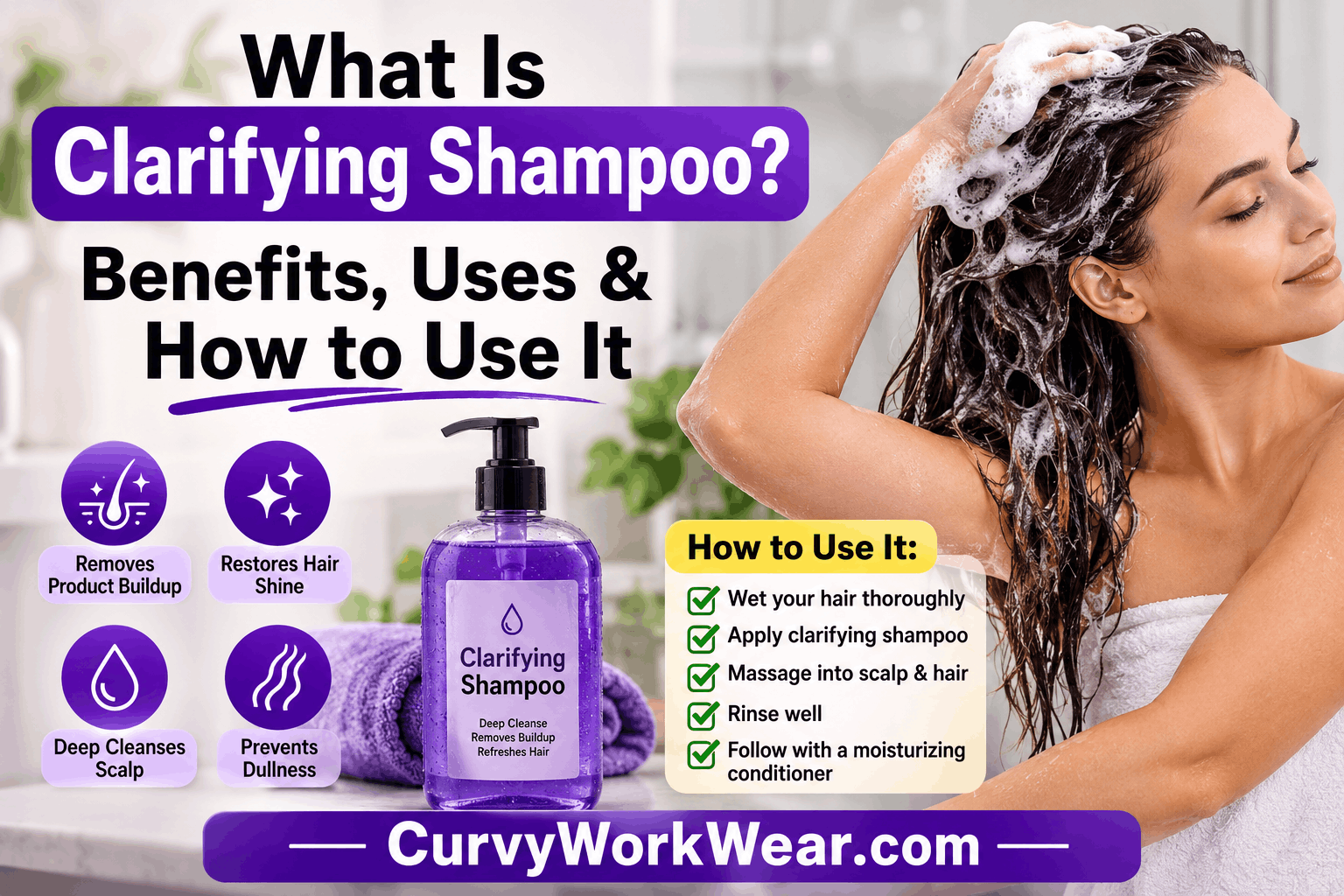
Step 1: Wet Your Hair Thoroughly
Start with fully soaked hair. This helps the shampoo spread evenly and lather properly.
Step 2: Apply and Massage Into the Scalp
Focus on your scalp first, since that’s where most oil and buildup collects. Use your fingertips (not nails) to massage gently for about a minute.
Step 3: Let It Sit for a Few Minutes
Some clarifying shampoos work better if you leave them on for two to three minutes before rinsing. Check the product label, since formulas vary.
Step 4: Rinse Completely
Rinse thoroughly with warm water. Any leftover product can leave residue behind, which defeats the purpose.
Step 5: Follow With a Deep Conditioner
This step matters. Clarifying shampoo can leave hair feeling a bit stripped, so a good moisturizing conditioner or hair mask afterward helps restore softness and hydration.
How Often Should You Use Clarifying Shampoo?
For most people, once every one to two weeks is enough. If you swim often, use a lot of styling products, or live in a hard water area, you might need it slightly more often.
However, if your scalp is dry or sensitive, stretch this out to once every three to four weeks. Overusing it can strip away too much natural oil, leaving hair dry, frizzy, or brittle.
In short, this is a “less is more” kind of product. Use it when you notice buildup, not on a fixed daily or weekly schedule like your regular shampoo.
Who Should (and Shouldn’t) Use Clarifying Shampoo
Clarifying shampoo isn’t one-size-fits-all. Here’s a quick breakdown.
Good For
- People who use dry shampoo or styling products often
- Swimmers dealing with chlorine buildup
- Those living in hard water areas
- Anyone noticing dull, flat, or heavy-feeling hair
- People prepping for a color or chemical treatment
Use With Caution
- People with color-treated hair (clarifying too often can fade color faster)
- Those with naturally dry or curly hair, which needs more moisture
- Anyone with a sensitive or easily irritated scalp
If you fall into the “use with caution” group, this doesn’t mean avoid it completely. It just means space out your washes more and always follow up with conditioner.
Clarifying Shampoo for Different Hair Types
Not all hair reacts the same way to a deep clean, so it helps to adjust based on your hair type.
Oily Hair
Oily hair types can typically handle clarifying shampoo weekly without issues, since there’s more oil to remove.
Dry or Curly Hair
These hair types produce less oil and rely on it for moisture. Stick to using clarifying shampoo every three to four weeks, and always deep condition right after. Natural moisturizers like shea butter for hair can also help restore softness and lock in hydration after a deep clean.
Color-Treated Hair
Look for clarifying shampoos labeled as gentle or color-safe. These are formulated to clean without stripping color as aggressively as standard clarifying formulas. If you’re dealing with brassy or faded tones between colorings, a purple shampoo can help maintain your shade on non-clarifying wash days.
Fine or Flat Hair
If your hair tends to look flat by midday even right after washing, buildup could be part of the problem. Once you’ve clarified, a volume shampoo on your regular wash days can help keep hair looking fuller for longer. Some people also look into biotin shampoo as part of a routine to support thicker-looking hair over time.
Frequently Asked Questions
Is clarifying shampoo good for everyday use?
No, clarifying shampoo is not meant for daily use. It’s a deep-cleaning treatment, and using it too often can strip away natural oils, leaving your hair dry or frizzy. Once every one to two weeks is usually enough for most people.
Can clarifying shampoo cause hair loss?
It does not directly cause hair loss. However, if it’s overused and leaves your scalp too dry, this can lead to irritation or breakage, which may look like hair thinning. Using it as recommended, followed by conditioner, helps avoid this.
Does clarifying shampoo remove hair color?
Clarifying shampoo can fade hair color faster if used too often, since it strips more than regular shampoo. If you color your hair, look for a color-safe or gentle clarifying formula and use it less frequently.
What’s the difference between clarifying shampoo and regular shampoo?
Regular shampoo is gentle and made for frequent washing, while clarifying shampoo is stronger and designed to remove deep buildup like minerals, product residue, and chlorine. It’s used occasionally, not daily.
Can I use clarifying shampoo on my kids’ hair?
Clarifying shampoo can generally be used on children’s hair if needed (for example, after a lot of swimming), but check the product label for age recommendations. When in doubt, a mild, kid-specific formula is a safer choice.
Conclusion
Clarifying shampoo is a simple way to reset your hair when it feels weighed down, dull, or coated in product. It clears away buildup that your regular shampoo can’t fully remove, from styling products to hard water minerals and chlorine.
The key is balance. Use clarifying shampoo once every one to two weeks (or less if your hair is dry or color-treated), and always follow up with a good conditioner. Pay attention to how your hair feels and adjust from there.
If your hair has been looking flat or feeling heavy lately, it might just be time to try a clarifying shampoo and see the difference for yourself.
Disclaimer: This article is for general informational purposes and is not a substitute for professional dermatological advice. If you have a persistent scalp condition, severe hair loss, or a reaction to any hair product, please consult a dermatologist or trichologist.